AI agents now answer customer support calls, turn plain-English questions into SQL queries, and fix mislabeled card transactions in seconds. The technology has matured beyond the experimental stage. McKinsey reports that 40% of billion-dollar companies are scaling AI agents in 2026.
It's worth looking at how companies are putting AI agents to work and the results they're getting. This article covers 12 AI agent examples, the problems they solve, and the benefits they deliver. You’ll also learn how to equip your own agents with the tools to do similar work on Apify.
TL;DR: Top 12 agentic AI examples
| AI agent | What it does | Key result |
|---|---|---|
| Intercom's Fin Voice Customer support |
Answers support calls, handles refunds and bookings, and hands complex cases to people | 24.5% higher resolution rate with Fin Voice 2 |
| Stripe Radar Payments |
Scores each payment for fraud risk, then approves, blocks, or flags it | 32% less fraud on average |
| Abridge Healthcare |
Turns doctor-patient conversations into structured clinical notes | 34% lower clinician burnout, 77% higher job satisfaction |
| Uber's Finch Transportation |
Answers finance teams' plain-English questions in Slack by writing SQL | Data answers in seconds, not hours or days |
| Ramp's AI agents Fintech |
Fixes wrong merchant labels using card data, receipts, and memos | Fixes in under 10 seconds, at cents per request |
| Dropbox Dash Productivity software |
Plans multi-step searches to answer, summarize, and draft across company apps | 95%+ of queries answered in under 2 seconds |
| O3sigma's AI agents Manufacturing |
Analyzes equipment data and recommends machine adjustments | 30% higher equipment effectiveness |
| Fireblocks Genie Digital assets |
Answers questions about customers' assets and drafts actions for approval | Also available as an API and MCP tool |
| Mekorot's AI agents Water utilities |
Analyzes operational data to find water losses and leaks | Water loss rate below 4% |
| Under Armour's help desk Apparel |
Gives employees self-service answers from internal documents | Better employee self-service |
| Notion Agent and Custom Agents Productivity software |
Completes multi-step tasks and runs scheduled workflows across connected apps | Up to 60 hours saved per month |
| Matillion's Maia Data engineering |
Builds and maintains data pipelines from plain-language requests | Up to 90% less manual engineering |
In the following chapters, you'll explore these AI agent examples. For each one, you'll see what it does, the problem it solves, and how it works.
Intercom's Fin Voice
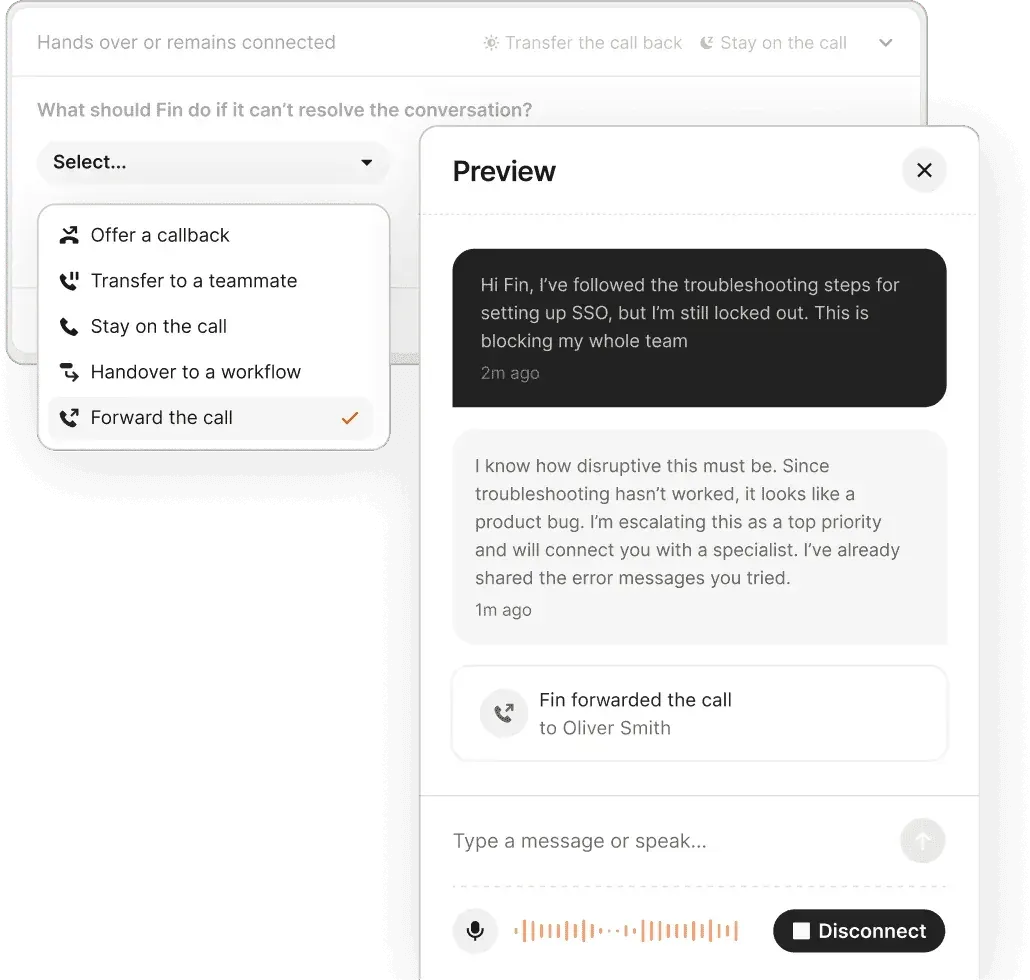
Fin Voice is Intercom's AI voice agent for customer support. It answers incoming phone calls, resolves requests, and hands off to a human when needed.
The problem
Many businesses handle thousands of customer support calls every day. Callers expect quick and accurate answers. Long hold times, repeated questions, and incorrect responses can lead to frustration. Traditional auto attendants can route callers through phone menus, but they can't resolve requests on their own.
How the AI agent solves it
Fin Voice answers calls instantly and resolves multi-step requests, such as verifying an identity, processing a refund, or booking an appointment. This takes AI customer service beyond chat and into the phone channel.
Results and takeaways
According to Intercom, Fin Voice 2 achieves a 24.5% higher resolution rate and reduces time to first audio by 0.43 seconds compared to the first version of the agent. Intercom customer Avocado Green Mattress also reported a higher resolution rate and more natural-sounding conversations.
Inside the implementation
Instead of the usual speech-to-text, language model, and text-to-speech chain, Intercom pairs Apex Flash 2.0. The model is optimized for customer service and runs on a real-time audio layer that manages speech generation and pacing. Fin Voice connects to telephony providers such as Twilio and Genesys, and calls business systems through Intercom's Actions framework.
Further reading:
Stripe Radar
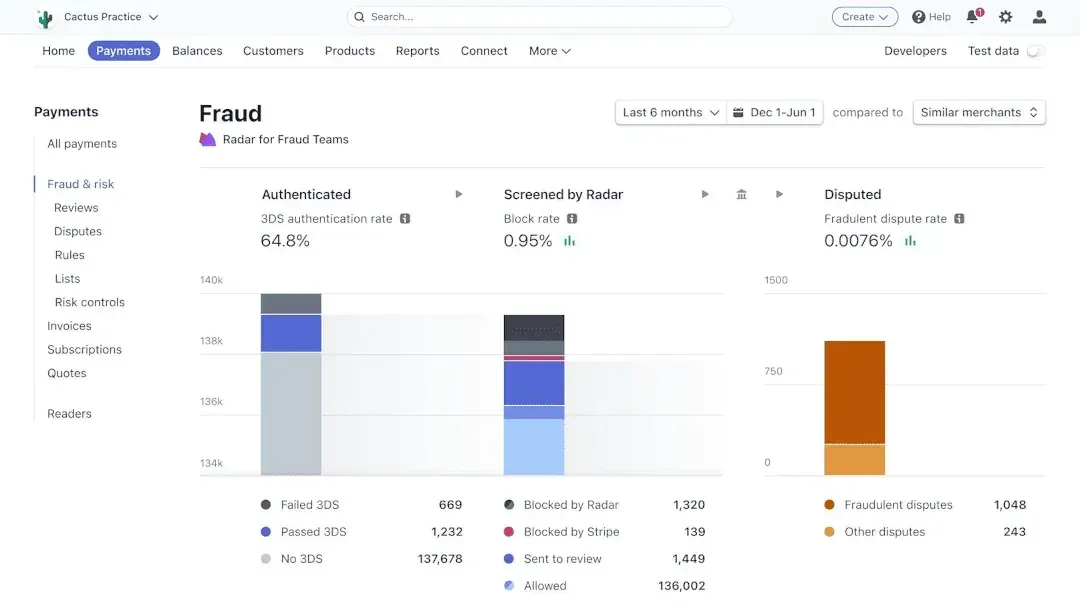
Stripe Radar is an AI-powered fraud detection system built into Stripe's payment platform. It detects fraudulent payments before they go through.
The problem
Millions of online businesses need to detect fraudulent payments quickly. Fraud tactics constantly change, so static rules fall behind, and manual reviews cannot keep pace.
How the AI agent solves it
Radar's machine learning models are trained on billions of payment events and adapt to new fraud patterns. For each payment, they analyze signals such as device fingerprints, transaction history, and purchasing behavior. They then assign a risk score from 0 (least risky) to 100 (riskiest). This score determines whether a payment is approved, blocked, or flagged for review.
Results and takeaways
According to Stripe, Radar reduces fraud by 32% on average, and its models are trained on 70 trillion data points. There's a 92% chance that a charge comes from a card Stripe has seen before.
Inside the implementation
Radar scores each payment with a deep neural network, which replaced an earlier XGBoost-plus-DNN ensemble with a ResNeXt-inspired multi-branch design. It weighs over 1,000 signals in under 100 ms, with features built on Shepherd (Stripe's adaptation of Airbnb's Chronon). It trains on dispute labels from the Stripe network.
Further reading:
- Payment migration: Braintree to Stripe and beyond
- How agents pay for things with Machine Payments Protocol (MPP)
Abridge
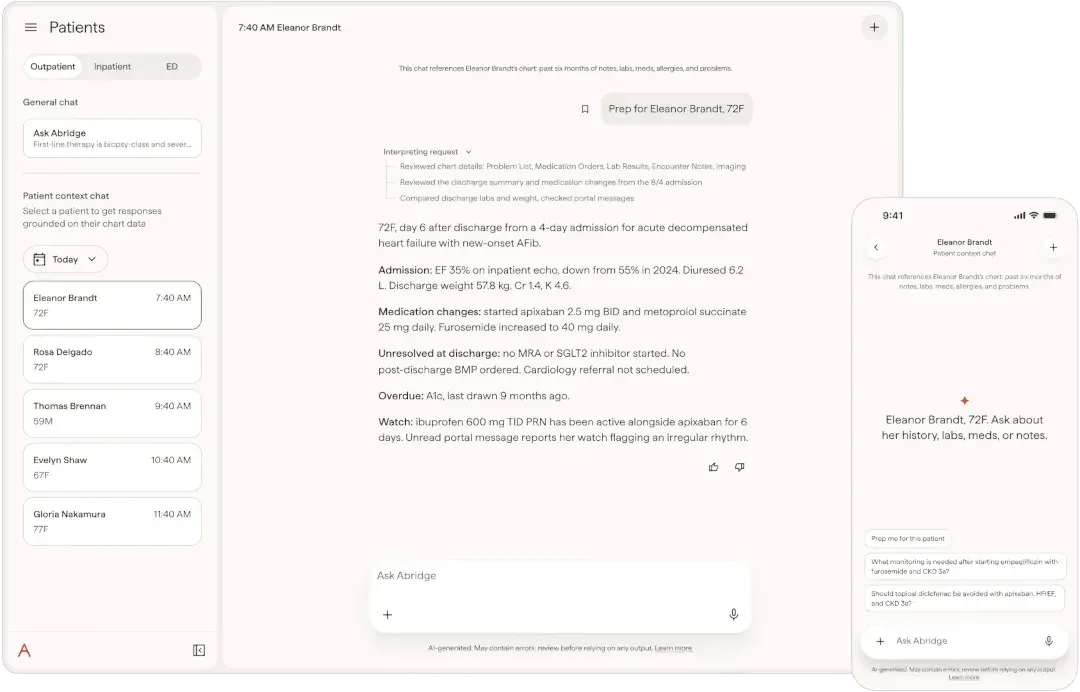
Abridge is an AI-powered clinical documentation platform that turns doctor-patient conversations into structured clinical notes.
The problem
Doctors spend much of their day documenting patient visits and updating electronic health records. This administrative work leaves less time for patient care.
How the AI agent solves it
Abridge analyzes conversations during clinical visits, transcribes them, and extracts key medical information, such as symptoms, diagnoses, and treatment plans. It then organizes the information into structured clinical notes, reducing the time clinicians spend on documentation.
Results and takeaways
At WVU Medicine, 77% of clinicians reported higher job satisfaction, while documentation-related cognitive load fell by 61%. Clinician-reported burnout also decreased by 34%. Mayo Clinic also plans to expand Abridge to 2,000 clinicians, covering more than 1 million patients.
Inside the implementation
Abridge runs visit audio through its Contextual Reasoning Engine, which drafts clinically useful, billable notes. Then, it ties each AI-written statement back to its source. The platform integrates with Epic, the electronic health record system.
Further reading:
- Building a multilingual medicine safety Actor on Apify
- Build a documentation chatbot with LangChain, OpenAI, Pinecone, and Apify
Uber's Finch
Finch is an AI agent that lets Uber's finance teams query company data in plain English through Slack.
The problem
Uber's financial analysts often had to check several platforms to find the right data. Writing SQL or waiting for a data science request could take hours or even days.
How the AI agent solves it
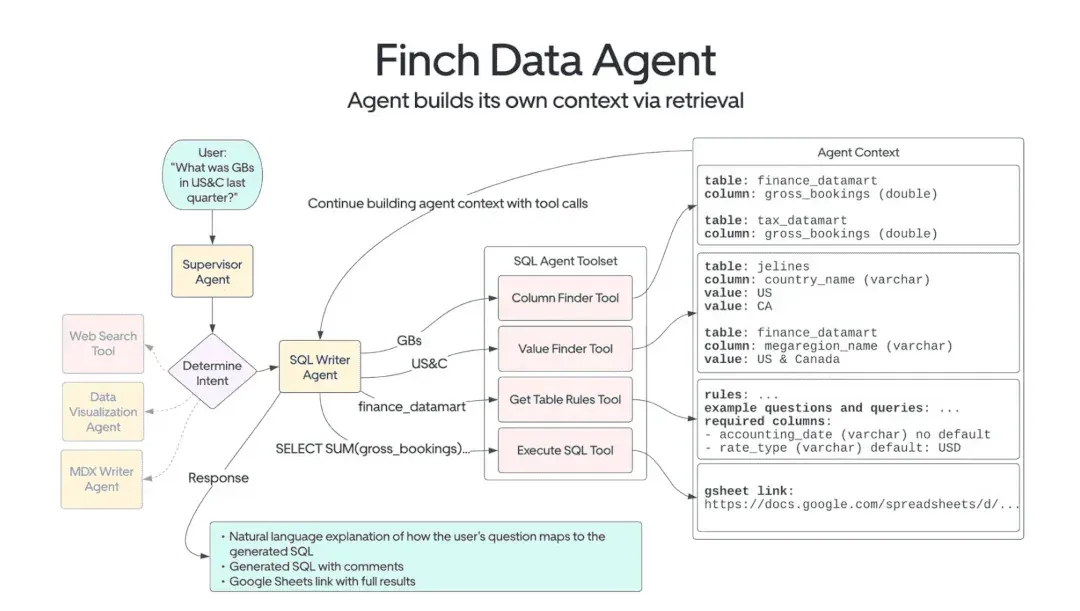
A supervisor agent reads each question and routes it to a SQL writer agent. The SQL writer finds matching table columns and values, writes the query, and checks the user's permissions before running it.
Results and takeaways
According to Uber, Finch returns structured answers within seconds, replacing the wait for data requests. Since generative AI can still hallucinate, Uber plans to add a "Request validation" button. It will send the context and Finch-generated answer to an expert for review.
Inside the implementation
As reported by Uber, the company built Finch with LangGraph from LangChain. It routes model calls through its internal Generative AI Gateway, allowing it to switch models as the technology changes. Column names and natural language aliases are stored in an OpenSearch index. This helps the agent write accurate filters.
Further reading:
Ramp's AI agents
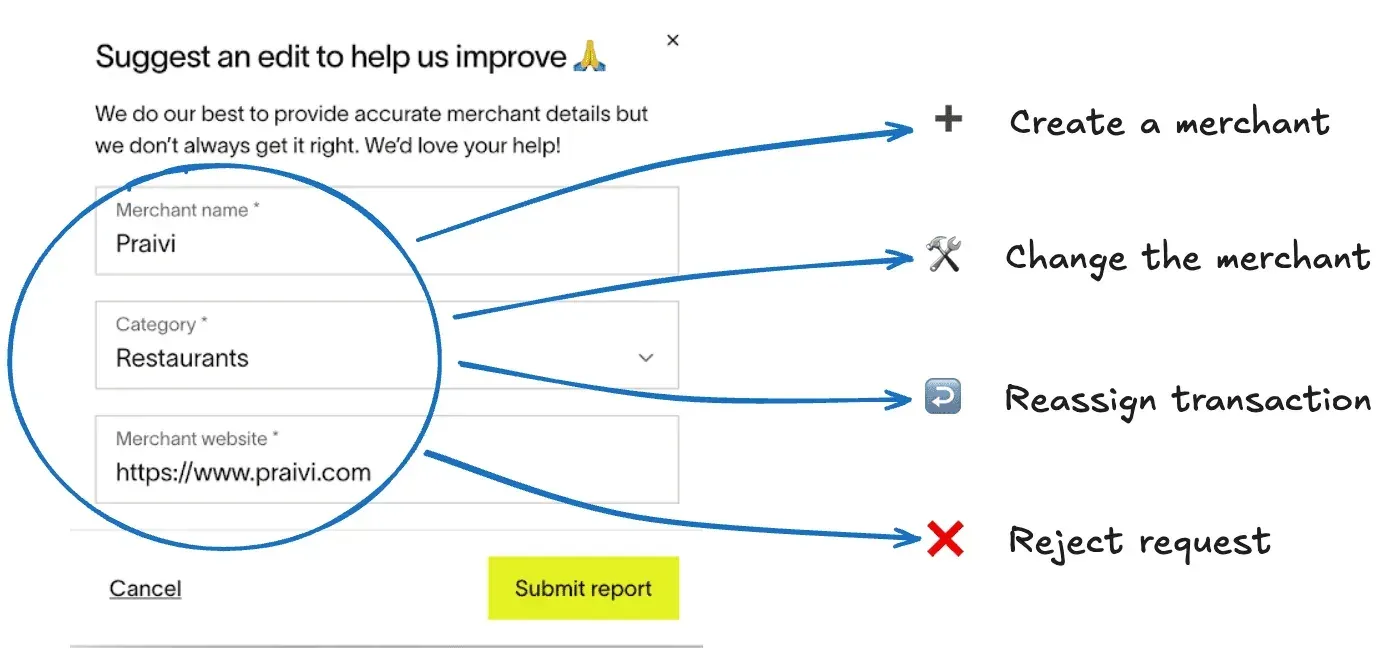
Ramp is a corporate card and expense management company. It's built an AI agent that corrects incorrect merchant labels on card transactions.
The problem
Card payment data often shows cryptic merchant names, so transactions get matched to the wrong merchant or category. For example, a hotel might be classified as entertainment. Fixing each error took hours of work from customer support, finance, and engineering teams.
How the AI agent solves it
When a user reports an incorrect merchant, the agent gathers context from card data, receipt images, and transaction memos. It can create, update, or reassign a merchant, but only through a predefined set of actions. Guardrails also catch hallucinated output.
Results and takeaways
Ramp reports resolving requests in under 10 seconds instead of hours and cutting the cost per request from hundreds of dollars to cents. An LLM judge rated 99% of classifications as improvements, and fewer than 10% of transactions received follow-up correction requests.
Inside the implementation
As explained in a Builders Blog post, Ramp combines an LLM with embeddings and OLAP (Online Analytical Processing) queries. Multimodal RAG (Retrieval-Augmented Generation) lets the agent analyze card data and receipt images. It also sees only the most relevant merchants, keeping prompts focused.
Dropbox Dash
Dropbox Dash is a universal search product whose AI agents answer questions, summarize content, and draft text across company apps.
The problem
Information is scattered across apps and formats. Knowledge workers lose time switching between tools to find documents. This fragmentation also hurts collaboration and can create security risks.
How the AI agent solves it
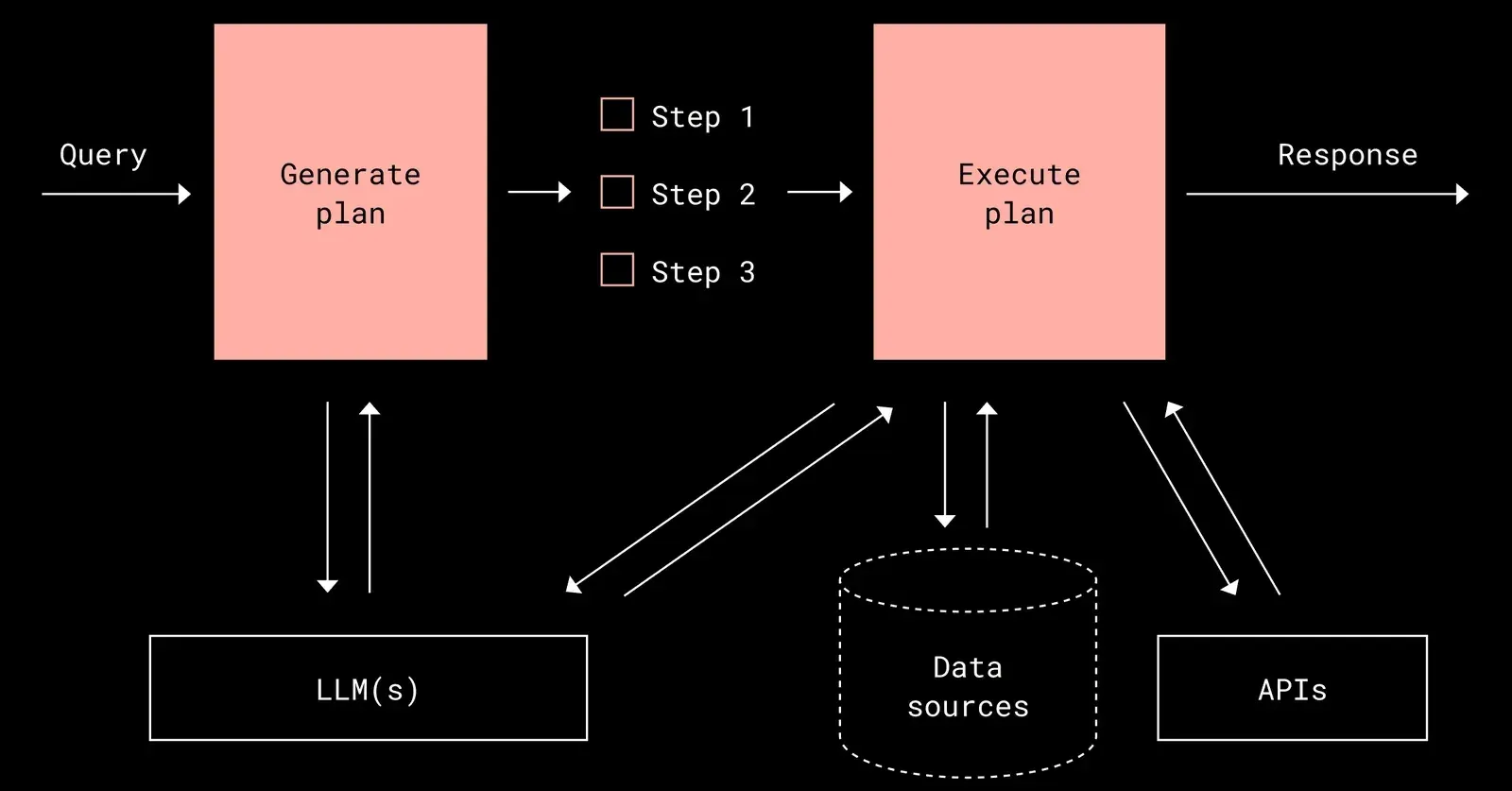
Dash treats each request as a multi-step task. An LLM first writes a short plan in a Python-like language, such as finding a meeting and its attached notes. Dash checks the plan with static analysis before running it. The LLM then fills in any missing functions.
Results and takeaways
According to Dropbox, more than 95% of Dash queries return results in under 2 seconds. Since the plan is written as code, failures point to a specific step. From a business perspective, building Dash delivered a 216% return on investment for Dropbox.
Inside the implementation
As outlined in a Dropbox Tech blog, Dash is based on a minimal Python-like interpreter for agent code, with static analysis and runtime type checks. Its search uses RAG, combining a lexical search index, on-the-fly chunking, and an embedding-based reranker. The system is model agnostic.
O3sigma's AI agents
O3sigma's AI agents for factories analyze equipment data and recommend changes before problems affect production.
The problem
Factories run hundreds or thousands of machines, each with hundreds of parameters that affect efficiency and uptime. Tuning them manually is nearly impossible, and unplanned downtime costs manufacturers money.
How the AI agent solves it
The platform processes data from thousands of machines and provides maintenance suggestions in natural language. It identifies likely root causes and recommends specific adjustments, such as changing a motor's speed, so operators can act before production is affected.
Results and takeaways
In one case, a motor adjustment suggested by an O3sigma AI agent increased a printing machine's speed by 15%, adding tens of thousands of dollars in client revenue. At another manufacturer, changes improved OEE (Overall Equipment Effectiveness) by 30% across four production lines.
Inside the implementation
O3sigma agents run on Snowflake's AI Data Cloud, which centralizes equipment data from Apache Parquet tables and Microsoft Azure Blob Storage through Apache Iceberg. Snowflake Cortex AI powers natural language search, while semantic data provides manufacturing context. Clients connect machines through an open-source MES (Manufacturing Execution System).
Fireblocks Genie
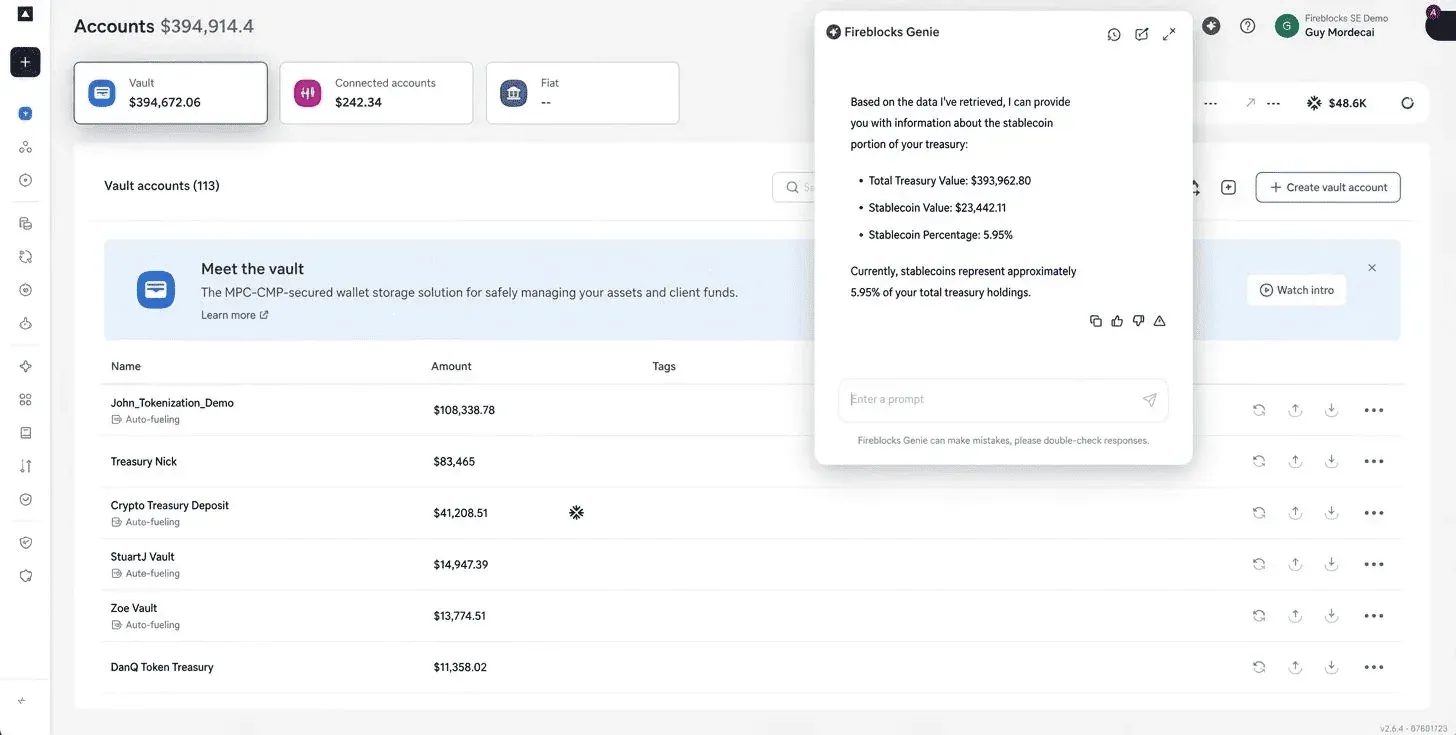
Fireblocks Genie is an AI agent that answers customers' questions about their assets.
The problem
Treasury teams had to search dashboards and spreadsheets for answers about assets. At Fireblocks, basic queries across billions of rows could take up to 20 minutes.
How the AI agent solves it
Users ask questions such as what share of their treasury is held in stablecoins. Genie answers using its own data. For security, it's read-first. It drafts recommended actions but cannot execute transactions without user approval.
Results and takeaways
After six months in production, teams used Genie for policy investigations, help center lookups, and support questions, not just treasury queries. Fireblocks now also offers Genie as an API and an MCP tool, allowing other agents to use it.
Inside the implementation
Genie uses Anthropic's Sonnet model to turn questions into Fireblocks API calls. Then, the built-in MCP client selects the right tools. Meanwhile, Snowflake Cortex hosts conversations and queries over curated data.
Further reading:
- The fintech data problem no API can fully solve (but web scraping can)
- Why web RPA still matters for fintech
Mekorot's AI agents
Mekorot, Israel's national water company, uses AI agents to analyze operational data and reduce water losses.
The problem
Water is scarce, and every drop lost before reaching a customer is wasted. Mekorot needed a way to identify losses across large volumes of operational data.
How the AI agent solves it
AI agents analyze operational data stored in Mekorot's data warehouse to spot water losses. They then turn the data into actionable insights to help reduce leaks.
Results and takeaways
Mekorot keeps its water loss rate below 4%. The company has also published these tools on Google Cloud Marketplace, allowing water authorities in other countries to use the same systems.
Inside the implementation
As mentioned in a Google Cloud blog post, Mekorot agents run on Google Cloud and combine Gemini models with BigQuery for data analysis.
Under Armour's internal agentic platform
Under Armour uses an AI-powered internal help desk to support its employees.
The problem
Onboarding can take several weeks and involve orientations, documentation, and meetings. Employees needed a faster way to learn workflows and find answers.
How the AI agent solves it
The agentic help desk solution gives employees a self-service way to get answers. It works with unstructured content, such as documents, made available through the company's Snowflake platform.
Results and takeaways
In the dedicated Snowflake use case for this project, Under Armour says the help desk is already delivering financial benefits and improving the self-service experience for employees.
Inside the implementation
The agentic help desk runs on Snowflake's data platform, which Under Armour uses as a single source of truth for analytics, AI, and business intelligence. Employees also get conversational AI through Snowflake CoWork.
Further reading:
Notion Agent and Custom Agents
Notion Agent is an AI assistant inside Notion. It completes multi-step tasks across documents, databases, and connected apps.
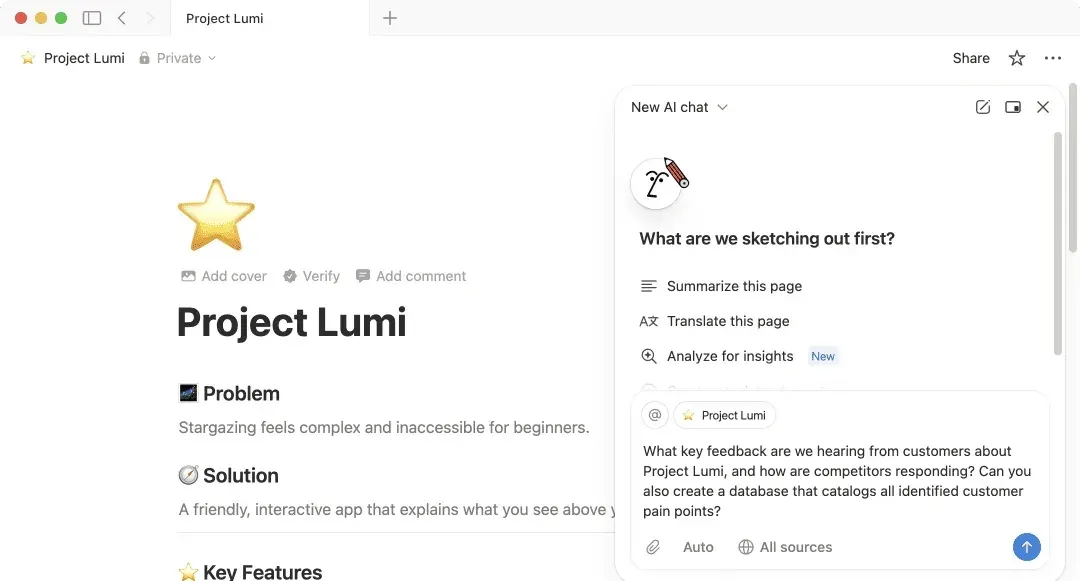
Instead, Notion's Custom Agents take care of autonomous background work. They run on schedules and act only on the pages, databases, and tools they're explicitly granted.
The problem
Much of teamwork is repetitive. The same questions come up again and again. Tasks need routing, and status reports need to be written on a schedule.
How the AI agent solves it
Notion Agent completes multi-step tasks using context from Notion, connected apps, and the web. Custom Agents run on a schedule or trigger, such as a Slack mention or a new email. They can read and write across Notion, Slack, Mail, and Calendar.
Results and takeaways
Brandon Gell, COO of Every, stated on X that the team moved away from managing work in Notion databases and now uses Notion Agents to chat instead.
Thanks to Custom Agents, Heidi's product team saves up to 60 hours a month with an internal Q&A agent. Remote's IT operations team saves 20 hours a week, with triage accuracy above 95% and more than 25% of tickets resolved autonomously. Users created more than 1 million Custom Agents in the first two months of the beta.
More than 50% of Notion's customers adopted AI features before the company included them in its Business and Enterprise plans.
Inside the implementation
Notion agents support multiple AI models, including Fable, Sonnet, GPT, Gemini, and Grok models. You can connect external tools via MCP, and developers can extend agents with custom code through Workers. Every run is logged, and you can reverse changes through version history.
Further reading:
Matillion's Maia
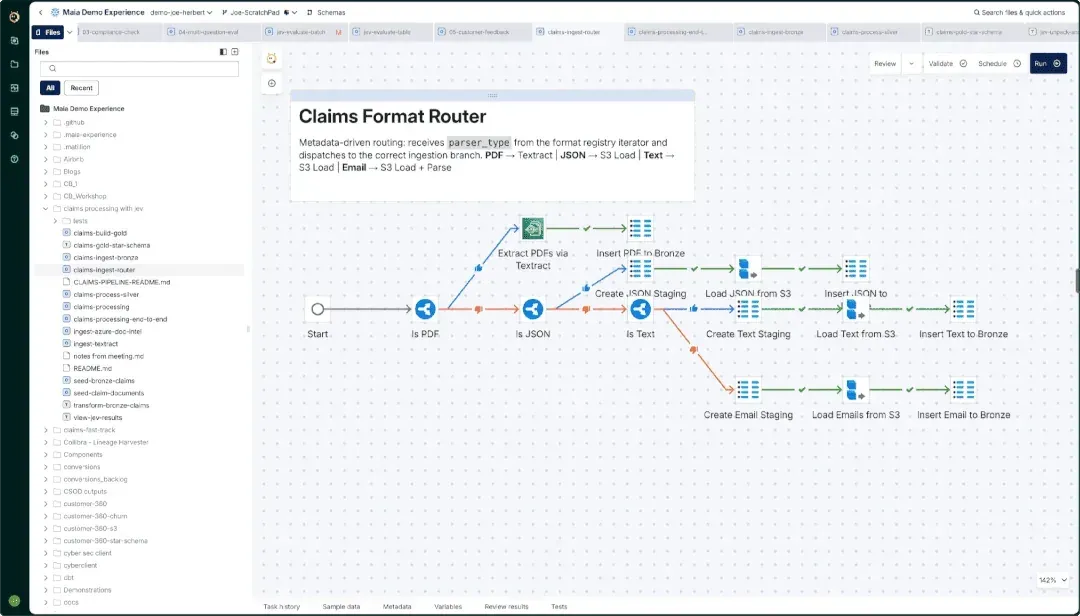
Maia is an agentic AI-powered data engineering platform and autonomous data team created by Matillion. It builds data pipelines from natural language requests.
The problem
Data engineering is time-consuming and repetitive. Engineers face growing backlogs, especially during large projects such as an Azure migration, and every delay pushes back the insights businesses need.
How the AI agent solves it
Users describe what they need in plain language. Maia then designs, builds, optimizes, and maintains pipelines across ingestion, transformation, orchestration, testing, and deployment. It also flags anomalies and errors.
Results and takeaways
Snowflake's case study on Matillion's Maia reports about 40% lower infrastructure costs and a 50% reduction in analyst workload. Matillion says Maia can cut manual engineering effort by up to 90%. In one anonymized project, a global pharmaceutical organization reduced refactoring work from weeks to under an hour.
Inside the implementation
Maia relies on context files: Markdown documents that describe schemas, naming conventions, and business definitions. Its Context Engine maps entities and metadata into a knowledge graph that agents use to make decisions.
Maia runs on Snowflake's AI Data Cloud, with Cortex AI features such as Cortex Search. It also supports the MCP and A2A standards.
Other high-level examples of AI agents
Here are four more AI agent examples:
- Hostinger Agent: Identifies customer intent across channels, pulls answers from help center articles, guides troubleshooting, and escalates complex issues to engineers.
- Delivery Hero: Extracts product attributes, generates standard titles, and sends low-confidence outputs to human review.
- Airtable Field Agents: AI-powered fields that gather insights and create content within Airtable bases, with users able to give feedback.
- Netguru's Omega: A multi-agent sales assistant in which one agent plans, another executes, and a critic reviews, preparing call agendas and summarizing conversations.
For a broader look at where AI agents fit, read our guide on the best 11 AI agent use cases.
Equip your AI agents with Apify
AI agents need tools to complete tasks, and Apify offers thousands of ready-to-run tools for AI. Apify Actors are cloud tools that perform specific tasks, such as collecting web data, generating leads, and monitoring social media.
Apify Store organizes Actors into categories, including:
| Category | Description |
|---|---|
| Agents | Autonomous agents that use LLMs, other Actors, and external systems to achieve specific goals. |
| Automation | RPA for browser-based workflows, including data import and export. |
| Integrations | Tools for moving data between the Apify platform and third-party systems. |
| SEO tools | Website audits, search engine results page data, keyword research, broken-link checks, and image checks. |
| Social media | Data extraction from profiles, posts, comments, reviews, and engagement metrics, including data beyond official APIs. |
| E-commerce | Product data for competitive research, dynamic pricing, analytics, and dropshipping. |
You can connect AI agents to Actors in several ways:
- MCP: The Apify MCP server lets any MCP client discover and use Actors as tools.
- Code: Use the official LangChain, OpenAI Agents SDK, or other AI library integrations to call Actors from code.
- Agent-building platforms: Add Actors to agentic workflows in Gumloop and Dify.
- Automation platforms: Run Actors as steps in no-code workflows with n8n, Make, and Zapier.
For example, a support team could build an alternative to Intercom's Fin Voice. The agent could use Website Content Crawler to collect information from the company's help center and documentation. PDF Text Extractor could also extract instructions from employee PDF handbooks.
The agent could then use that context to answer customer questions in the intended way. If a question requires human attention, it can hand the conversation to a support specialist. Apify can help you build similar solutions for other AI agent examples.
Conclusion
Businesses across industries rely on AI agents to automate a wide range of workflows, from customer support and fraud detection to data analysis and predictive maintenance.
Companies such as Intercom, Stripe, Abridge, Uber, Ramp, Dropbox, O3sigma, Fireblocks, Mekorot, Under Armour, Notion, and Matillion show how agentic AI can solve specific business problems.
To build similar examples of agentic AI solutions, use Apify’s tools for agents. You can connect them to AI agents through the MCP, frameworks like LangChain, or agent-building platforms such as Dify and Gumloop.

FAQ
What are real examples of AI agents?
Real-world AI agent examples include Stripe Radar for fraud detection, O3sigma for analyzing equipment data in manufacturing, and Uber's Finch for internal finance support. Other agentic AI examples include Under Armour's AI-powered internal help desk and Maia, Matillion's AI data engineering platform.
What are the 7 types of AI agents?
| Type of AI agent | How it works |
|---|---|
| Simple reflex | Uses if-then rules to react to current inputs without remembering past events. |
| Model-based reflex | Maintains an internal state to track information that isn't currently observable. |
| Goal-based | Plans a sequence of actions to achieve a specific goal. |
| Utility-based | Evaluates possible outcomes using a utility function to balance competing priorities. |
| Learning | Improves its performance over time through experience and feedback. |
| Hierarchical | Breaks complex tasks into subtasks and delegates them to specialized agents. |
| Multi-agent systems | Uses multiple agents that collaborate or compete to solve complex problems. |
Is ChatGPT an example of an AI agent?
ChatGPT started as a conversational AI chatbot. Today, it also has agentic capabilities. So, it qualifies as an AI agent example. It can use tools to plan and complete multi-step tasks, such as searching the web, analyzing files, and interacting with connected apps.
What is the difference between AI agent examples and AI agent use cases?
AI agent examples are real-world agents built or adopted by companies, such as Fireblocks Genie or Uber's Finch. AI agent use cases describe broader applications of the technology, such as fraud detection, customer support, or data analysis.
How does Apify help you build AI agents?
Apify helps you build AI agents with thousands of ready-to-use Actors for tasks such as web data extraction, automation, and more. Connect Actors to your agent through the Apify MCP server, code integrations, or in n8n, Make, and Zapier.