
Official APIs are restrictive, rate-limited, and rarely cover the data points you actually need. And manually copying data from social platforms doesn't scale. Each of these 10 tools scrapes public data from a different platform or use case, no API keys required.
Here's what they do and when to use them.
1) Instagram Scraper
Instagram is a treasure trove of user-generated content and engagement. Instagram Scraper allows you to gather information about posts, profiles, places, hashtags, photos, and comments. Integrating this data into content platforms enables advanced audience segmentation, competitor analysis, or campaign optimization.
Using Instagram Scraper is easy to use. All you have to do is fill in the input schema. It looks like this:
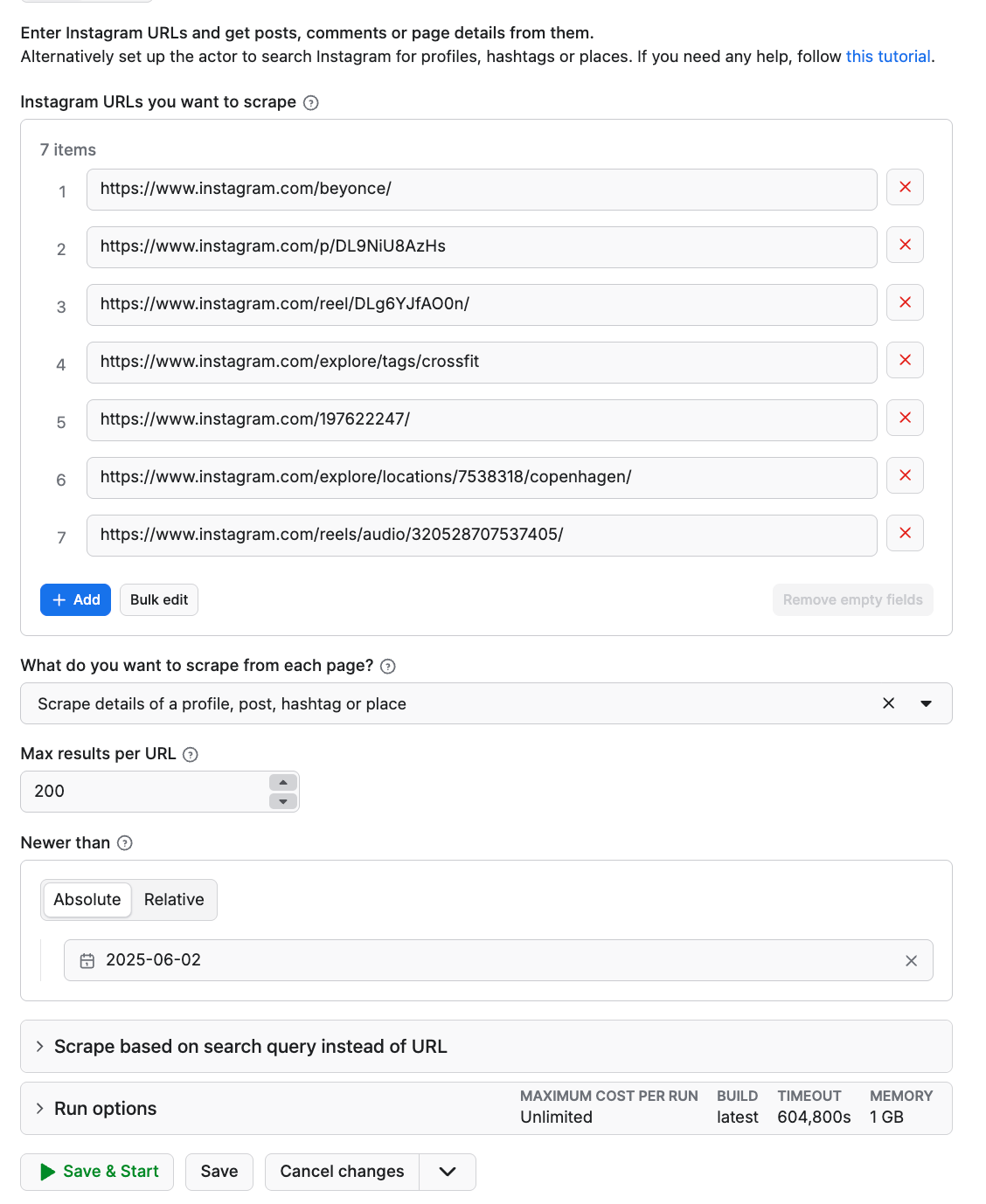
Once you hit the Start button, you’ll get a table with results in a few minutes. You can download in Excel, JSON, CSV, and proceed with your analysis. You can also plug the data directly into your LLM workflows.
📷 Follow along with our guide on how to scrape Instagram →
Is web scraping Instagram legal?
This Instagram Scraper does not scrape any private data, only that which is publicly available on the web. In other words, running this scraper is totally legal, as long as you use it ethically.
Why do people scrape Instagram?
Marketers use it to track competitor campaigns and measure engagement trends. Agencies vet influencers by checking real follower counts and engagement rates. Researchers pull comment data for sentiment analysis, and sales teams use it for lead generation.
If you need something more specific, check out the full collection of Instagram scrapers in Apify Store.
2) TikTok Data Extractor
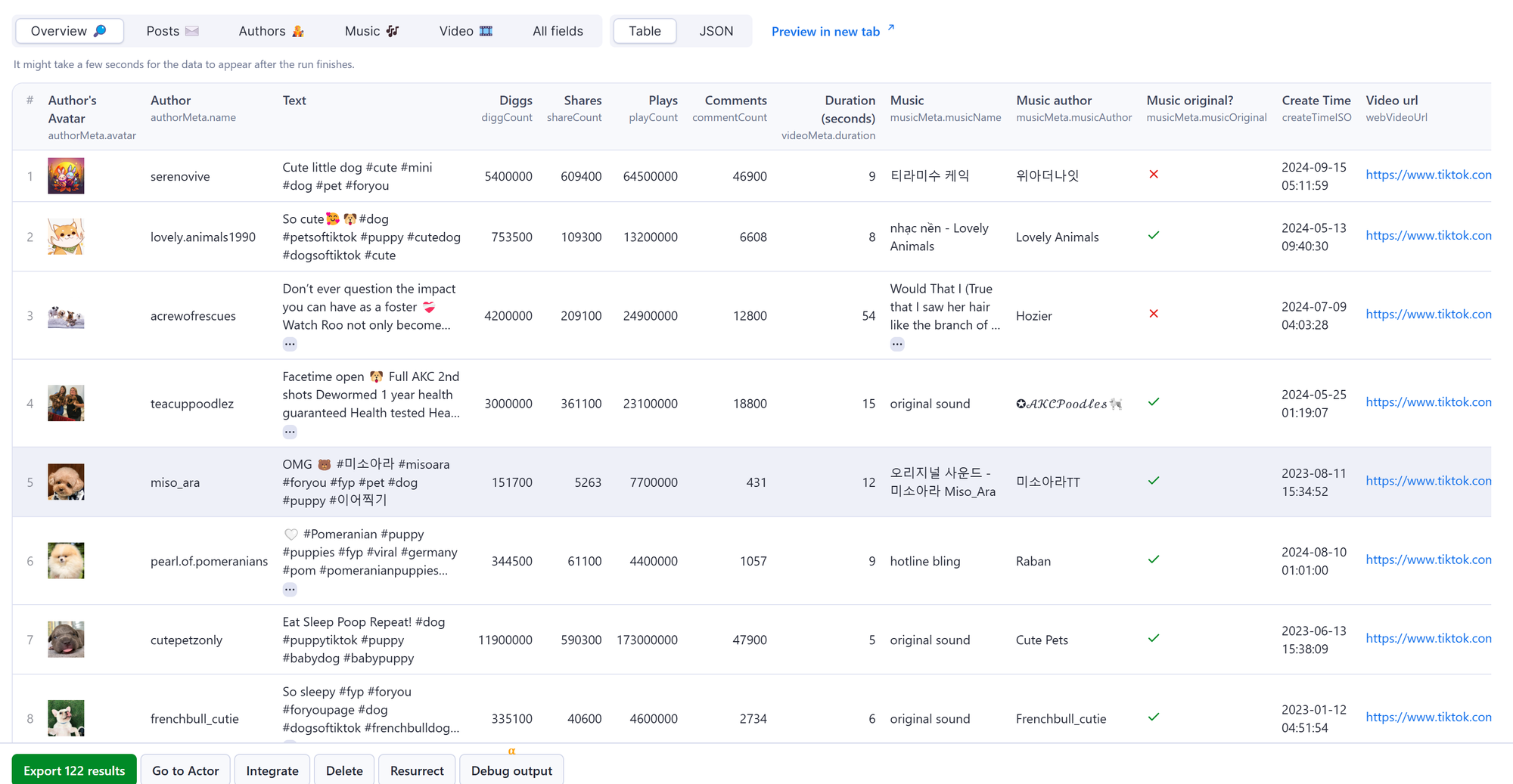
TikTok's rapid rise in popularity makes it an essential platform for every TikTok advertising agency or social media expert to look into the needs and wants of a younger audience. TikTok Data Extractor enables you to collect data on trending hashtags, videos, user profiles, and engagement metrics such as number of comments, shares, followers and total likes.
You can get your data with just a hashtag, search query, or URL. The results will be displayed in a simple table. Just like this:
🎵 Follow along with our simple guide on how to scrape TikTok →
Does TikTok allow web scraping?
Scraping any data that you can find on the web yourself is legal. However, TikTok provides its APIs only for selected researchers, so you might want to look for other tools, such as the above-mentioned TikTok Data Extractor or other scrapers from the TikTok family.
3) Facebook Comments Scraper
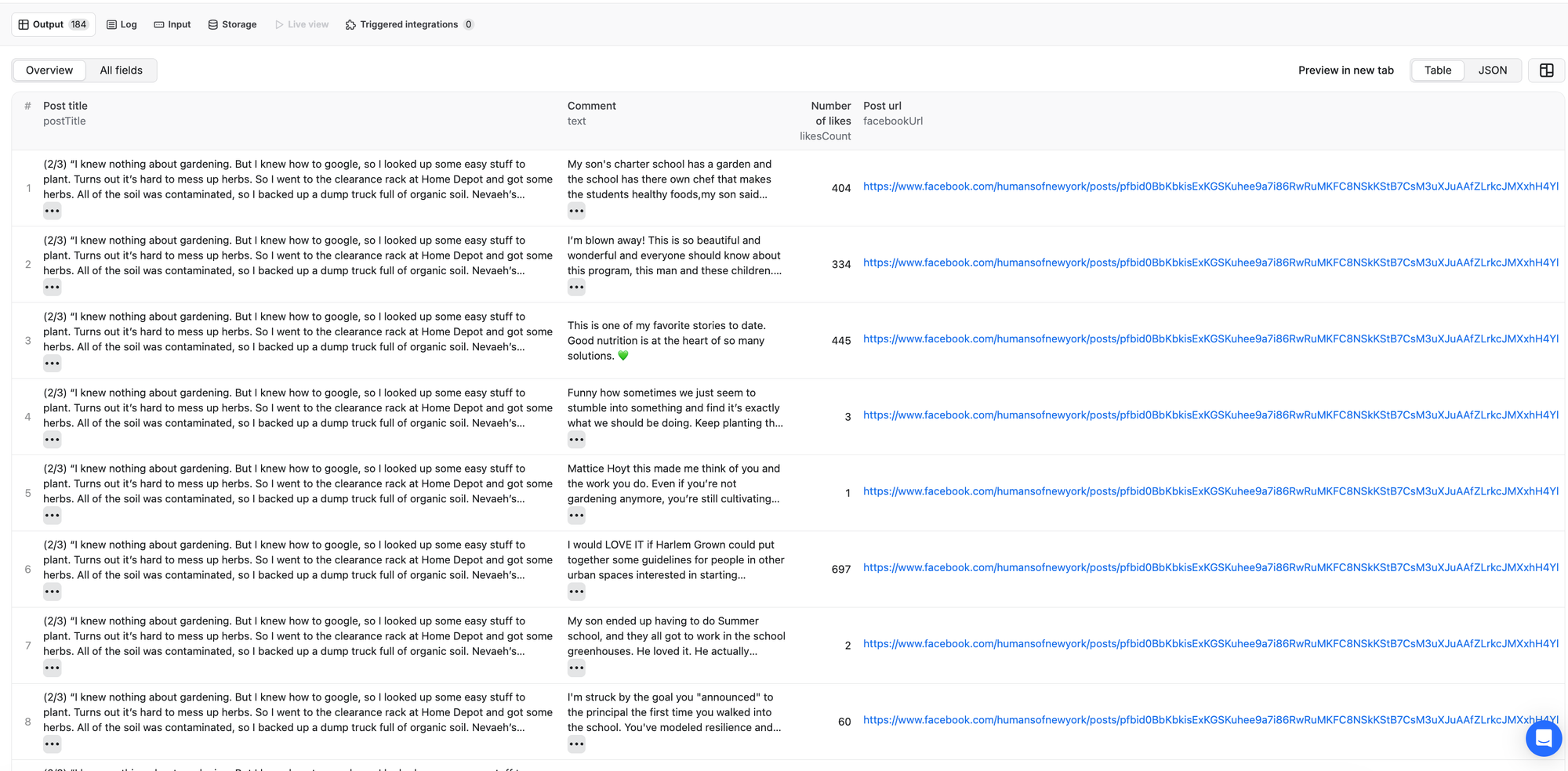
Facebook Comments Scraper lets you extract comments from public Facebook posts, long-form videos, photos, and reels. Just paste a post URL and start scraping thousands of comments along with replies, likes, timestamps, and basic public profile info of commenters.
Unlike the official Facebook API, it has no request limits, works with posts of all types, and lets you export data in JSON, CSV, Excel, or HTML. You can also use it through API endpoints in Python & Node.js, webhooks, or integrate it with apps and AI workflows, making it a simple, powerful way to get structured Facebook comments data fast - even if you've never scraped before.
This tool is useful for crisis management and content moderation too. You can monitor comments during a PR incident to gauge public sentiment in real time, spot issues before they escalate, and flag spam or inappropriate content for removal.
📘Follow along with our simple guide on how to scrape Facebook →
What is the best Facebook scraping tool?
The best Facebook scraping tool depends entirely on your project and the data you need to get. Apart from Facebook Comments Scraper, there are multiple tools designed specifically for niche use cases such as extracting data about Facebook events or marketplaces.
Take a look at this list to explore them all:
Beyond these top picks, Apify offers a comprehensive collection of Facebook scrapers designed for different use cases—from extracting comments and reviews to monitoring page activity and tracking ad performance.
Want to go deeper into Facebook scraping? Check out our complete guide to the best Facebook scrapers or learn how to scrape Facebook with Python. You can also use Facebook data for sentiment analysis to understand audience reactions and brand perception.
Is Facebook scraper legal?
As long as you crawl Facebook data that is not hidden under a login, scraping social media is perfectly legal. You can read more about the legality of web scraping in this article and find out about recent web scraping legal law suits.
4) YouTube Scraper
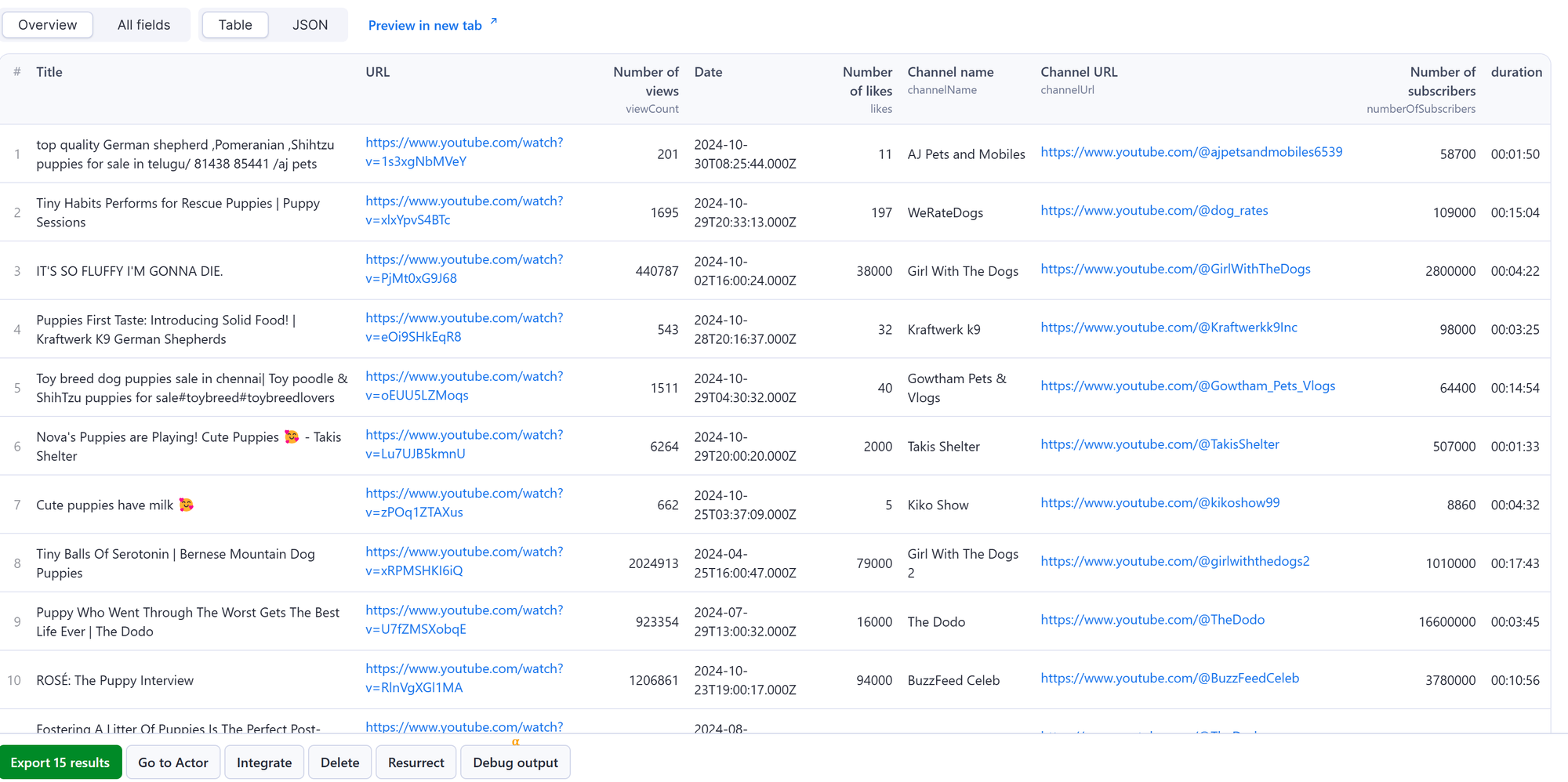
YouTube remains a thriving entertainment platform and a large search engine. YouTube Scraper enables you to gather data on video views, likes, subscribers, and channel performance.
See what data you get with YouTube Scraper just by entering the query puppies.
How to extract YouTube data?
Extracting YouTube data is straightforward. All you need to do is choose an Actor in Apify Store that best suits your needs.
| 🎥 YouTube Scraper | 💬 YouTube Comment Scraper |
| 🔍 YouTube Search Scraper | 📺 YouTube Channel Scraper |
| 📊 YouTube Statistics | 🎬 YouTube Shorts Scraper |
Read our step-by-step guide on how to scrape YouTube for more information.
Is it legal to scrape YouTube comments?
As YouTube comments are publicly available on the internet, you can scrape them without worrying about the legality of doing so.
Moreover, scraping information from comments can significantly help with your market research. Comments can reflect emerging trends and topics within your industry or niche. By scraping comments from relevant videos, you can stay updated on what's currently popular, helping you customize your content and marketing strategies accordingly.
5) Social Media Hashtag Research
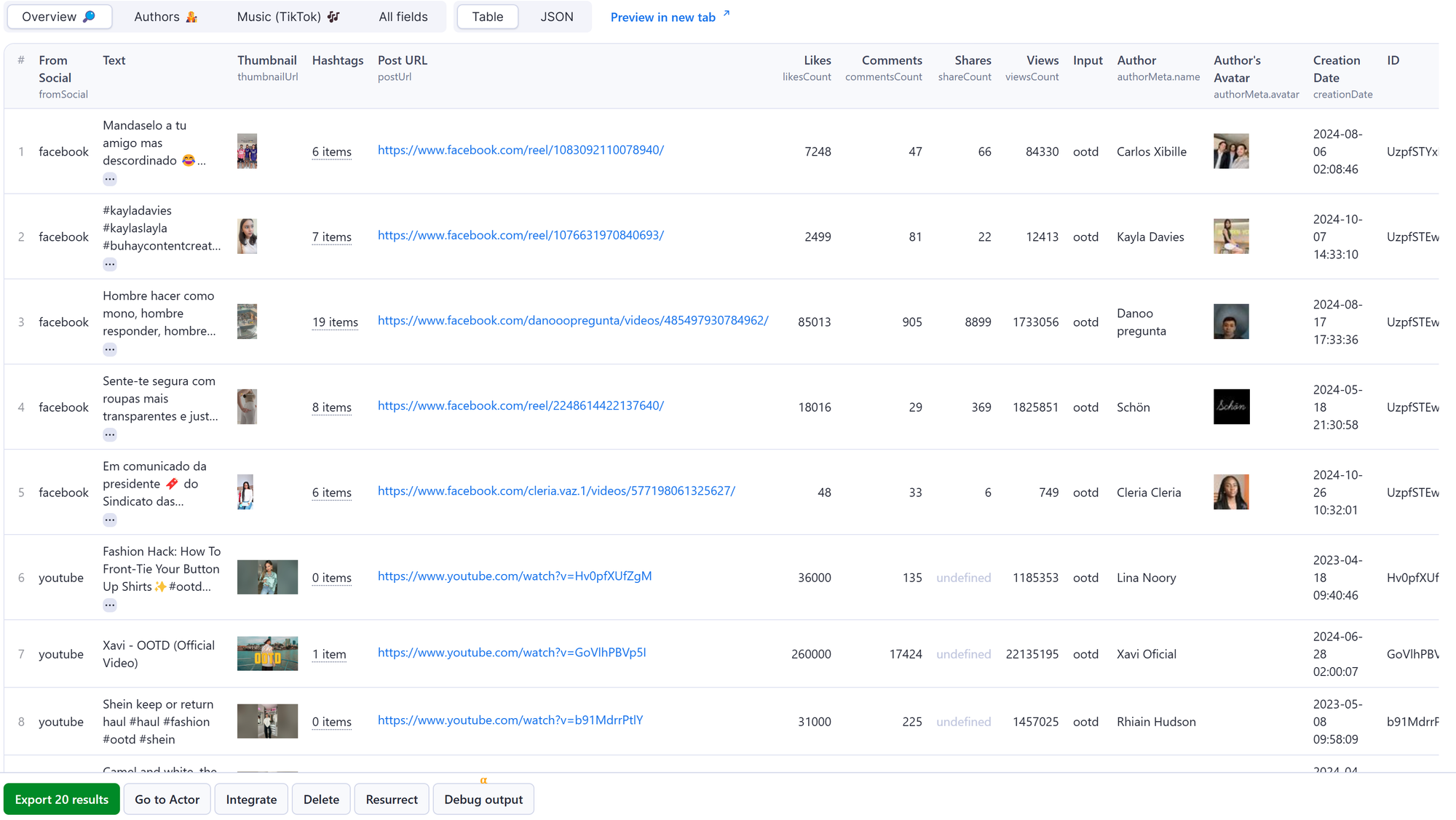
Are you looking for a tool that can scrape all social media sites at once? Look no further! Social Media Hashtag Research gets you information about posts with the same hashtag from TikTok, Instagram, Facebook, and YouTube.
You’ll get not only basic profile info but also posts’ URLs, captions, timestamps, likes, dislikes, views, and comments count.
Let’s say you are about to do research on trending topics with the hashtag #OOTD. Simply fill in the input form with “OOTD” and run the scraper. Here are the results:
6) Leads Analyzer
Are you in the lead gen industry and still looking for a high-quality lead extraction tool that can enrich your lead information?
Social Media Leads Analyzer gets you data from leads' social media accounts—Instagram, LinkedIn, Facebook, TikTok, YouTube, Twitter, Pinterest, and even Discord.
All you need to know beforehand is the leads’ website URL.
How it works?
- Simply prepare the list of your leads’ URLs and put them into the Social Media Leads Analyzer input field. First, you’ll need to create an account on Apify. With our free plan, you can get up to 250 results.
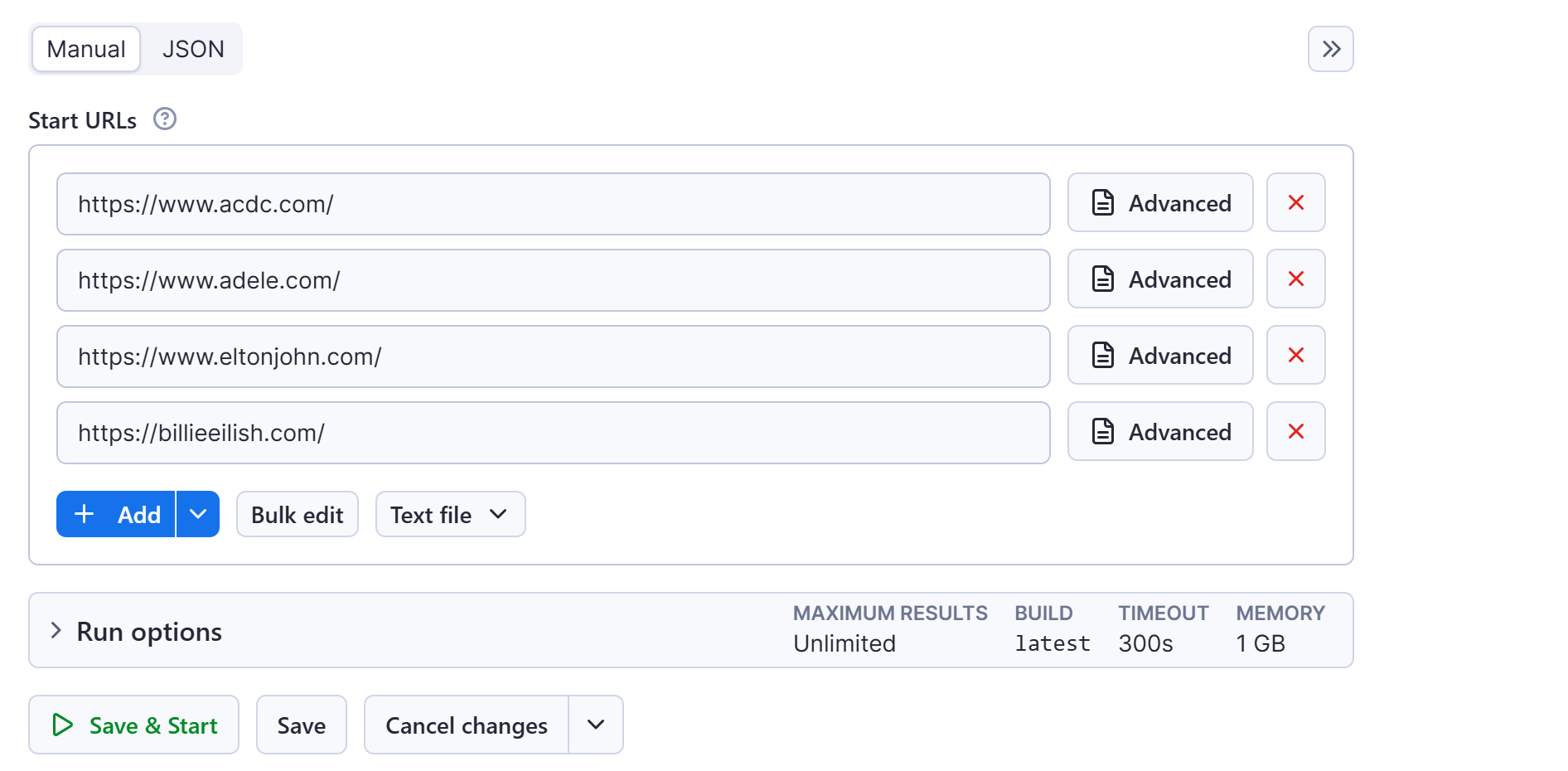
- Fill in the URLs of your leads. As an example, let’s scrape the contact details of some pop music icons. This is the input:
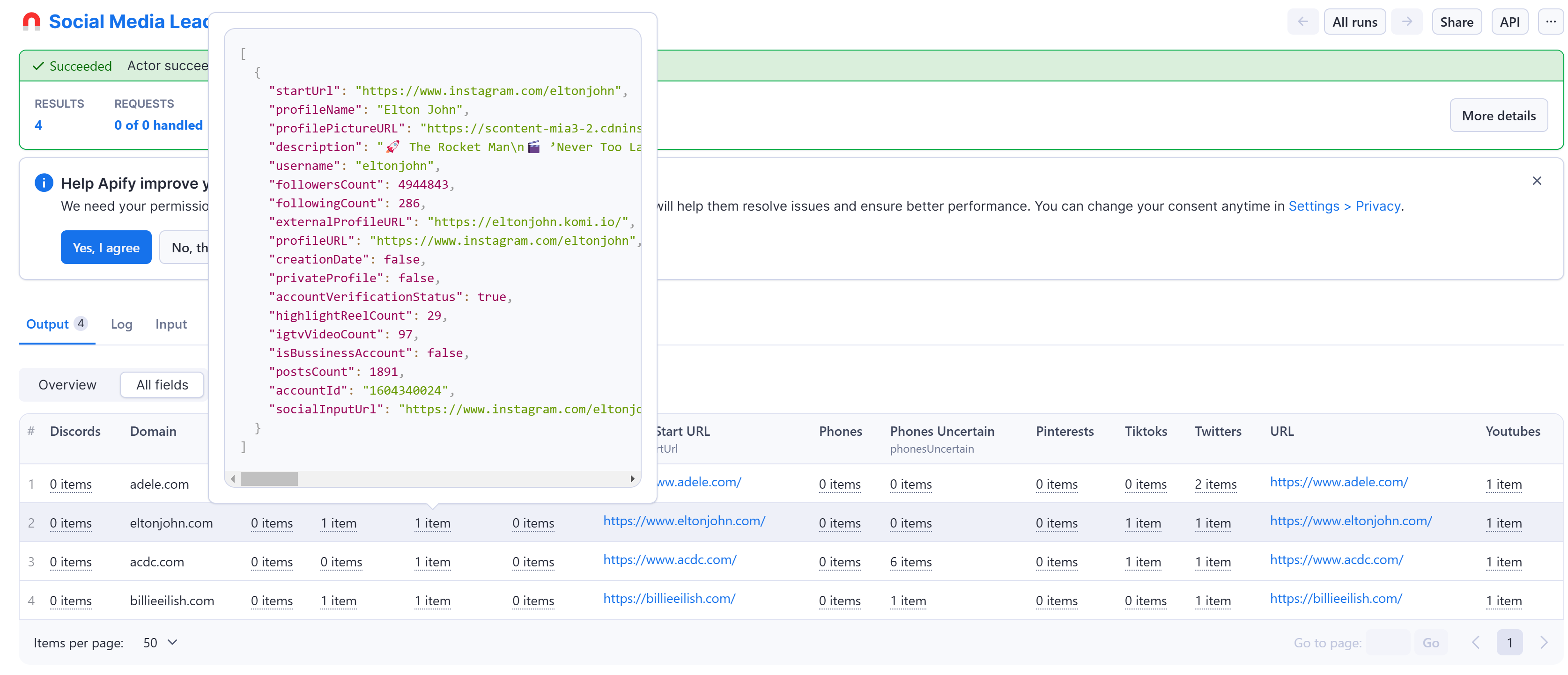
- This will get you data from all social media. Not only the profile name, but also the number of followers, views, posts, and much more. You can even verify the email and phone number if it appears on the website.
7) Social Media Sentiment Analysis Tool
Are you stuck with your sentiment analysis? Then this is the tool for you. It combines scraping comments from social media - Facebook, Instagram, and TikTok - and analyzing them. You’ll get information about each comment, whether it’s negative, positive, or neutral. What more do you need?
With Apify, you can analyze 2,000 comments for free. All you need to do is sign up, navigate to Social Media Sentiment Analysis Tool, and type in the social profile name.
Let’s assume that I want to know how Arnold Schwarzenegger is doing on social media. I just put his name in the input field and hit the Start button. In less than a few minutes, I get this information about the newest comments on his profiles across social media.
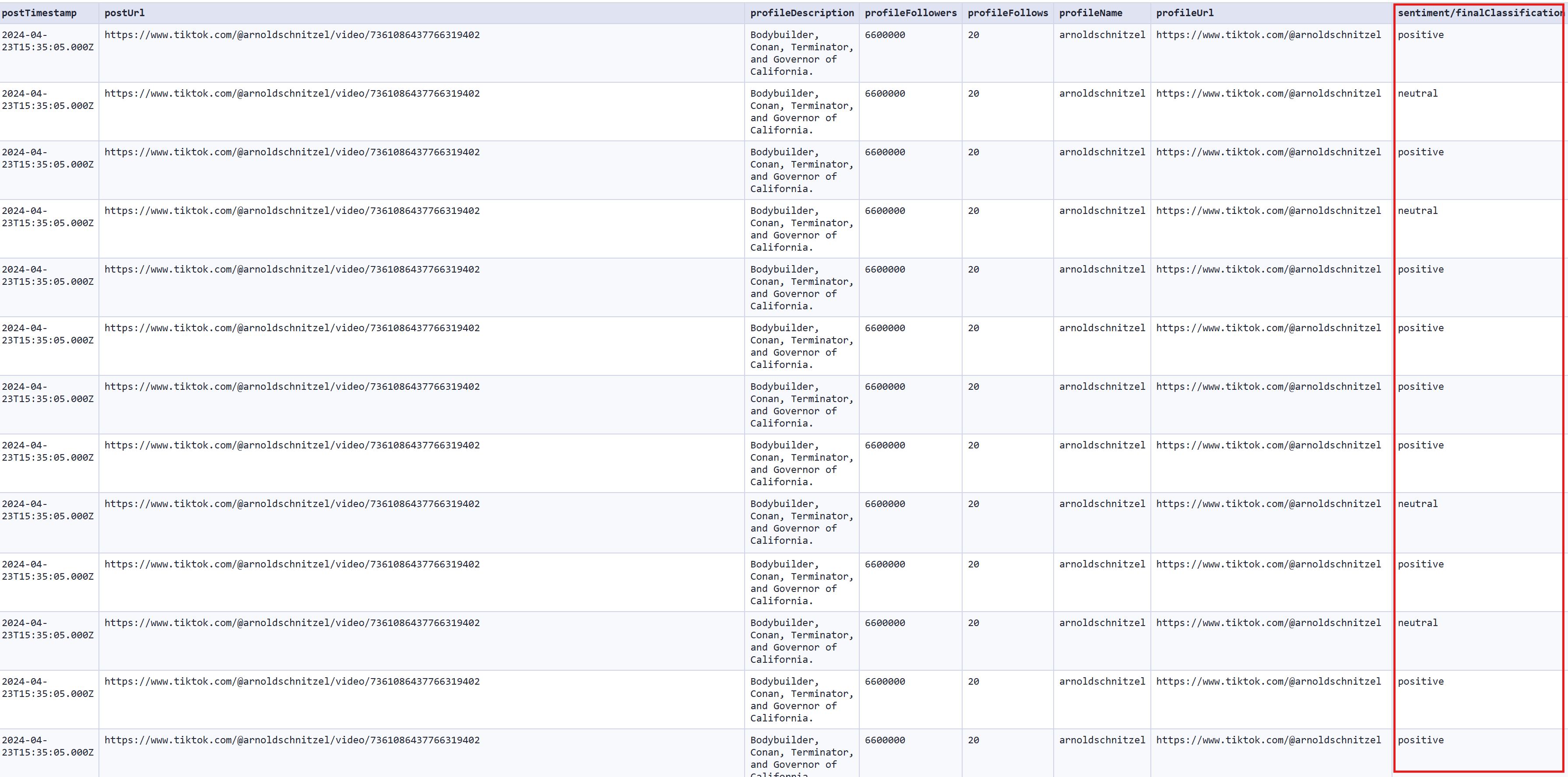
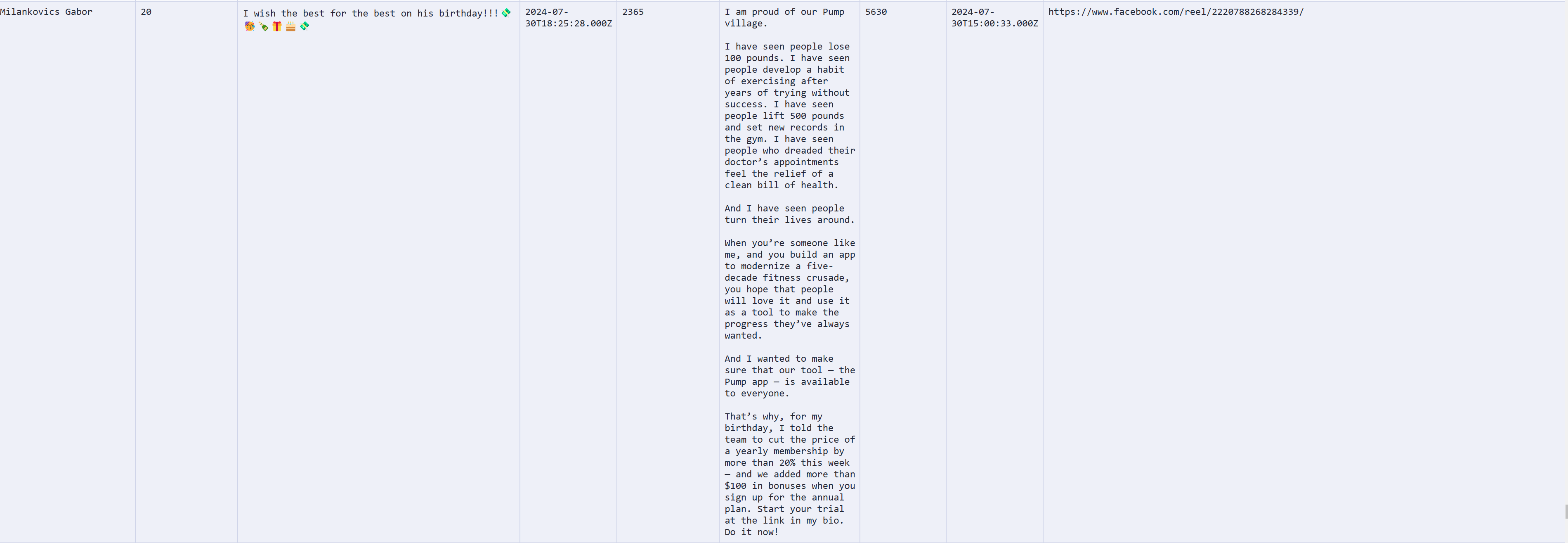
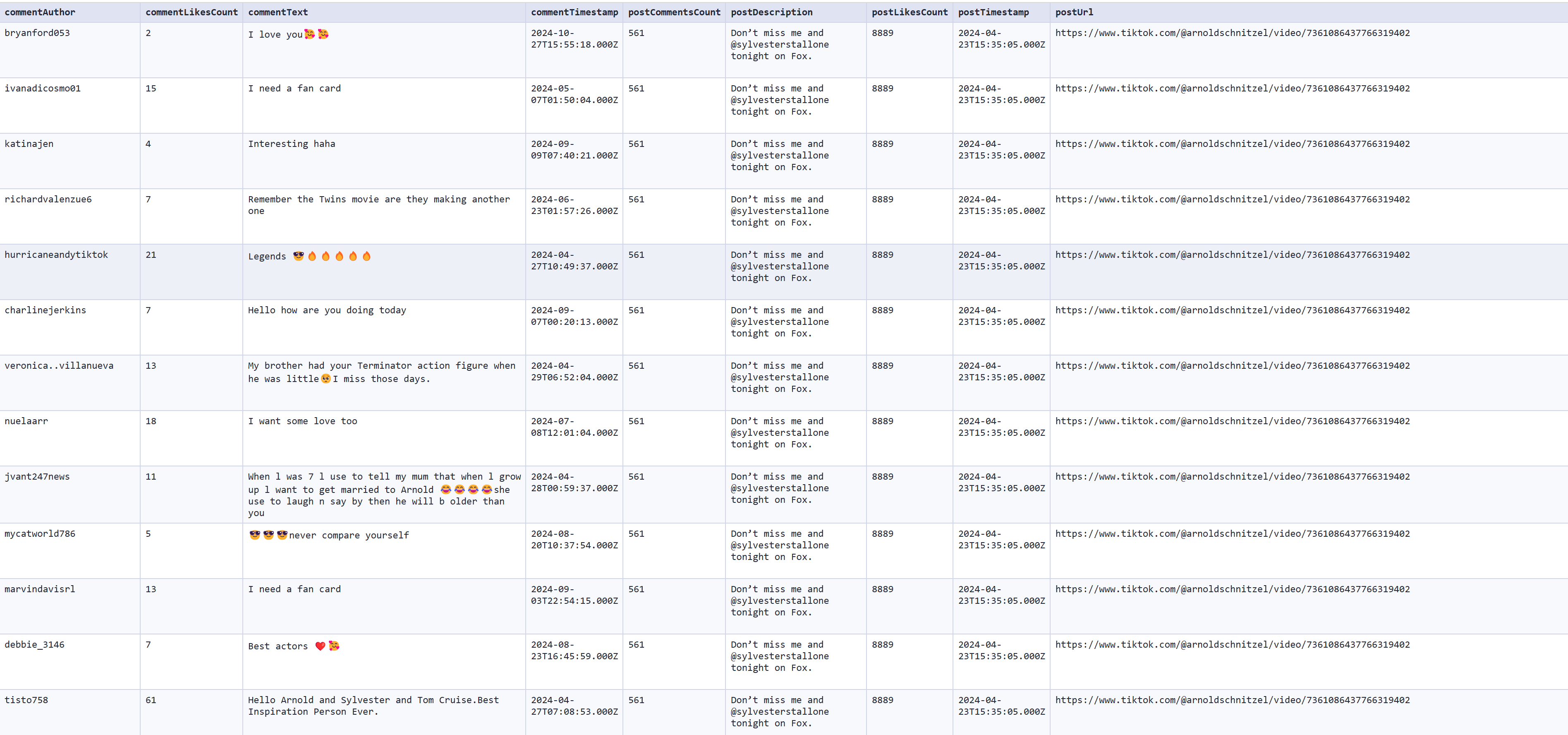
The results include not only the comments but also the analysis - whether they're positive, negative, or neutral
8) Social Media Finder
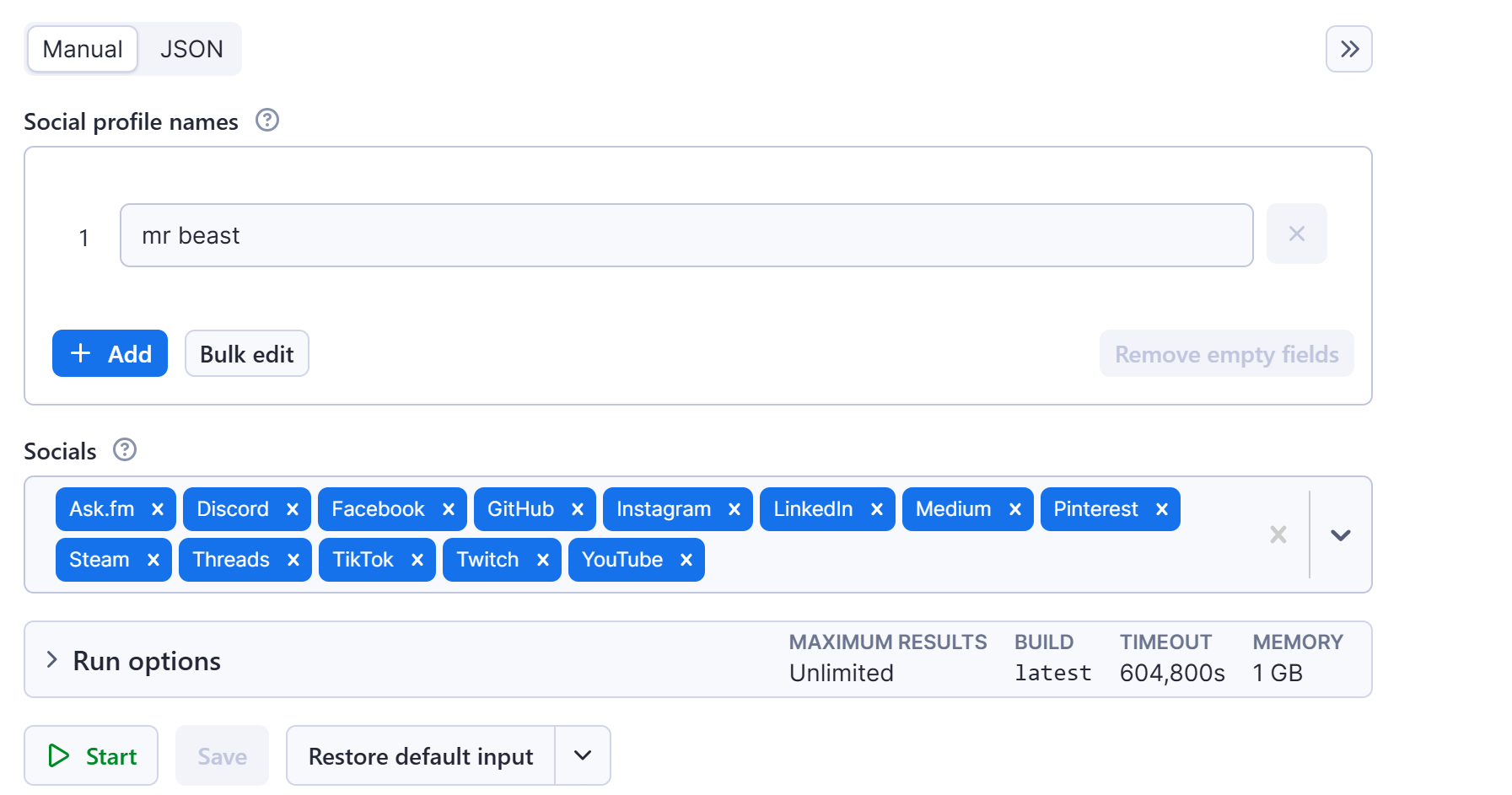
Next, let me introduce you to Social Media Finder. If you don’t want to spend time searching for someone’s social media profiles anymore, this tool will do it. Just by typing in the probable profile name, you’ll get direct links and information about this person’s profiles on:
- ▶️ YouTube
- 🎵 TikTok
- 🐙 GitHub
- ✍️ Medium
- 🎮 Steam
- 🧵 Threads
- 🎥 Twitch
- 🗣️ AskFM
- 🔗 Discord (invite links)
9) Facebook (Meta) Ads Scraper
Meta platform remains essential for advertisers and marketers looking to reach targeted audiences. Facebook (Meta) Ads Scraper enables you to gather data from the Meta Ad Library across Facebook, Instagram, WhatsApp, Threads, Messenger, and Audience Network, going beyond the limitations of official APIs.
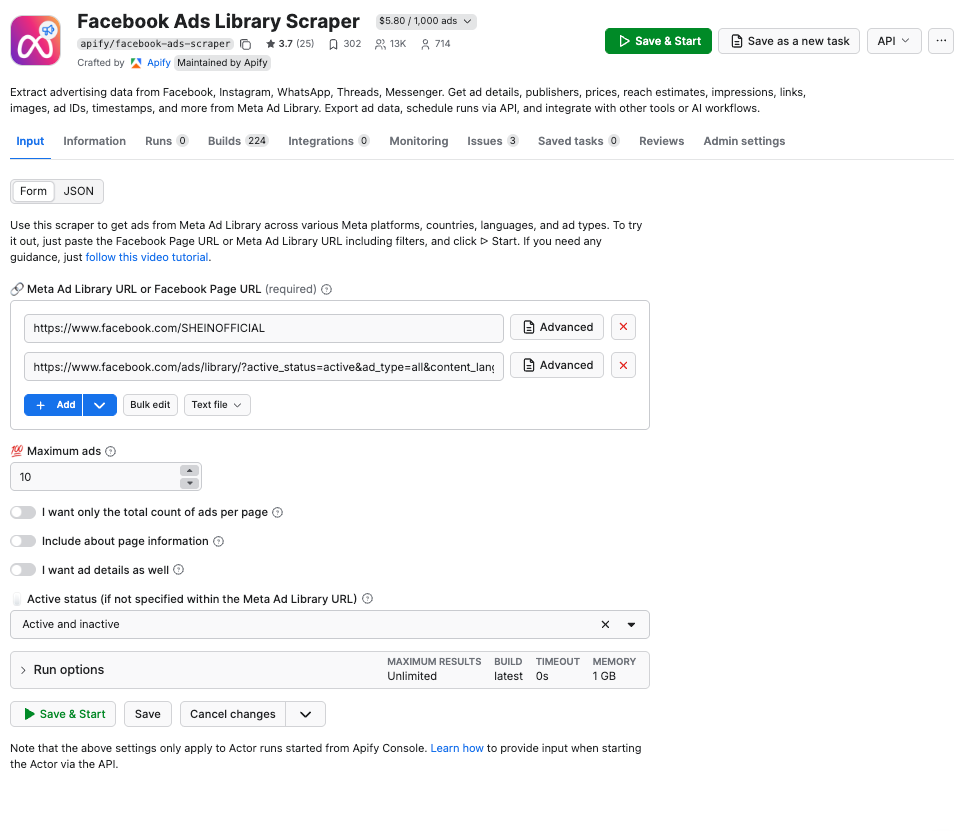
See what data you get with Facebook (Meta) Ads Scraper just by entering a Facebook Page URL or Meta Ad Library URL. You can scrape ad creatives, copy, CTA links, impressions, spend, audience insights, and more. Filter ads by brand, keyword, country, language, media type, ad status, and format to track campaigns, analyze competitors, and optimize your own strategy.
How to extract Facebook Ads data?
Extracting data is simple. Add one or multiple Facebook Page or Meta Ad Library URLs, optionally prefilter by platform, language, country, or ad type, and click "Start." You can download the results in JSON, CSV, Excel, XML, or HTML, or access the data programmatically via SDKs (Python & Node.js), API endpoints, and webhooks.
For a detailed walkthrough, check out our step-by-step tutorial on scraping Facebook Ads data.
Is it legal to scrape Facebook Ads?
As the ads in Meta Ad Library are publicly available, scraping them is legal. Collecting ad data can help with competitor monitoring, content strategy, benchmarking, performance analysis, and regulatory reporting, giving you actionable insights into advertising trends across Meta platforms.
10) Instagram Reels Scraper
Instagram remains one of the fastest-growing platforms for short-form video content. Instagram Reel Scraper enables you to extract detailed data from public Instagram reels, going beyond the limitations of the official API.
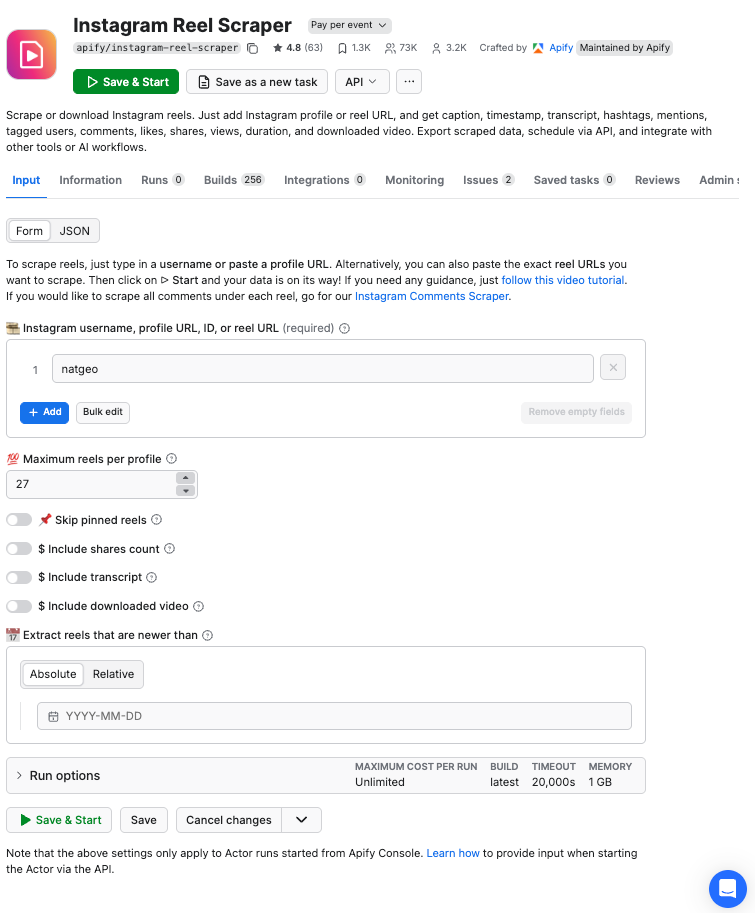
See what data you get with Instagram Reel Scraper just by entering an Instagram profile or reel URL. You can gather metrics like likes, comments, shares, views, plays, timestamps, captions, transcripts, hashtags, mentions, tagged users, music info, and even download videos for offline use. This makes it easy to track trends, analyze content, and monitor influencer or competitor activity.
How to extract Instagram Reels data?
Extracting reels data is simple. Add one or multiple Instagram usernames, profile URLs, profile IDs, or specific reel URLs, and click "Save & Start." You can export your data in JSON, CSV, Excel, or XML, or access it programmatically via SDKs (Python & Node.js), API endpoints, and webhooks.
For a complete walkthrough, see our step-by-step tutorial on scraping Instagram Reels.
Is it legal to scrape Instagram Reels?
As Instagram Reels are publicly available, scraping them is legal. Collecting this data helps with influencer research, campaign tracking, competition monitoring, content auditing, and trend analysis, giving you actionable insights to improve your short-form video strategy.
Meet other social media scrapers
If you thought 10 scrapers were a lot, you might want to explore our offer for every social media web scraping case.
In Apify Store, you can find a tool to scrape X, Reddit, Rednote, Telegram, Snapchat, Twitch, Pinterest, Quora, OnlyFans, Threads, WhatsApp, Mastodon, and even LinkedIn.
Heck, we might even get a scraper for your favorite platform someday. Is anything lacking on that list? Let us know on the Ideas page.
Automate social media scraping with AI agents
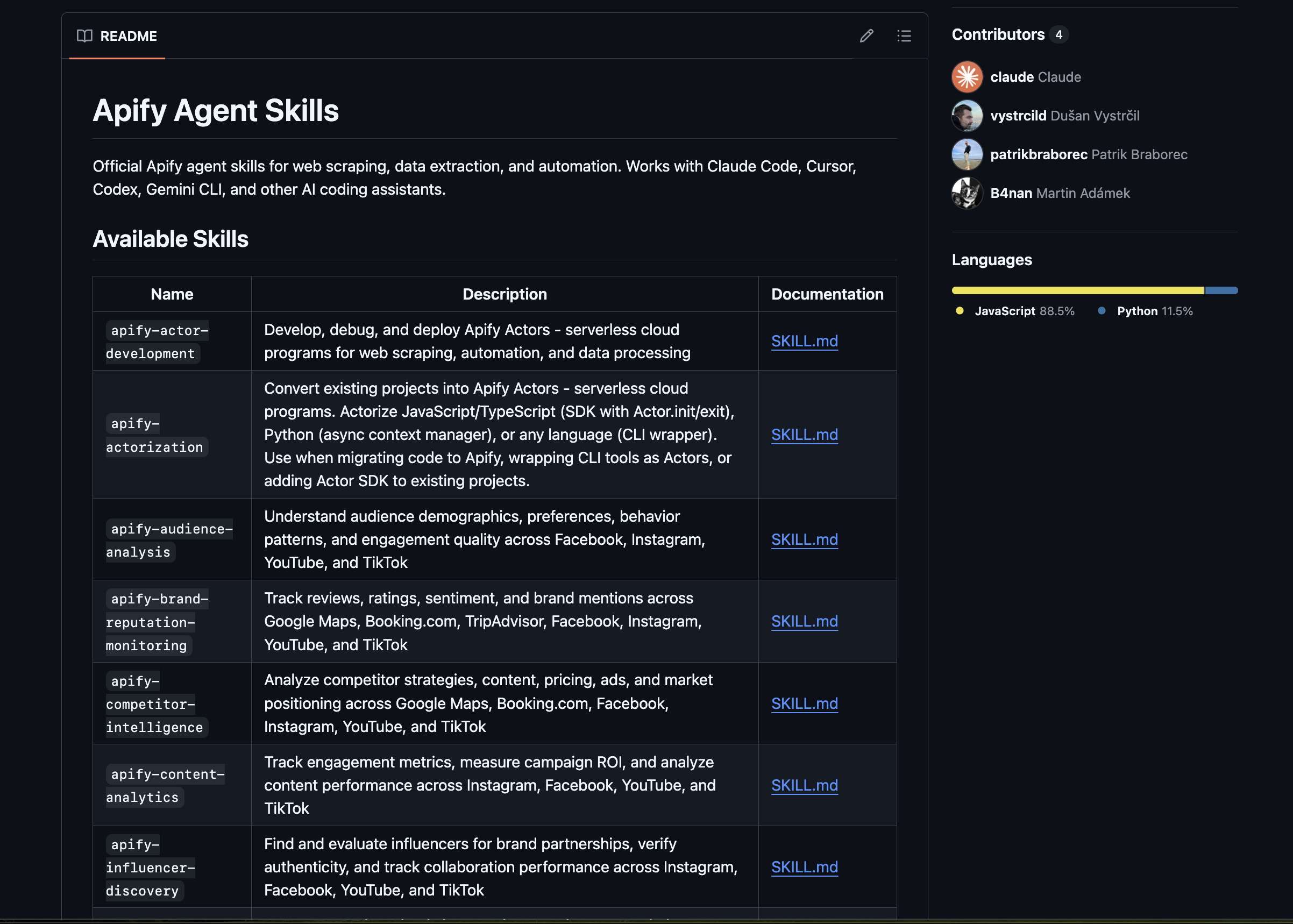
Beyond running scrapers manually, you can integrate Apify's social media scrapers directly into AI coding assistants like Claude Code and Cursor through Apify Agent Skills.
These skills enable AI agents to autonomously extract data from Facebook, Instagram, YouTube, TikTok, and other platforms as part of larger automation workflows—whether you're analyzing competitor content, tracking brand mentions, or monitoring campaign performance.
Start scraping smarter
Now you know how to use the best 10 social scrapers to help you boost your business.
Simply add them to your marketing or research toolkit, and they’ll support your hunches about trends and refine your strategies.
However, always keep in mind that while scraping web data can provide valuable insights, it's essential to combine it with other data sources and your own expertise to make well-informed decisions.

Frequently asked questions
⚙️ What exactly is web scraping?
Web scraping is the automated process of collecting data from websites. Usually, it involves accessing a website's HTML code and parsing it to extract specific information such as text, images, or pricing details. Web scraping is the go-to method for fast and systematic gathering of web data, especially data from social media.
Find out more in our guide to web scraping 101.
💡 What are social media scrapers?
Social media scraping tools were created to extract and analyze data from platforms like Instagram, TikTok, Facebook, Reddit, and YouTube. Getting data from social media consistently and at scale enables digital media marketers, researchers, and business professionals to have a clear understanding of any audience and make more informed decisions about its engagement.
❓ Why scrape social media?
Data itself is useless without a clear understanding of how to apply it. And the more data there is — especially if it’s user-generated like in the case of social media platforms — the more ways appear on how to turn it into a use case.
With social media scrapers you can:
- Track sentiment, reviews, comments
- Enrich your leads and get their contact details
- Create your social marketing strategies
⚖️ Is social media scraping legal?
It's important to acknowledge that responsible and ethical scraping practices are key to preserving the integrity of the open web and the stability of scraped websites.
If you want to adhere to these policies, it's useful to be familiar with each platform's usage terms, legal considerations, and privacy policies to ensure compliance. Our detailed guide on the do's and don'ts of web scraping is a great place to start.
Social media scraping generally falls into a legal gray area (especially when compared to scraping other website types), given that it often involves collecting personal information like names. However, there are numerous scenarios where scraping social media is not just permissible but necessary.
See how companies use social media scrapers
Want to see social media scrapers in action? Check out these case studies: Entrepreneur for Hire saved 60 hours weekly monitoring 2,000 Instagram influencers, UNL research lab scaled multi-platform studies across TikTok, Instagram, and YouTube, Chefclub automated video trend analysis to maintain billions of monthly views, and hintly improved lead generation by collecting fresh social media data for marketing agencies.
Learn social media scraping on YouTube
Want to see these scrapers in action? Our YouTube channel features step-by-step tutorials on extracting data from Instagram, TikTok, Facebook, and more. Explore our full library of web scraping guides and automation workflows.