The Meta Ad Library serves as a public archive of all ads that run on Facebook and its associated platforms. If you want to scrape data from the Ad Library, Meta makes it possible through the Marketing API and the Ad Library API, but only with approved access and strict limits. Since ads are dynamically loaded through JavaScript, often after user interaction or scrolling, they're hard to detect with generic HTML scrapers.
With Apify Facebook Ads Scraper, you don’t need to build a Meta app, request approvals, or juggle tokens just to research ads. Proxies, CAPTCHAs, and human behavior emulation are handled for you. The Actor can also be connected with almost any cloud service or web app, including Make, Zapier, Asana, Google Drive, and more.
Actors have access to platform features such as built-in proxy management, anti-bot evasion support, integrated storage with structured CSV/Excel/JSON exports, and standardized input parameters (URLs, keywords, limits, etc.).
Step-by-step guide to scraping Facebook Ads
Step 1. Go to Facebook Ads Library Scraper
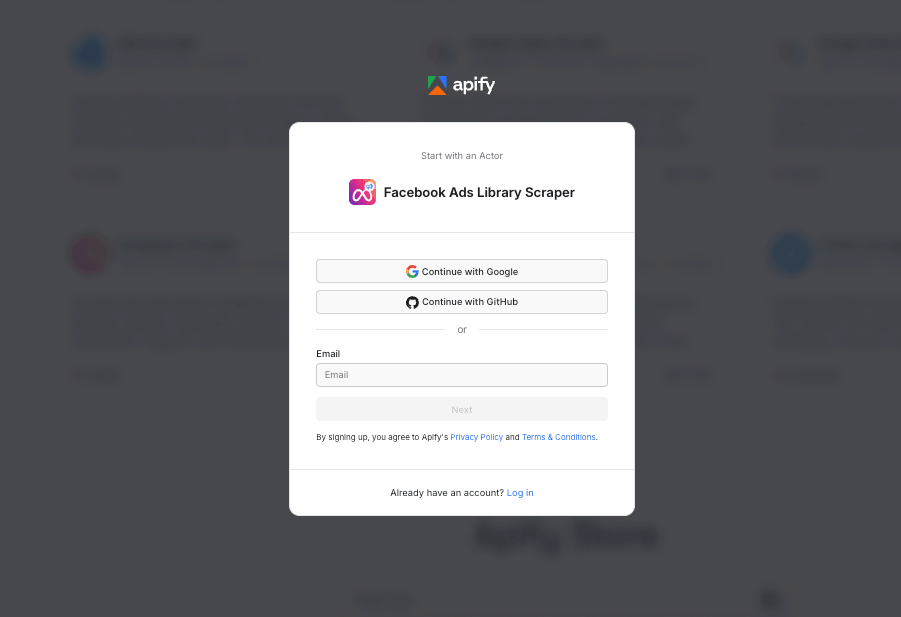
Find Facebook Ads Library Scraper on Apify Store and try it for free. Apify provides $5 in free usage every month on the Free plan, meaning you can scrape up to 1,000 ads for free. If you don’t have an Apify account yet, it’s easy to sign up with your GitHub or email account from any provider. You’ll enter Apify Console, a workspace to run or build automation tools for any website, including Facebook.
Step 2. Configure the Actor
Decide which Facebook Page you want to extract advertising data from. You can use either Facebook Page URLs or Facebook Ads URLs as your starting point.
Scraping ads from a Facebook page
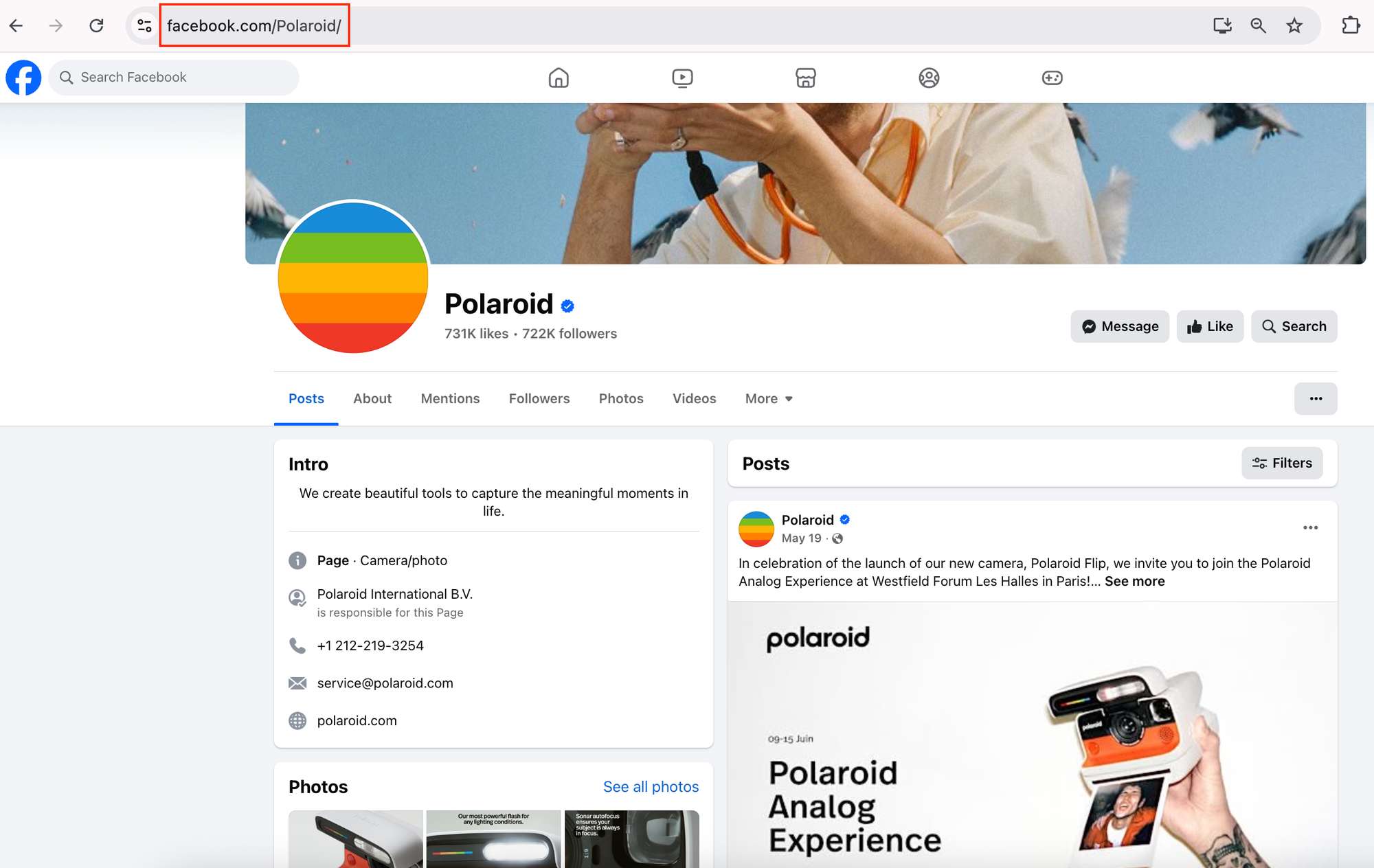
Head over to facebook.com, find the Facebook page of the brand or public figure whose ads you’re interested in, and copy their page URL(s). This method is the easiest since you don’t have to search for the ads themselves; a page is all you need. For our example, we’ll use Polaroid’s Facebook Page.
Scraping ads from the Ads Library
Alternatively, head over directly to the Ads Library. Facebook ads are publicly available, so you don’t need any special access to see the ads running presently, for any brand. This method works well if you need to narrow down your search: You get to pick the country, type, and filter the results by keyword before scraping them.
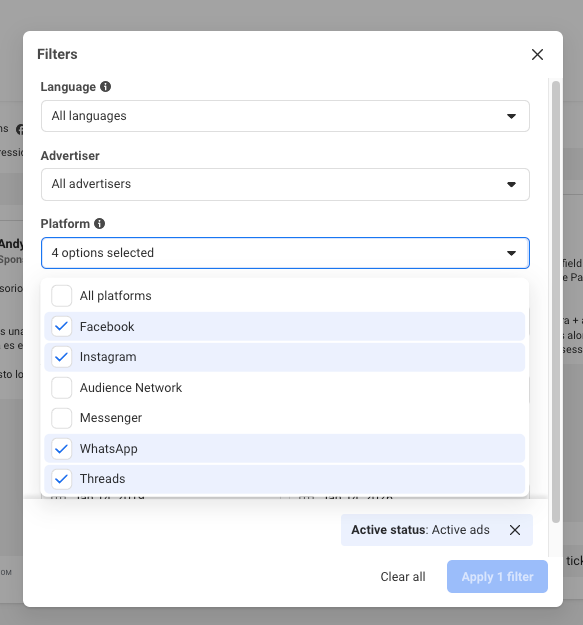
With Facebook Ads Library Scraper, you can easily collect all Meta advertising data - from Facebook, Instagram, WhatsApp, Threads, and Messenger, just as you would manually, while filtering Ads Library results:
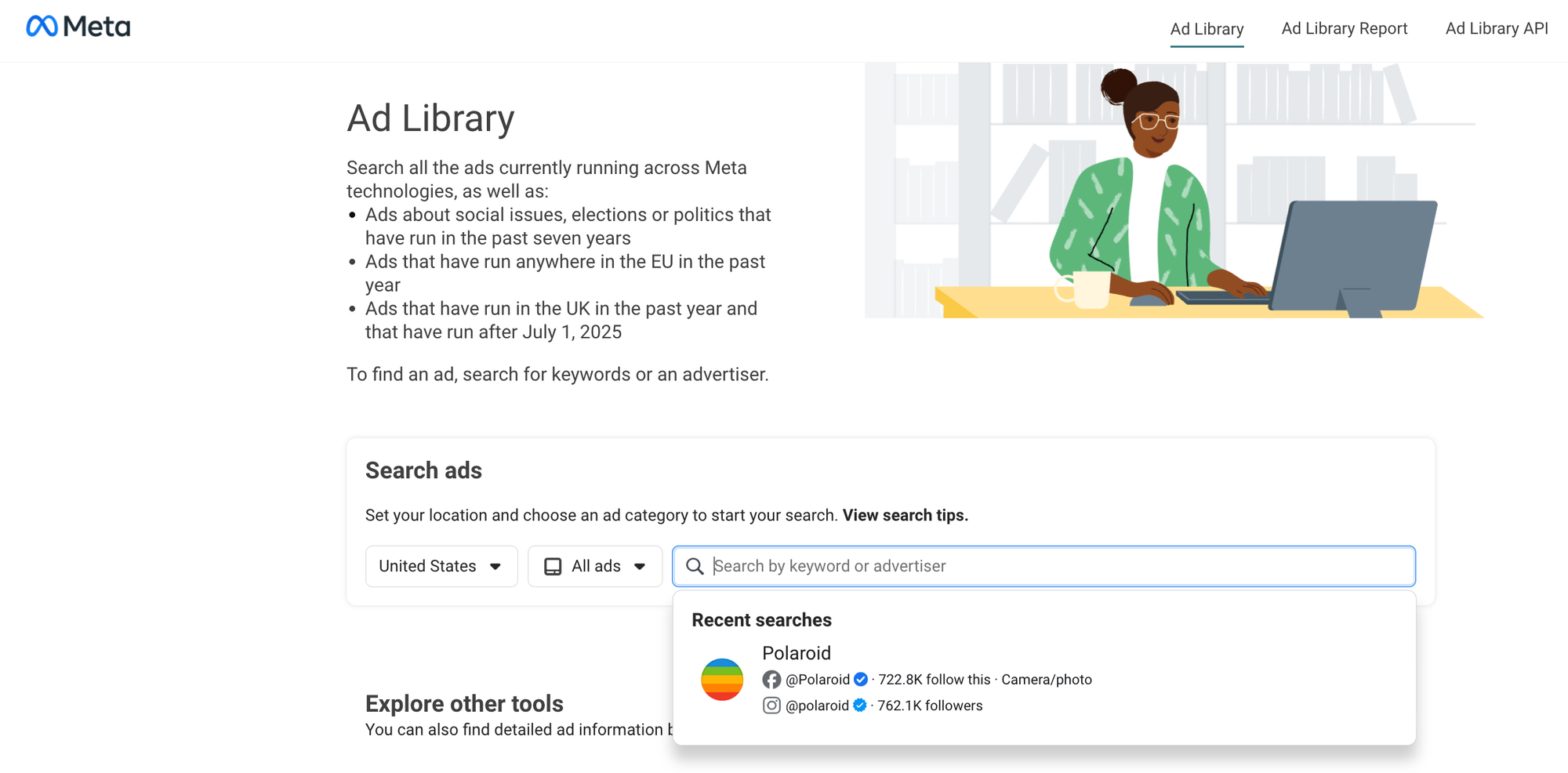
Pick the location, ad type, and brand you’re interested in:
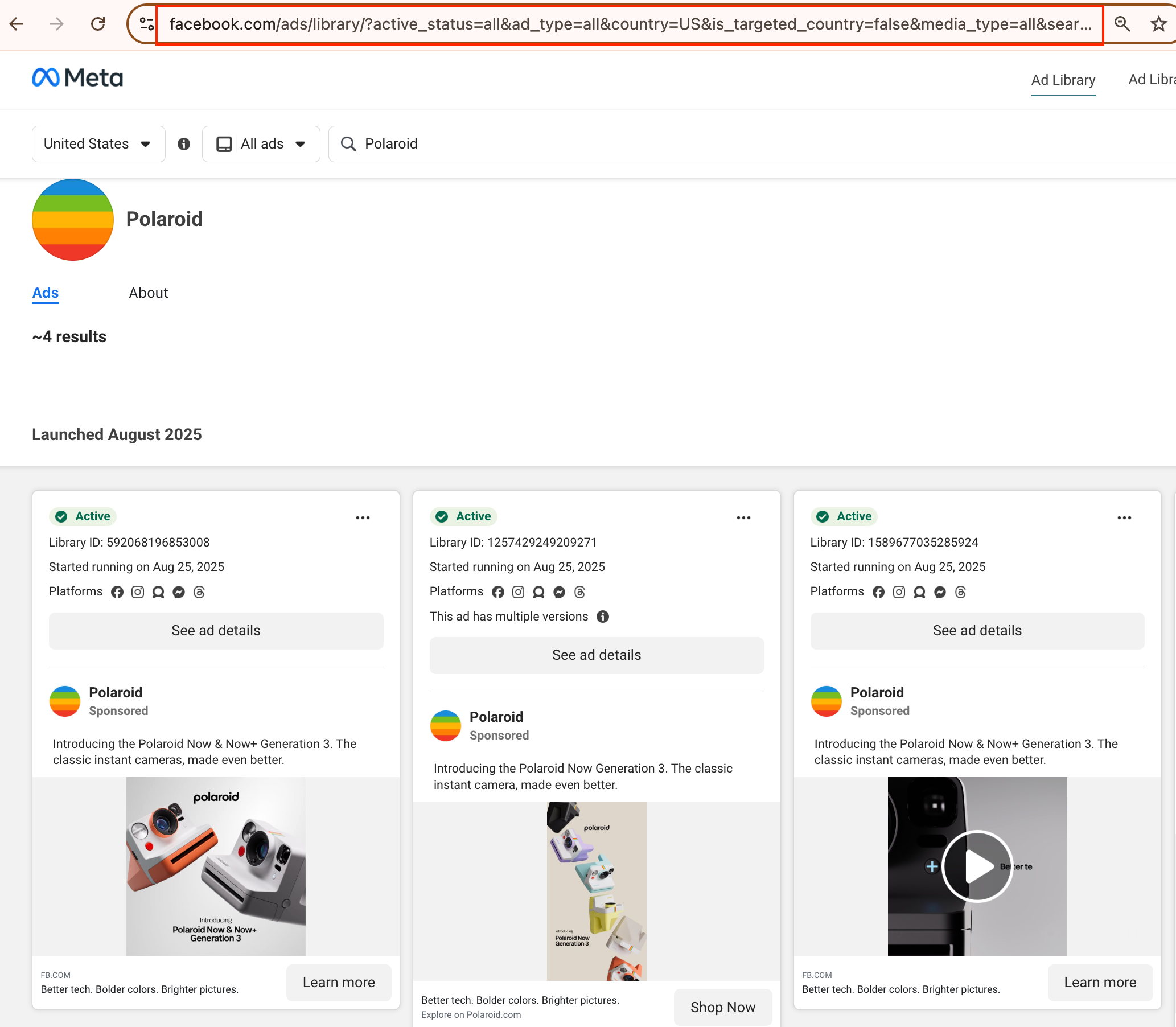
Once done, copy the Ads Library URL.
Now paste the Facebook page/Library Ads URL into the scraper. You can also set up how many ads you want to scrape or decide on the activity status of the scraped ads.
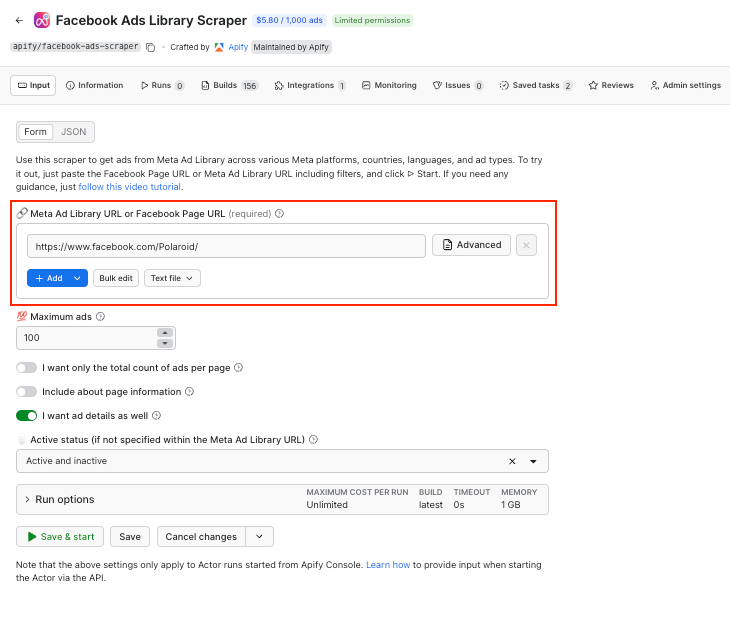
Step 3. Run the scraper by clicking Start
Click Save & Start to run the scraper. After a couple of minutes, the run will finish, and you’ll be able to check the results in the preview table.
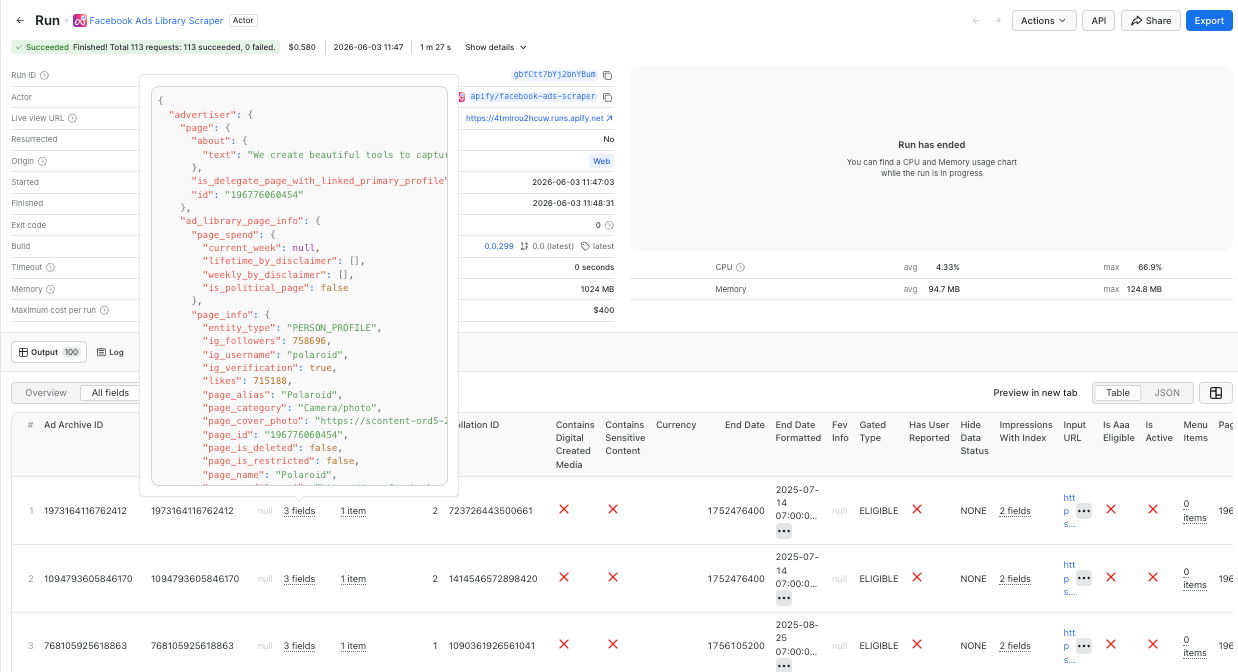
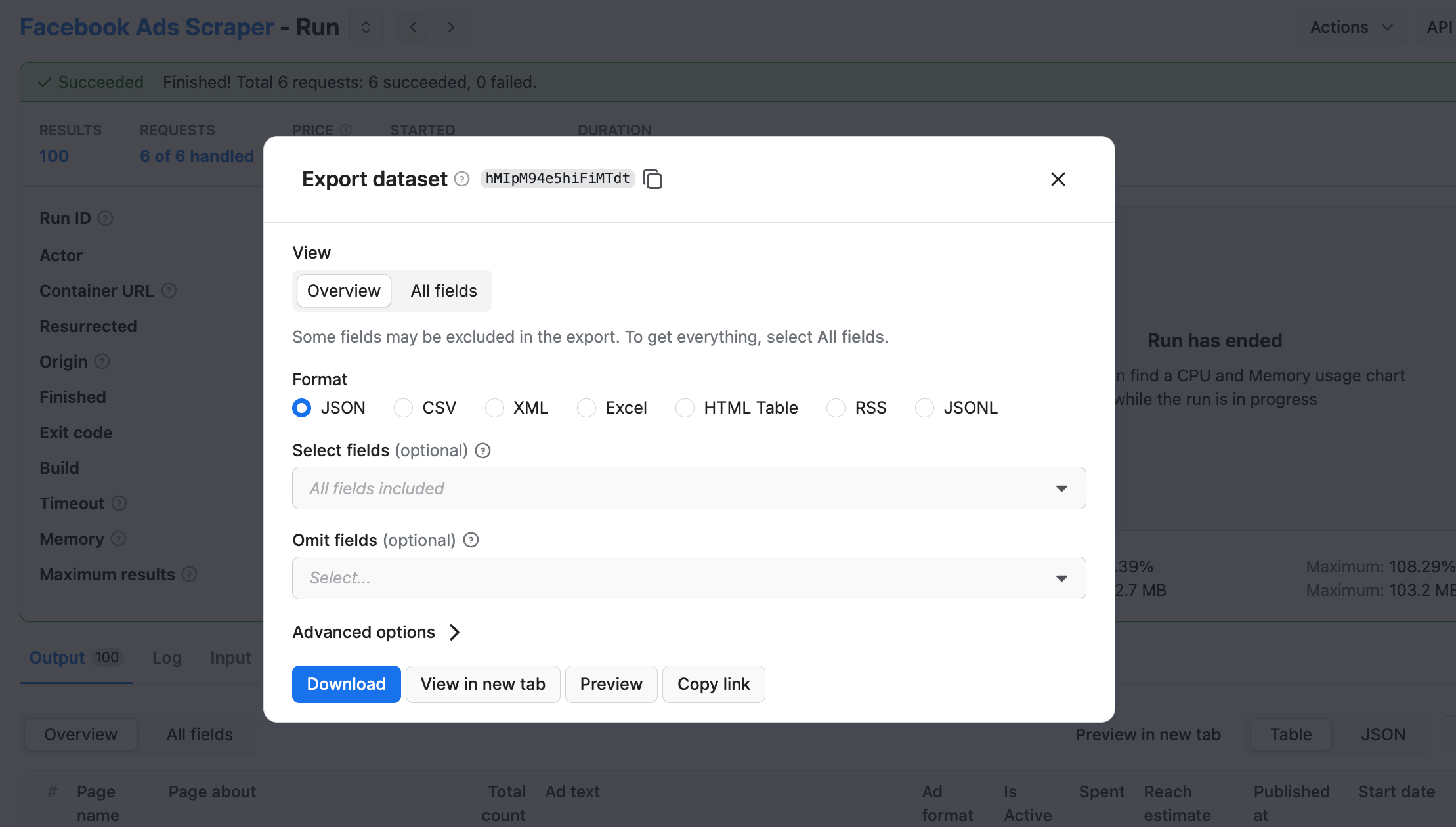
Step 4. Download your Facebook Ads data
You can download Facebook data in several formats, including JSON, CSV, and Excel. You can customize your export and exclude fields you’re not interested in, reducing the information noise.
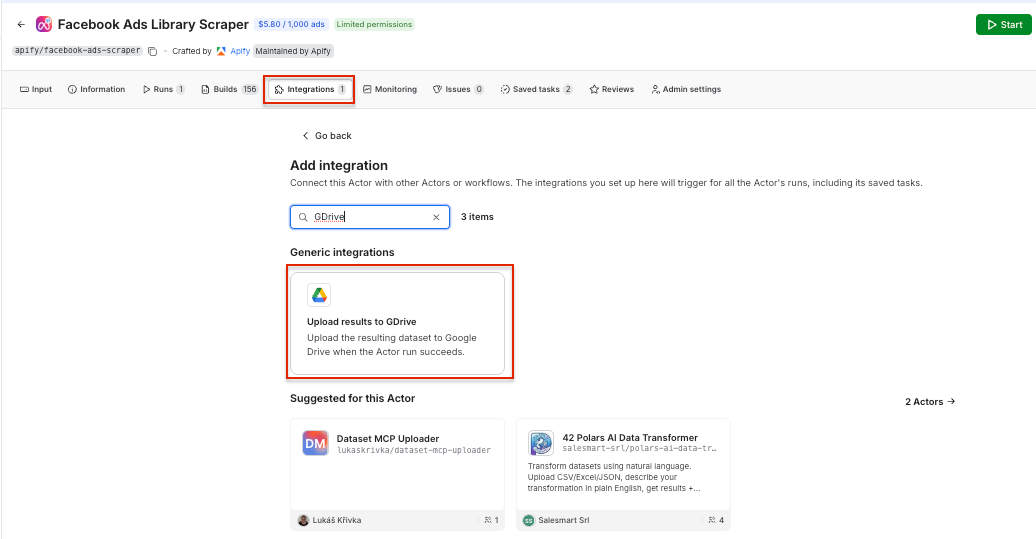
Step 5 (optional). Send data to Google Sheets
You can also send ads directly to your Google Drive. Go back to the Actor's page and select the Integrations tab. Start typing “GDrive” in the search bar, and select the Upload results to GDrive integration.
Give the integration a unique name. In our example, we’ll use Facebook Ads - Polaroid. Click Save to continue and connect your Google account. If you’re using your Google account with Apify Console, your email address might already be on the list of accounts to select.
Since we want the data to be sent to the spreadsheet once the scraper finishes running, we’ll select Run succeeded as our starting point. Select a format of the Google Drive file that the Apify integration will create (we’ll go with the XLSX) and click Save.
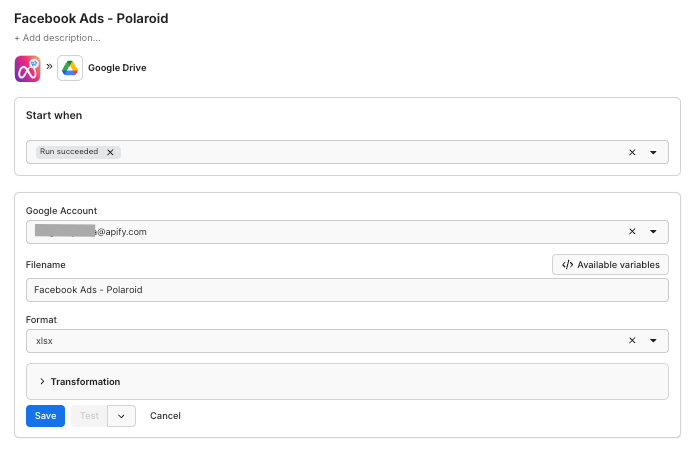
The workflow is ready - from now on, every time you run a scraping session, a new file with scraped results will be created in your Google Drive automatically, ready to analyze and compare over time.
You can check if the integration is set up correctly by refreshing the Integrations tab.
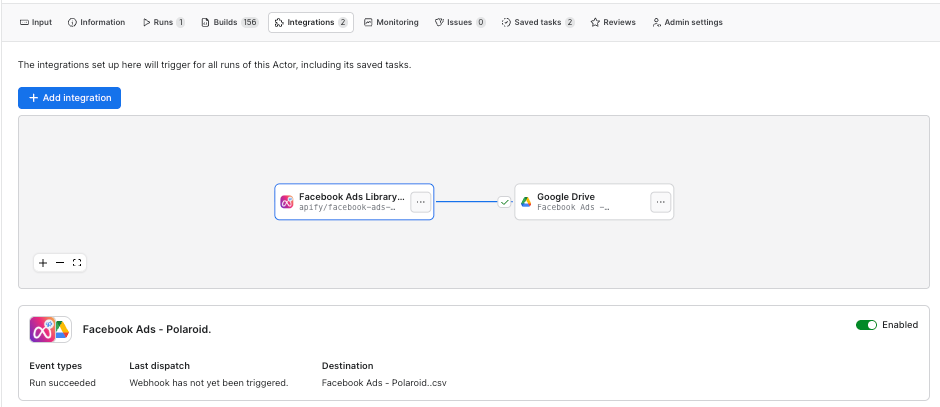
Step 6 (optional). Schedule automated runs
If you want to scrape Facebook ads regularly, you can schedule the Actor to run automatically and collect data without manual input.
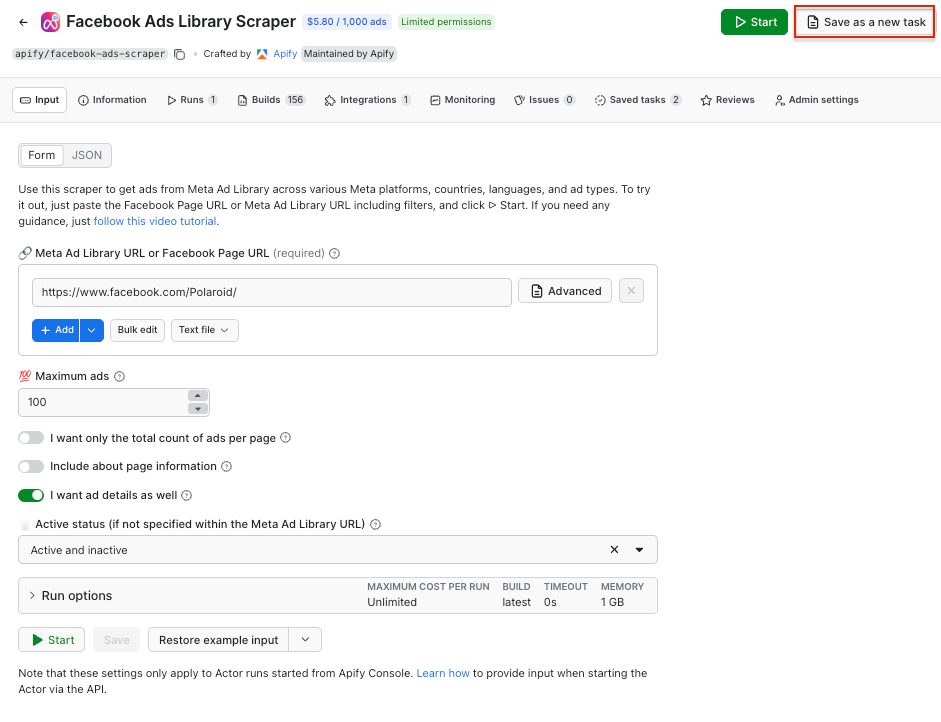
First, make sure your scraper is properly configured, then click the Save as a new task button in the top-right corner.
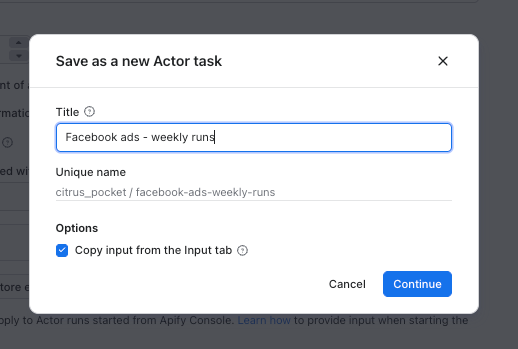
Give your task a name and save it.
Now, you can easily schedule the task by accessing Schedules in the left-hand navigation and clicking the Create a schedule button:
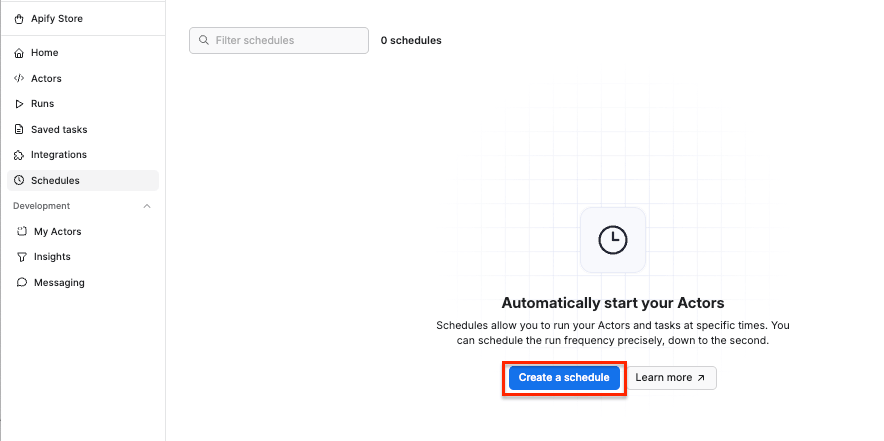
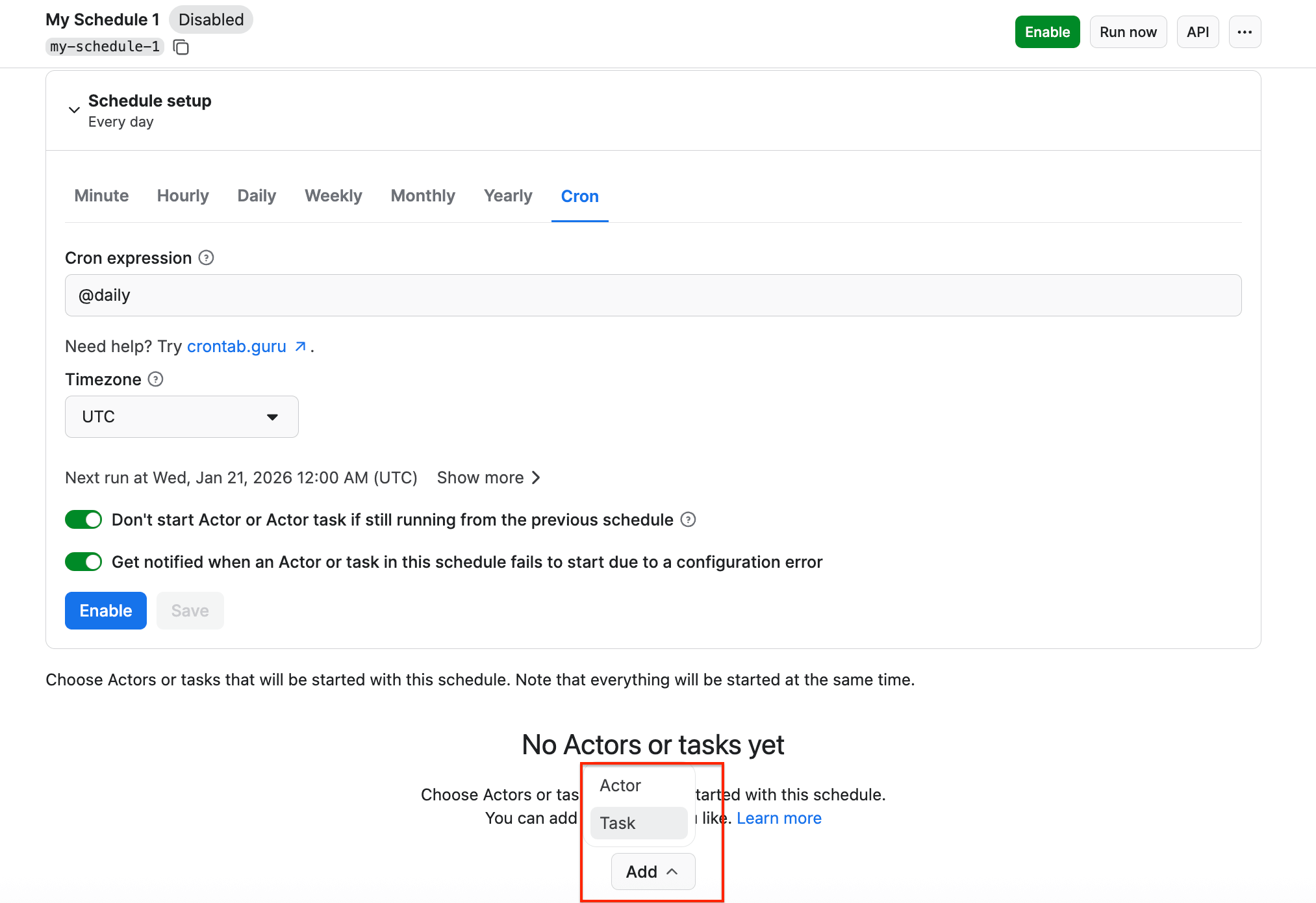
We’ve already saved our task, so now it’s time to add it to the schedule. Click Add task at the bottom to customize your schedule, select a task, and choose how often you want the scraper to run - daily, weekly, monthly, or on any day that works best for you. Click Save & enable to complete your setup.
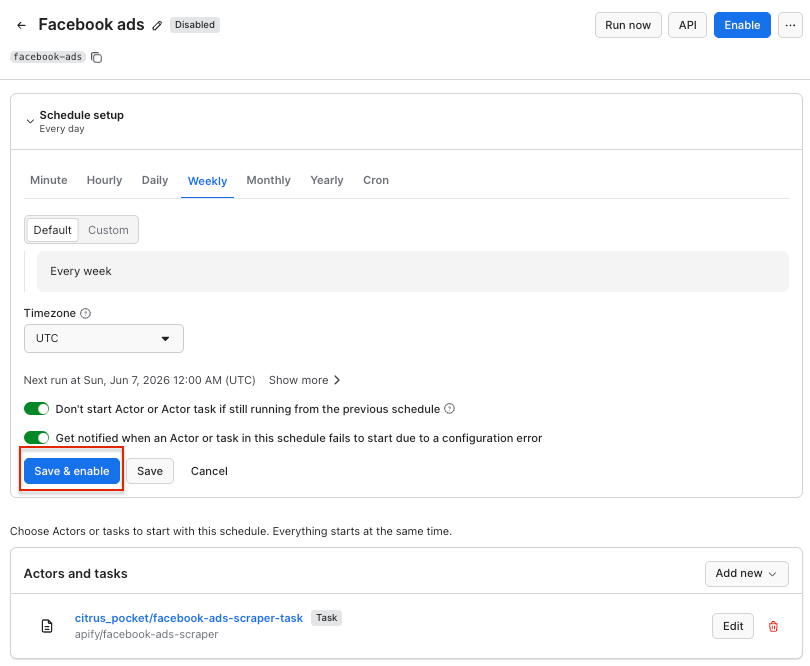
Once you enable the schedule, the Actor will run regularly without manual input.
Using data from Facebook Ads
The Meta Ad Library is a public, searchable record of nearly every ad running across Meta's platforms, which makes it one of the most useful free resources for understanding how brands talk to their audiences. You can study tactics, messaging, and (for political and social issue ads) spending across marketing, journalism, research, and politics. With Facebook Ads Library Scraper, you can:
- Get details about each ad: activity timeframe, advertiser, location, format, and more.
- Search for ads from a particular advertiser to see how top brands are reaching your audience.
- Use any keyword you want, or even target a specific country or ad type.
Here's what that data looks like in practice:
Track your competitors
See which ads a competitor is running right now, how long each one has been live, and how often they refresh their creative. An ad that's stayed active for months is usually one that converts.
Store the best creative examples
Every ad in the library comes with its copy, format (image, video, or carousel), and call to action. Pull a batch from the brands you admire, and you have an archive of hooks, offers, and landing pages to study before your next campaign.
Spot market and seasonal trends
Run the scraper on a whole category instead of a single brand, and patterns start to surface: seasonal pushes, new product launches, and shifts in promotional messaging across competitors.
Support research, journalism, and reporting
For political and social issue ads, the library also exposes reach estimates, report counts, and (in many regions) spend ranges and funding entities. Journalists can trace who's paying to influence an election, and researchers can study ad targeting at scale.
Because Facebook Ads Library Scraper connects to tools like Make, Zapier, Google Sheets, and Slack, you can route fresh ad data into the reports and dashboards your team already uses.
Start collecting and analyzing ads
That's the whole workflow: find the Facebook page or Ads Library URL you care about, paste it into Facebook Ads Library Scraper, run it, and export the results to JSON, CSV, or Excel. No Meta app, no API approvals, no tokens.
If you're trying to get specific Facebook data, such as comments or page reviews, Apify Store offers many ready-to-use Actors specifically designed to scrape Facebook. They are all free to try out.