If you're searching for the best brand monitoring tools in 2026, odds are you've probably hit at least one of these walls:
- Paying for two or three overlapping tools to cover every platform you care about
- AI sentiment models that miss sarcasm, jargon, or industry-specific context
- Niche communities (Reddit, Discord, GitHub) treated as low-priority sources
- Pricing tiers that cap your keywords or seats before you reach real scale
- AI search engines (ChatGPT, Perplexity, Google AI Mode) are invisible to traditional monitors
The problem is that even the most sophisticated brand monitoring tools have blind spots. It's why most users end up paying for two or more subscriptions to get the full picture.
Over time, the question shifted from "which tool is the best?" to "how many can you afford?"
But what if the answer wasn't a tool at all? What if you could track your brand on every platform on the web, classify mentions with the most competitive AI models using metrics you define yourself, and get alerted the second something matches your definition of urgent?
You'd own every byte of the data. And the whole thing would cost less than a Brandwatch subscription.
Apify makes that possible. In this guide, I'll walk you through how it stacks up against the 9 best brand monitoring tools in 2026.
Benchmarking top brand monitoring tools against an Apify pipeline
In 2026, the five constraints that matter most are cost, scale, AI feature capability, web coverage, and how easily the tool integrates into modern stacks. Here's how the big four hold up against an Apify pipeline:
| Pain point | Brand24 | Mention | Brandwatch | Meltwater | Apify pipeline |
|---|---|---|---|---|---|
| Pricing | $249 to $1499/mo, across all tiers. | Solo plan starts at $41/mo, and $599/mo for the Company tier with API access. | Operates solely on a quote-based pricing model; entry price estimate is ~$800/mo, Pro tiers $5,000+/mo. | Also operates on a custom enterprise quote; typically $1,000+/mo. | Starter plan set at $19 per month (pay-as-you-go model). The average cost for 1,000 results on Apify generally ranges from $1 to $10. |
| Keywords/mentions limits | 3-25 keywords (excluding Enterprise) and 2-100k mentions/mo. | 15-40+ keywords and 10-70k mentions/mo. | Organizations are limited to exporting 5,000 mentions per day across all users and searches. | Exact figures are gated behind "sales calls" ads. But, number of slots is based on your account package. | Limitless keyword and mention caps — the only ceiling is your monthly cloud budget. |
| AI sentiment analysis | Built-in AI sentiment. Fixed model tuned for general consumer language. No way to swap models or define custom categories beyond positive, neutral, and negative. | Same pattern as Brand24: one fixed model, three-way classification. Sarcasm, jargon, and industry-specific tone often get misread. | AI sentiment plus Iris for conversation insights. Powerful but proprietary. You can't inspect the prompts, tune them, or extend the taxonomy. | AI sentiment plus GenAI summaries. Same closed-box approach: useful outputs, no control over the model or the categories it scores against. | Plug in any model (GPT-5, Claude, and Gemini) at the provider's API rate. Define your own categories ("pricing complaint," "feature request," "comparison vs. competitor X") and tune prompts as your brand language evolves. |
| Web coverage | Great for standard social media and blogs, but blind to niche communities. You can't track a specific Stack Overflow tag or a GitHub thread. If it isn't pre-built in their dashboard, it doesn't exist to them. | Good for standard web tracking, but lacks the deep architecture to scrape specialized forums, walled communities, or niche platforms. | Wide coverage only on expensive enterprise plans; plus, tracking a new, niche platform requires submitting a feature request and waiting for approval. | Great for TV broadcast and paywalled news, but almost non-existent coverage for developer and niche community platforms (Discord, Hacker News). | If it's on the internet, you can monitor it. Track literally any data source from Reddit, Hacker News, App Store reviews, and more. |
| Ease of integrations | Slack, Zapier, basic API on higher tiers. | Standard integrations + alert routing. | Custom enterprise integrations. | PR-focused integrations: influencer outreach, Bloomberg, Dow Jones/Factiva. | Infinite routing. Webhooks, n8n, Slack. Push to a vector DB for RAG, enrich a CRM record, or trigger an auto-reply agent. |
9 best brand monitoring tools in 2026
1. Apify
- Best for: Building custom brand monitoring across any platform for solutions beyond what traditional brand monitoring tools cover.
- G2 rating: 4.7/5 across 415 reviews.
- What I like: Over 25,000 ready-made Actors (scrapers that extract data from dedicated web sources on the internet) that you can plug into any AI model, alert tool, or a dashboard your team already uses.
Apify is a web scraping and automation platform with over 25,000 ready-made scrapers (Actors) in its Store. You just have to point an Actor at a URL, or feed it a query, and you’ll get clean, structured data from any social platform, news sites, niche communities, or AI search engines.
Dedicated Actors track brand visibility across Google AI Mode, ChatGPT, Perplexity, Claude, and Gemini, which means the same platform that monitors your Reddit and Instagram presence also covers the AI search layer most legacy tools haven't caught up to yet. If you're new to Apify, the official getting-started playlist on YouTube walks through the basics in minutes.
finally set up @apify account today after a lot of postponing, and it's been a game changer! Using it together with Droids and notion MCP for social listening.
— Tereza Tizkova (@tereza_tizkova) April 29, 2026
(was recommended to me in our growth chat for X scraping. if you're doing growth/marketing/gtm in tech, text me &…
What makes Apify different from every other tool on this list is its flexibility and low cost. In fact, it's often used as the extraction layer for brand monitoring tools like Gumloop.
Apify gives you all the building blocks you need to create a custom brand monitoring system without any headaches. Instead of wrestling with code, ready-made tools pull in data from anywhere on the web and automatically send those insights straight to the everyday apps your team already relies on.
Rating: 5/5
What do you like best about Apify?
What I appreciate the most is the incredible time-saving offered by the Store. Having access to hundreds of pre-configured "Actors" for the most popular sites allows projects to be launched in just a few clicks. Moreover, their intelligent management of proxies and cloud infrastructure is remarkably reliable, allowing focus on data analysis rather than technical maintenance.
— Clemens G. (Small Business owner)
You can own the entire pipeline, including storage, classification, and alerts. For a concrete example, here's a Reddit brand monitoring tool I shipped using the Apify Reddit Scraper, n8n, OpenAI's gpt-4.1-mini, Google Sheets, and Slack.
Rating: 5/5
What do you like best about Apify?
The MCP gave me the ability to build and deploy 7 actors collecting 250,000+ rows of marketplace data in 6 weeks — by talking to Claude. The core primitives (call-actor, get-actor-run, get-actor-output) are the right shape for agentic workflows. search-actors and fetch-actor-details let me discover existing actors instead of reinventing the wheel. And search-apify-docs is underrated — having Claude pull up the right docs without context-switching to a browser is a small thing that compounds.
— Asaf O. (Co-Founder @Corgi)
The same pattern applies to anything else worth tracking, like monitoring your competitors’ ads across Meta platforms, pulling weekly G2 reviews, scraping Hacker News and Product Hunt for product mentions, or writing your own Actor in JavaScript or Python when nothing in the Store fits.
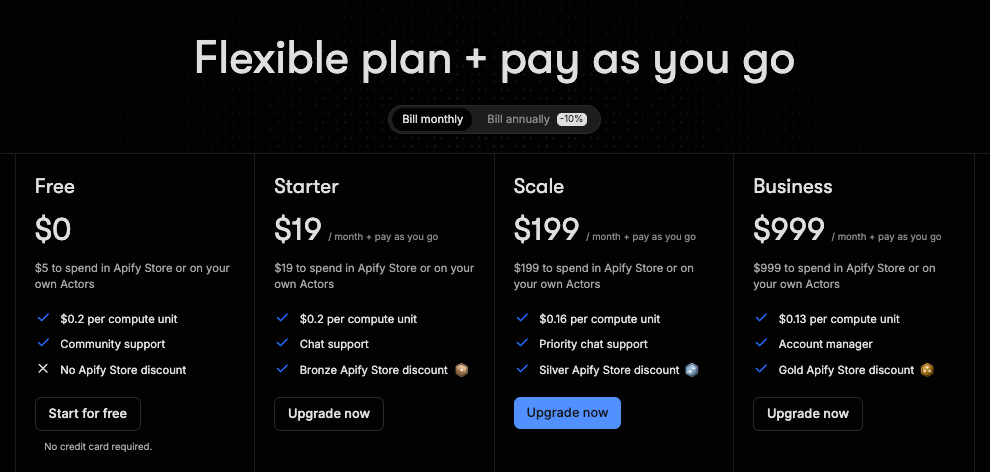
Apify pricing:
Apify uses a pay-per-result model where failed runs cost you nothing and a productive one scales linearly with its yield. If your monitoring stops being useful, your bill stops growing.

2. Brandwatch
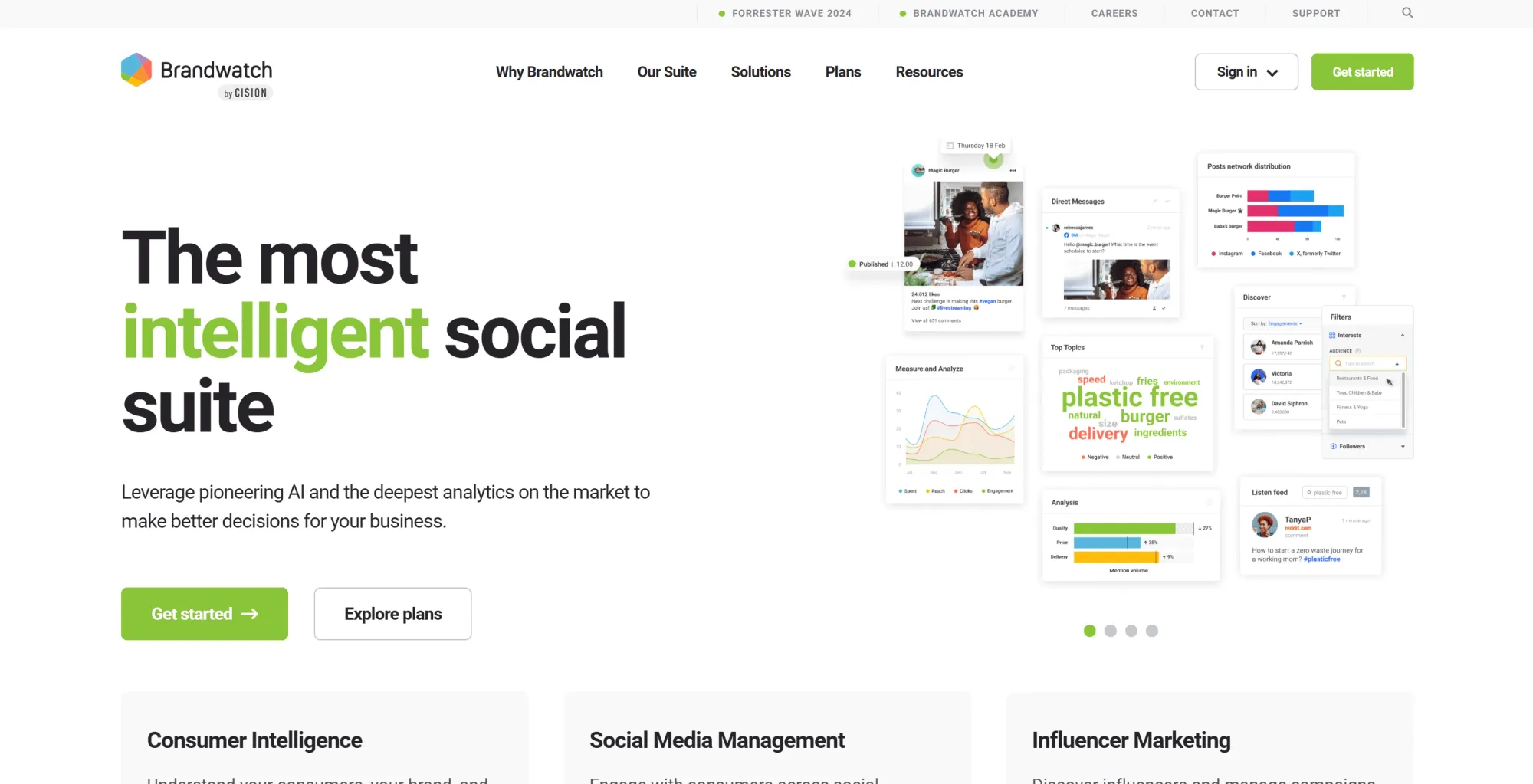
- Best for: Enterprise PR and comms teams that need a ready-made dashboard and years of historical data.
- G2 rating: 4.4/5 across 722 reviews.
- What I like: Iris AI handles sentiment and demographics processing without technical support, and the archive back to 2010 is a data moat you can build on.
Brandwatch's unique strengths include a clean UI, proprietary AI for sentiment analysis, and a historical mentions archive spanning years.
However, pricing remains expensive. Entry tier starts around $800/mo with quote-based scaling beyond that. And, while its coverage indexes the major networks well, it treats niche sources like subreddits, Discord servers, GitHub issues, and App Store reviews as low-priority platforms.
Brandwatch pricing:
Brandwatch uses a quote-only model, and every plan runs on an annual contract. The upside is a tailored fit for your data volume and team size. The downside is that you can't compare prices or test different payment plans to find the best fit, and the bill keeps coming whether you use the platform or not.
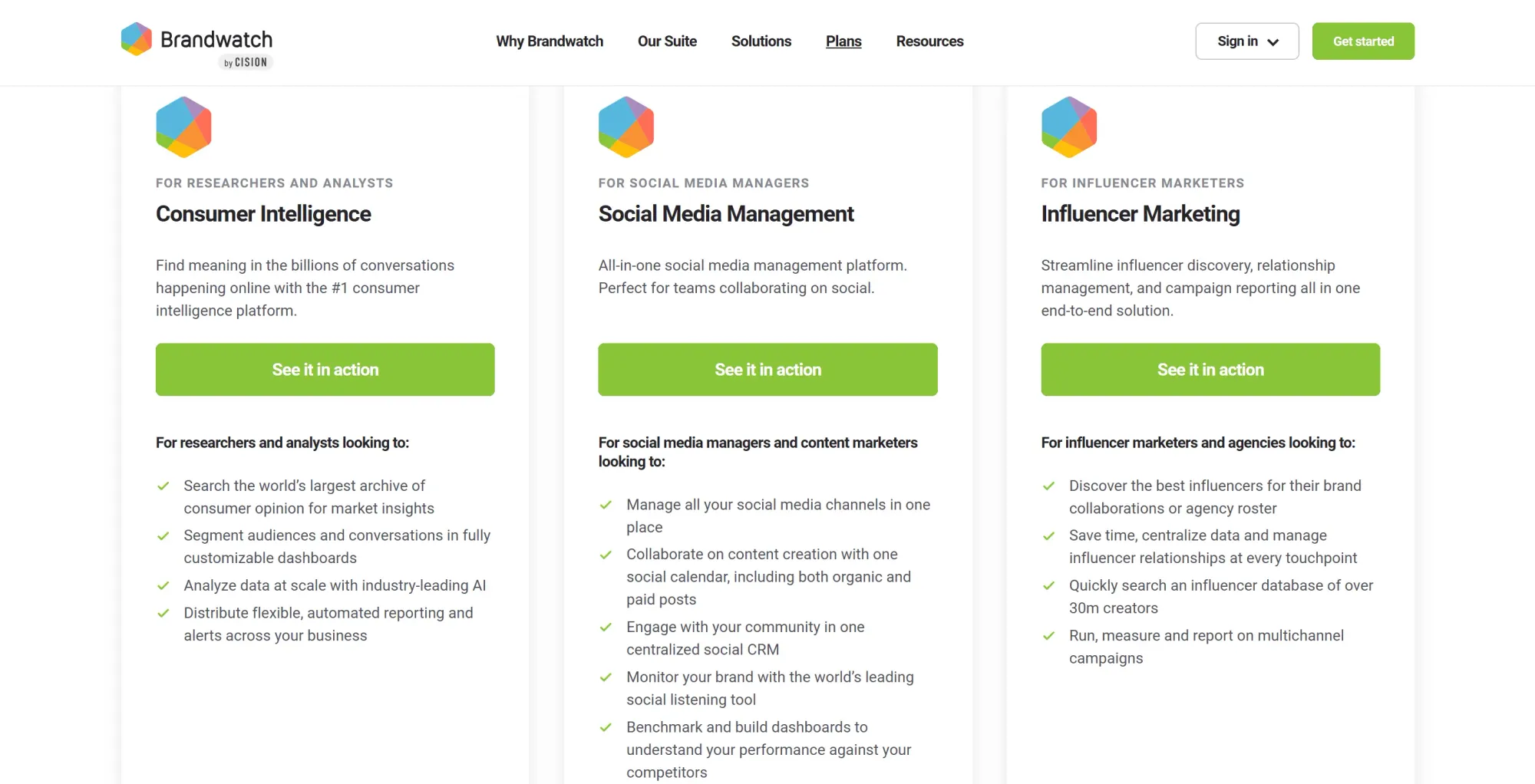
3. Meltwater
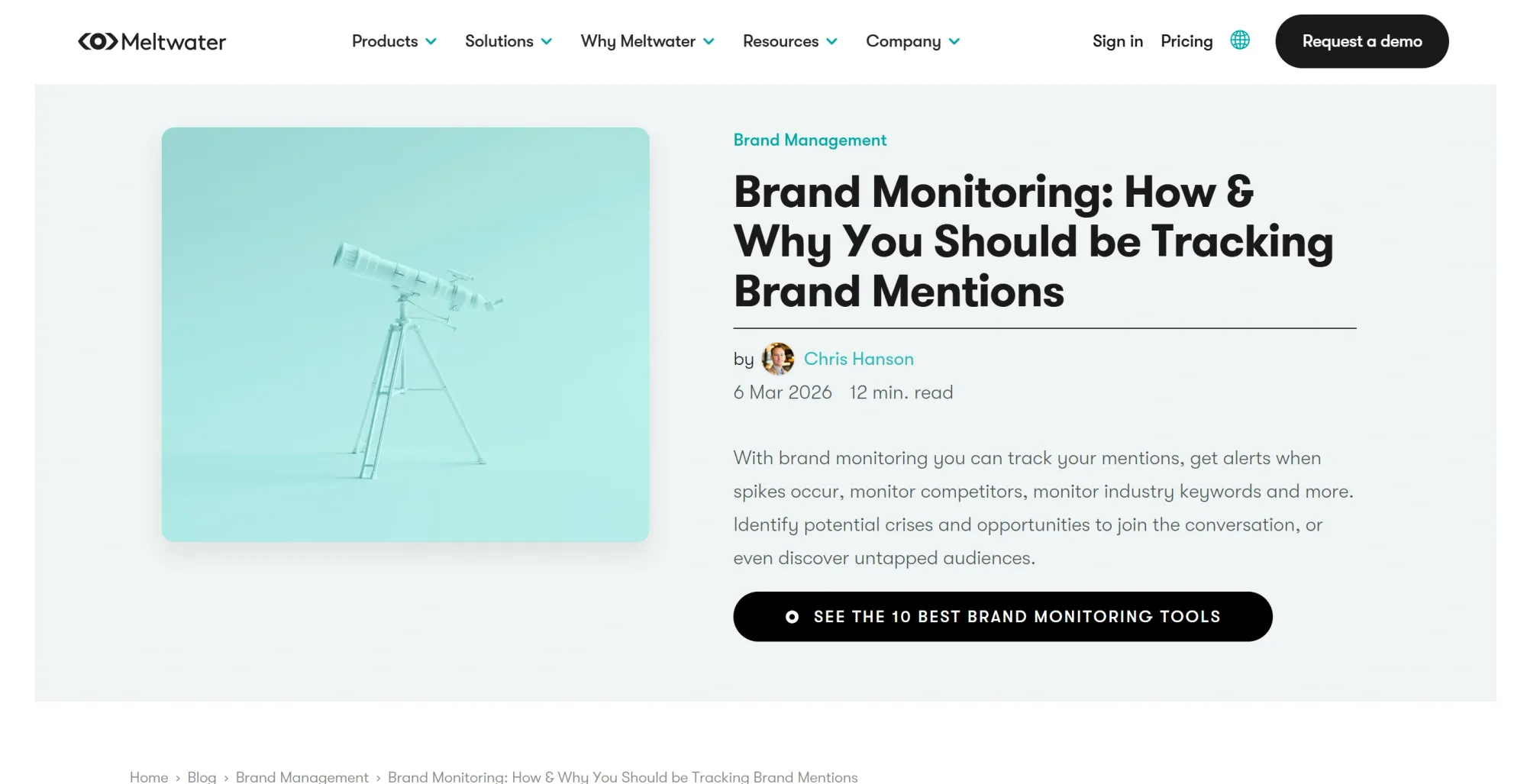
- Best for: Teams that need an all-in-one platform to find reporters to pitch to, track when their brand is mentioned in the news, and generate reports.
- G2 rating: 4.1/5 across 2,628 reviews.
- What I like: It has a massive, verified directory of 800,000 reporters that you can email directly from the platform.
Meltwater serves as a cohesive media intelligence platform with a verified database of over 800k journalists and influencers you can reach out to directly. This edge facilitates tracking across news, social media, and podcasts. The platform tries to bridge brand monitoring across traditional and web media, offering AI-driven sentiment analysis and customizable reporting tools.
Meltwater’s opaque pricing and steep learning curve are a source of concern for many of its users, who cite issues such as "noise" in monitoring data, inconsistent sentiment analysis, and an occasionally outdated media database.
Meltwater pricing:
Meltwater operates on an enterprise SaaS billing model that requires 100% of the annual fee to be paid upfront as a single lump sum at the start of the subscription. It’s noticeably different from other legacy tools that accept quarterly payments.
4. Sprout Social
- Best for: Social media monitoring for enterprise clients that want a unified tool to handle social media publishing, customer care, and analytics.
- G2 rating: 4.4/5 across 6,408 verified reviews.
- What I like: Trellis, Sprout's new AI agent, allows you to ask direct, conversational questions about your listening data and instantly pulls summaries, trends, and strategic recommendations.
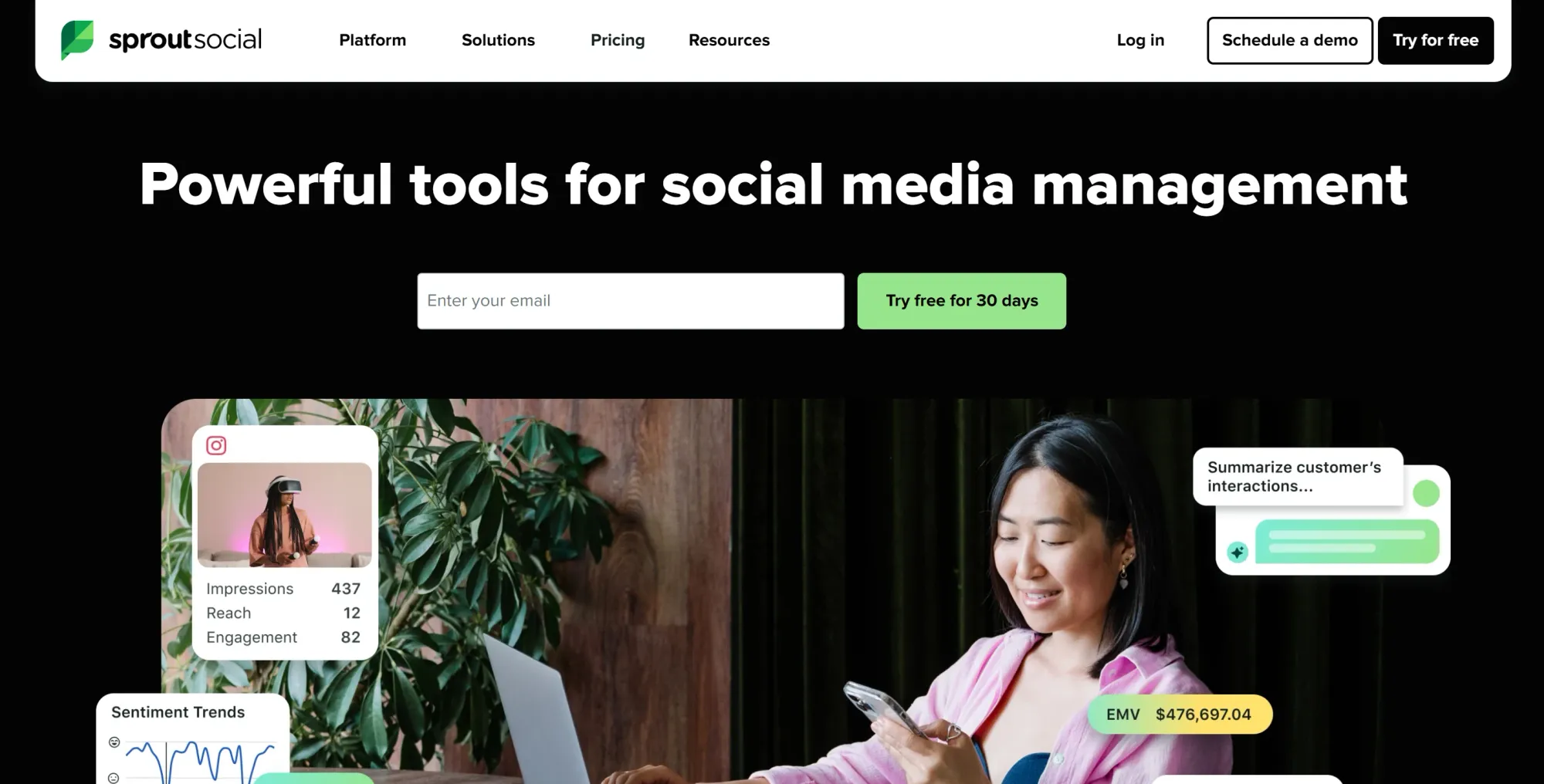
Sprout Social is a high-end social media management platform designed to handle publishing, engagement, analytics, and social intelligence from a single dashboard. Recently, it's pivoted heavily toward "Social Intelligence" (uses AI to analyze audience conversations across the web, even if they don't specifically tag your brand).
Sprout Social pricing:
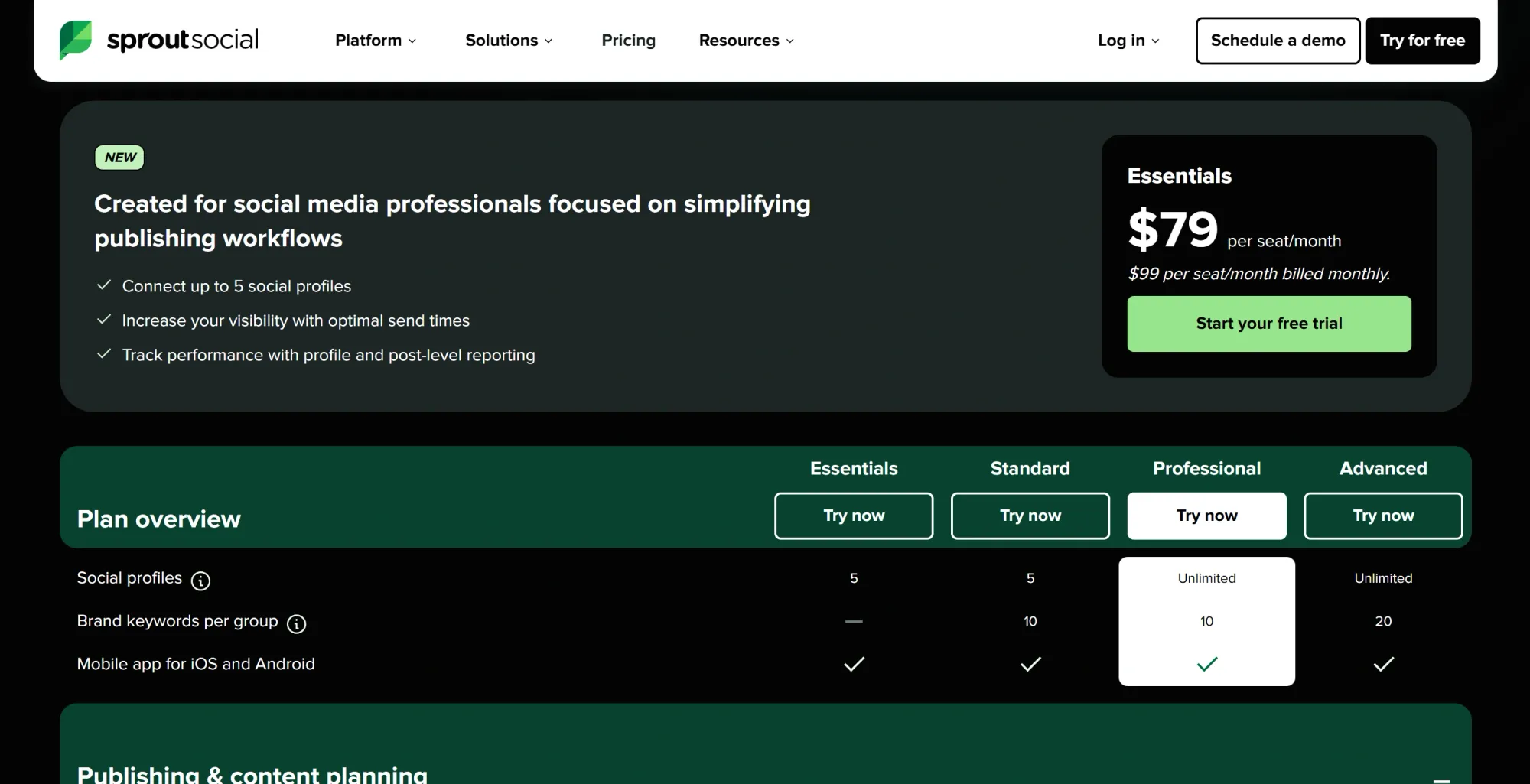
The flip side to using Sprout in 2026 is its complicated pricing. It uses a strict per-user price, even though most competitors have moved to "unlimited users" or "team bundles." What this means is: if your team grows from 3 to 10 people, your Sprout bill triples, even if your workload stays the same.
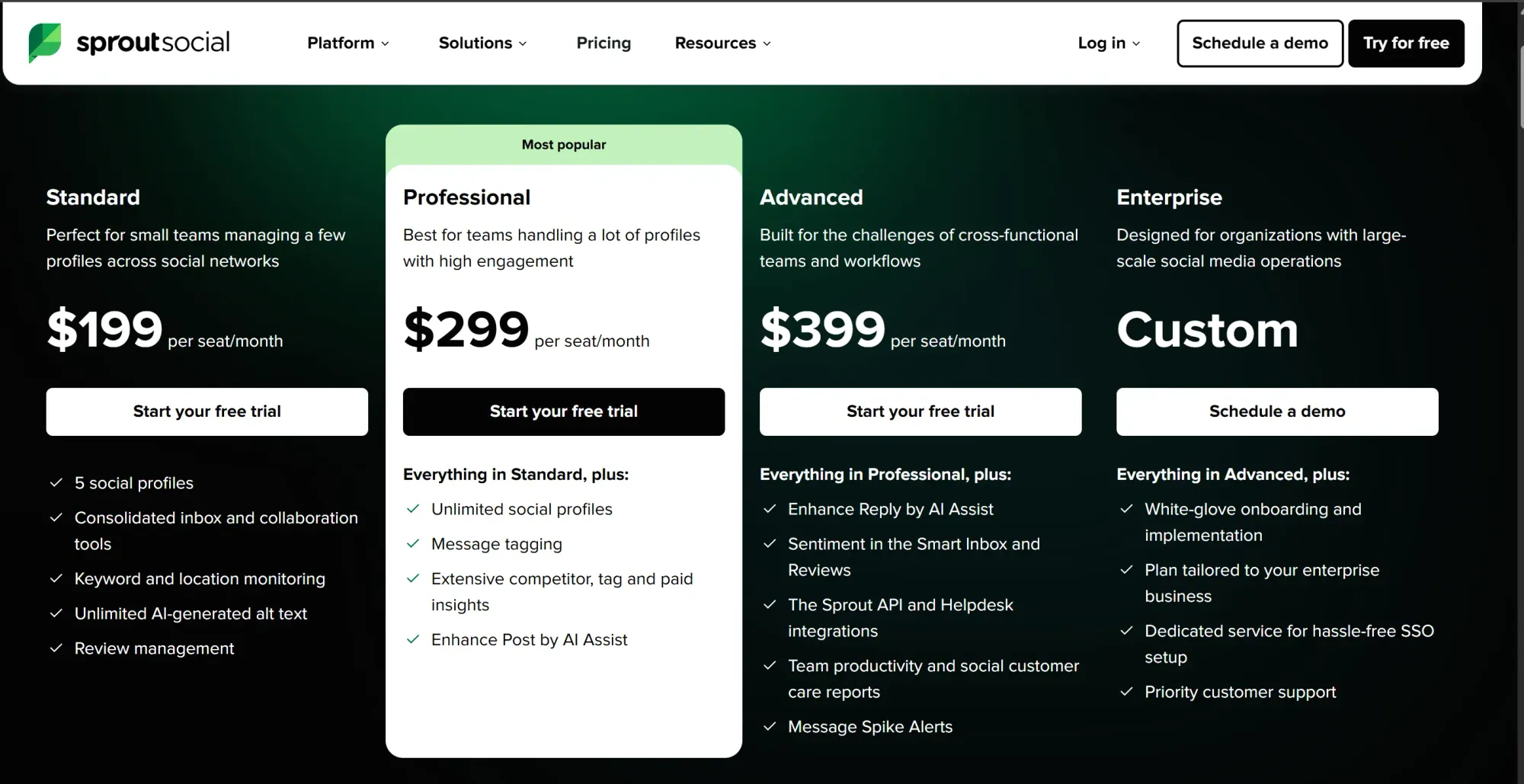
Also, you could be on the most expensive Advanced plan ($399/seat) and still not have access to Listening unless you purchase the Listening add-on separately.
The only time these two systems truly merge into a single price is when you negotiate a custom Enterprise quote.
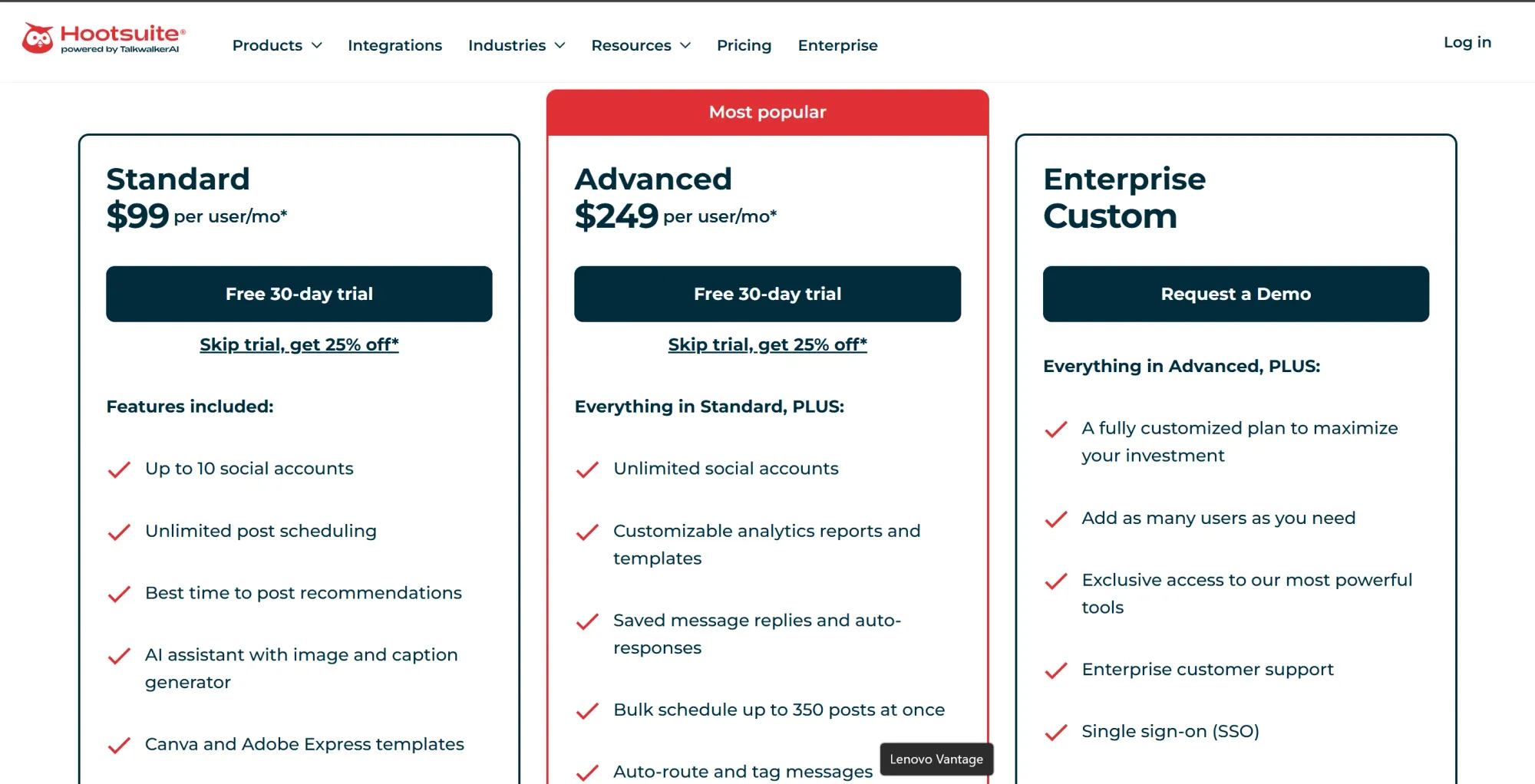
5. Talkwalker by Hootsuite
- Best for: Deep social listening that tracks brand mentions across the web, including specialized sources like news sites, blogs, forums, Reddit, and Quora.
- G2 rating: 4.3/5 across 137 verified reviews.
- What I like: Uses image recognition technology to detect brand logos and objects in photos, even when no brand text is mentioned.
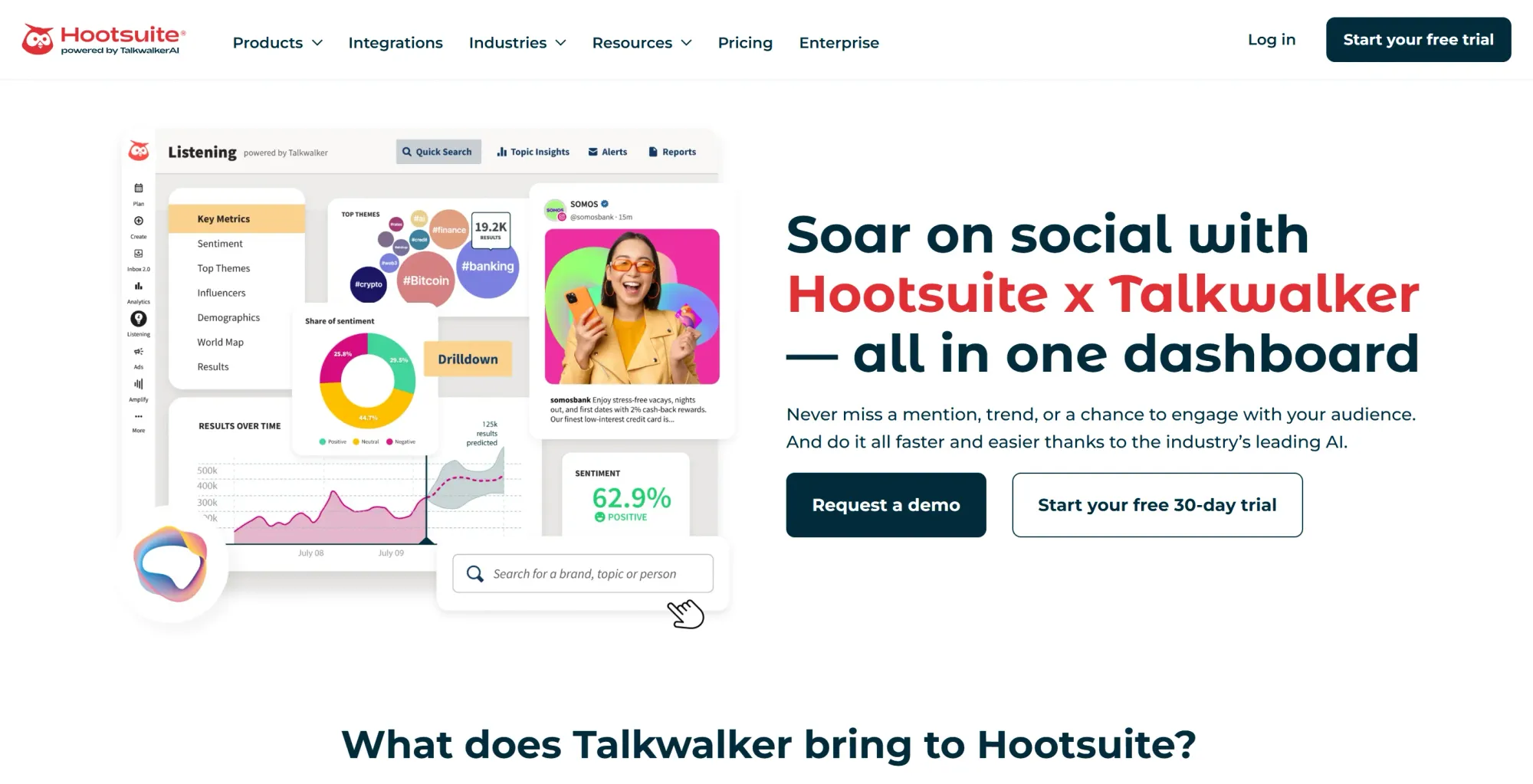
Hootsuite acquired Talkwalker on April 8, 2024, and objects in photos, even when no brand text is mentioned, and now functions as a social listening and intelligence platform that combines Hootsuite's social management tools with Talkwalker's deep listening capabilities to help brands monitor mentions, analyze sentiment, and predict industry trends.
Blue Silk AI, the platform's proprietary AI, can summarize millions of mentions into digestible insights and even forecast industry trends 90 days in advance. But sentiment analysis occasionally misses sarcasm or context, requiring human correction for accuracy.
It, however, has a steep learning curve. Setting up "Topics" requires a strong understanding of Boolean search operators. If you’re not familiar with advanced query logic, you’d struggle to filter out "noise," like job post ads or irrelevant mentions.
Talkwaker by Hootsuite pricing:
Talkwalker doesn’t publish its prices publicly. It requires custom quotes that typically cost tens of thousands annually, which, unfortunately, doesn’t make it the most welcoming option for small and medium-scale clients without large budgets.
6. Brand24
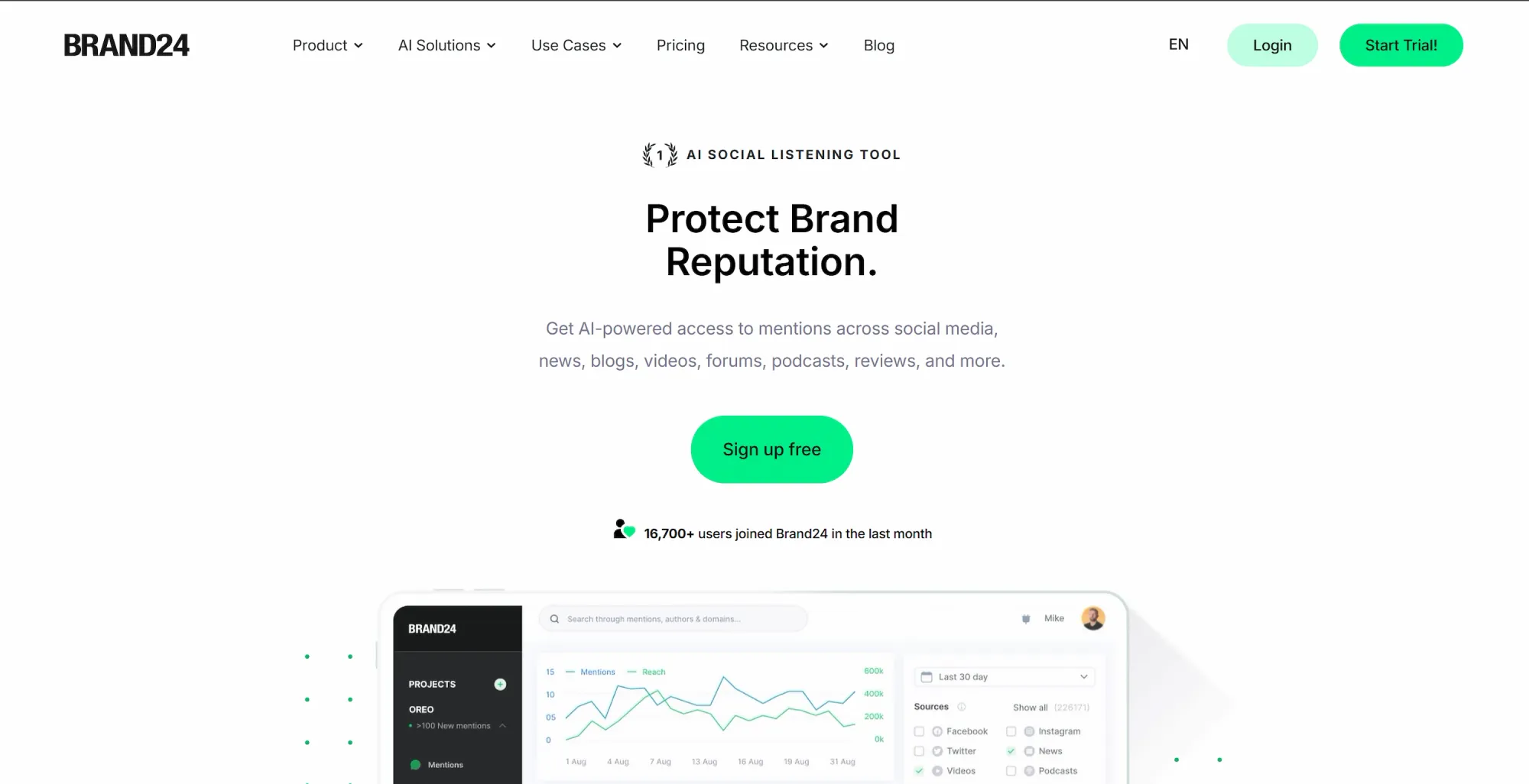
- Best for: Real-time brand monitoring across its 25 million+ sources
- G2 rating: 4.6/5 across 342 verified reviews.
- What I like: Does well with regional slang and nuanced context across more than 108 languages, and has a feature that tracks the velocity of negative mentions instead of just counting bad reviews.
Uber, Mercedes-Benz, and Hostinger use Brand24 to track their online mentions. It's popular for real-time monitoring of keywords and hashtags as they appear across platforms, and turning that raw data into actionable marketing insights.
Features like Presence Score (which measures your brand's online popularity) and Share of Voice benchmark your brand against competitors.
However, due to API restrictions, many traditional brand monitoring software, such as Brand24, can’t monitor sub-layered communities like private Facebook Groups or certain LinkedIn activities, which host a large share of discussions on these platforms.
Sentiment analysis still struggles significantly with data from video-based platforms like TikTok and YouTube compared to text-based sources.
Brand24 pricing:
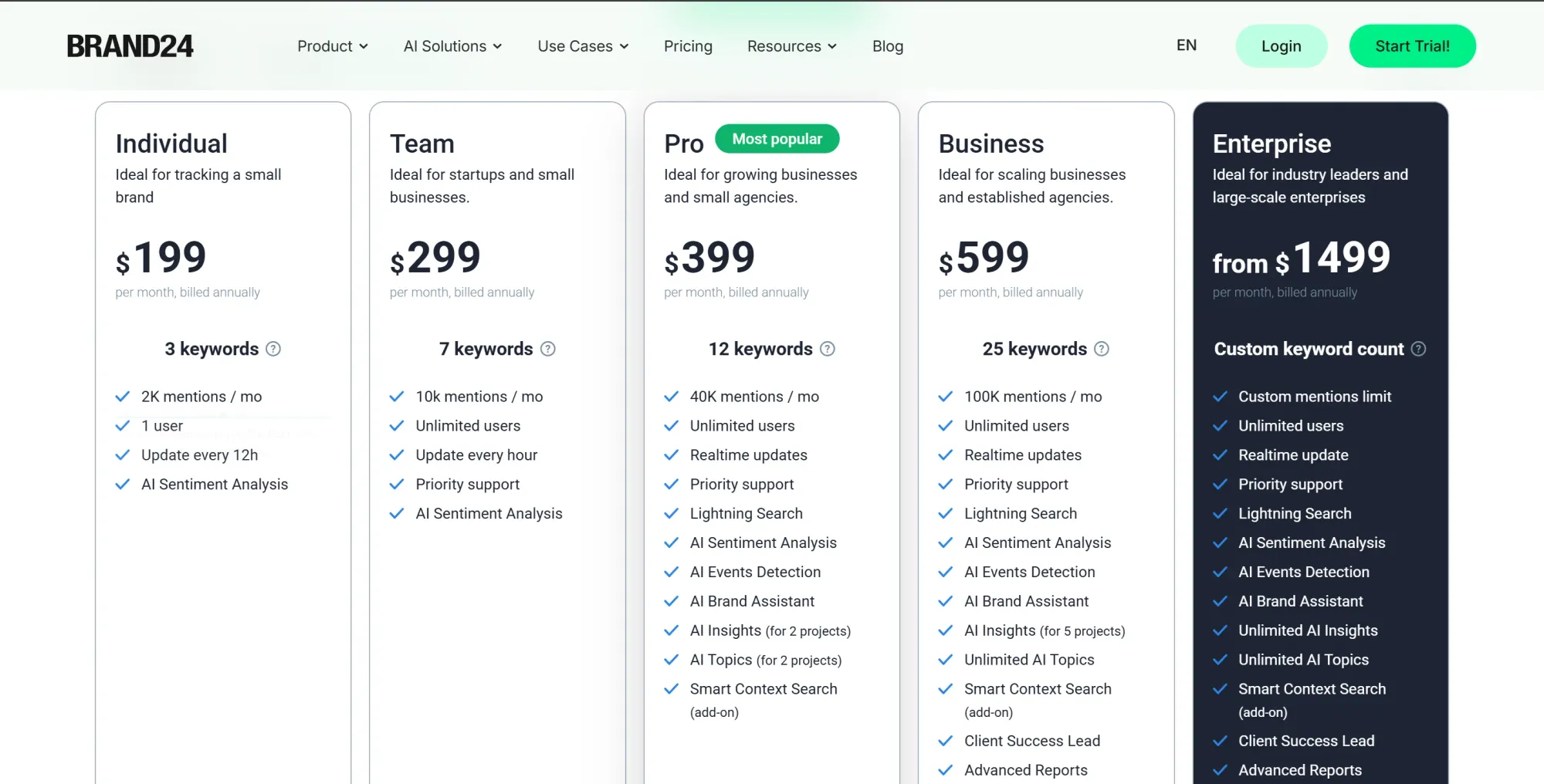
The most unique but problematic aspect of Brand24's pricing is its Keyword-Based Tier System. Unlike many social listening tools that offer more flexibility, Brand24 limits you to as few as 3 keywords.
So, if you’re an agency or brand that needs to track your brand plus 2 to 3 competitors, you reach the limit quickly. Makes it feel more like an “upgrade” trap than a fair allocation of resources.
7. Mention
- Best for: Real-time web and social media monitoring, especially for small to mid-sized businesses and PR teams.
- G2 rating: 4.3/5 across 442 verified reviews.
- What I like: Its highly intuitive UI, near-instant alerts that eliminate monitoring delays, and the ability to collaborate with team members directly within the platform.
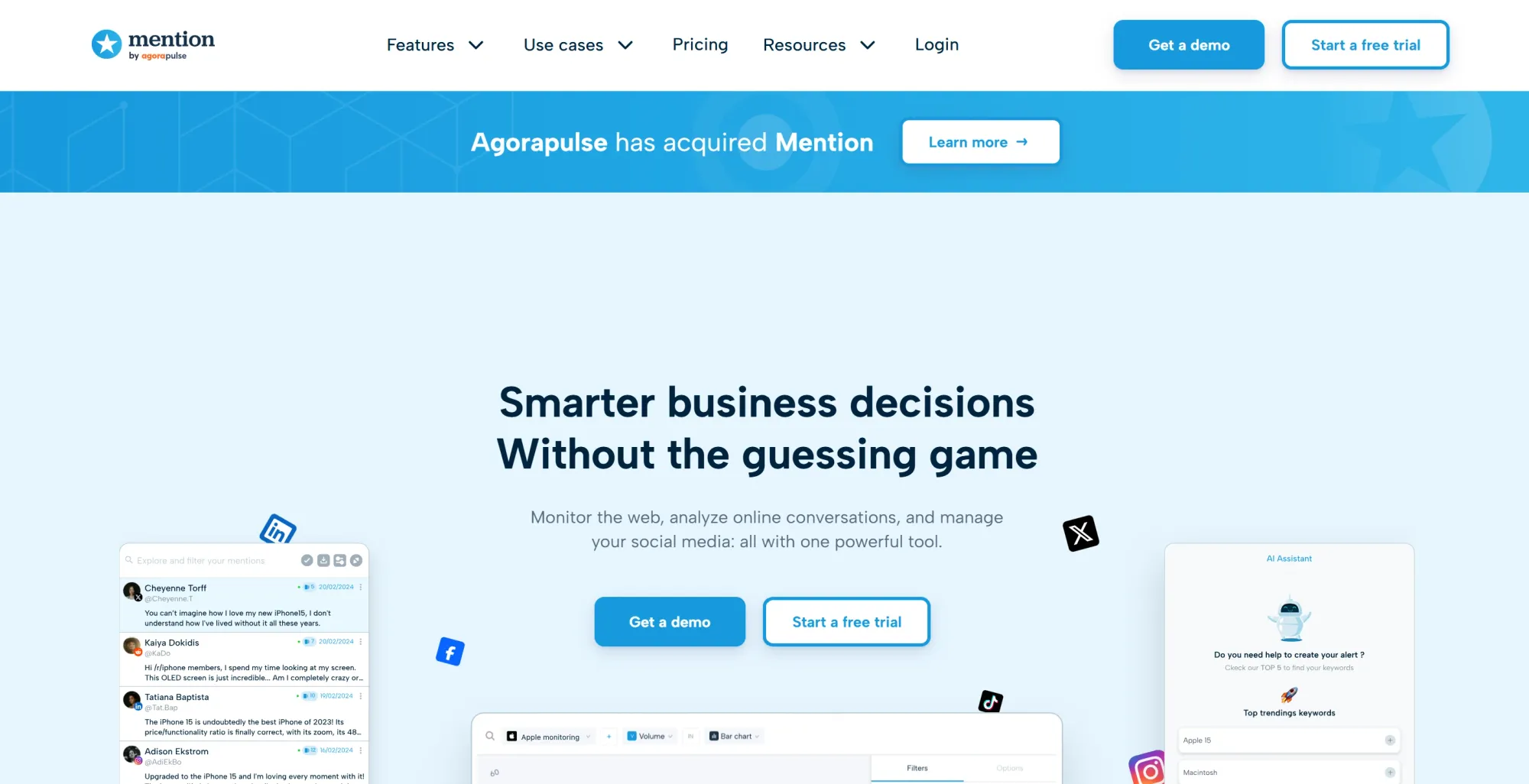
Mention crawls over a huge catalog of sources daily, mainly social media sources (X/Twitter, Facebook, Instagram), blogs, forums, news sites, and review platforms (like Yelp or TripAdvisor). Mention recently deprecated its "Publish" and "Respond" features to focus exclusively on listening and analytics, partnering with Agorapulse to handle its social management side.
The way it works is you receive instant notifications via email or Slack whenever a keyword like your brand name, a competitor, or an industry term is used online. Mention’s AI automatically categorizes those mentions as "Positive," "Negative," or "Neutral."
Mention's main weakness is the 'integration gap' with Agorapulse. While they share a parent company, you’ll still feel the friction of using two separate engines for listening and posting because you can’t post, schedule, or plan content from Mention directly.
If you find a great user photo of your product, you’d have to move between the listening and publishing tabs to turn a discovered mention into a live post. It might seem like a small issue on its own, but imagine having to do that for hundreds of posts daily.
There are also API restrictions on platforms like LinkedIn and Instagram. So, you’re forced to make do with data only from channel sources it can access.
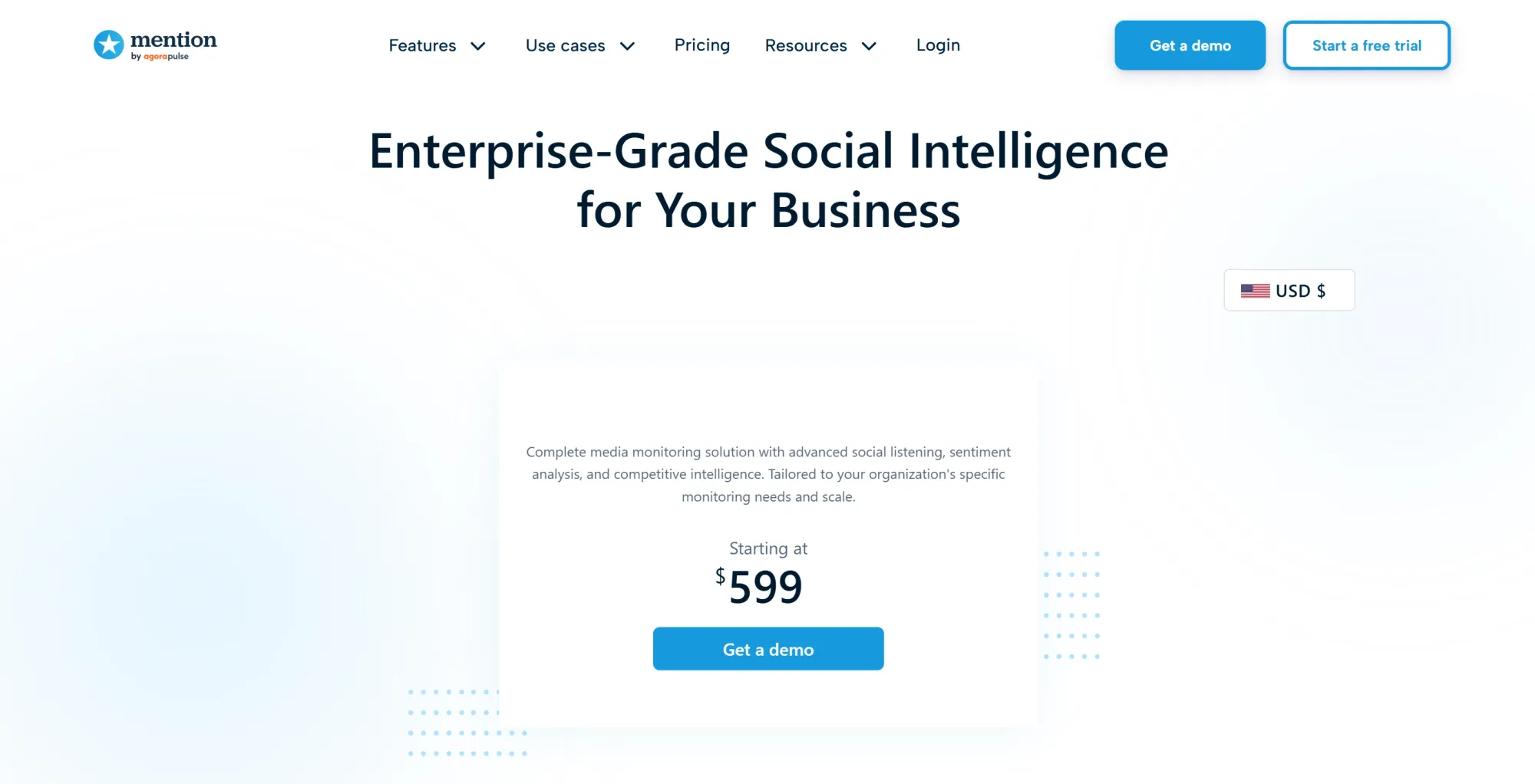
Mention pricing:
8. YouScan
- Best for: Visual-facing brands that appreciate tracking brand mentions via images and videos, even when text tags are missing.
- G2 rating: 4.7/5 across 284 verified reviews.
- What I like: The platform offers a lot of customization options you can fine-tune based on specific sentiment aspects like product taste, price, service, etc.
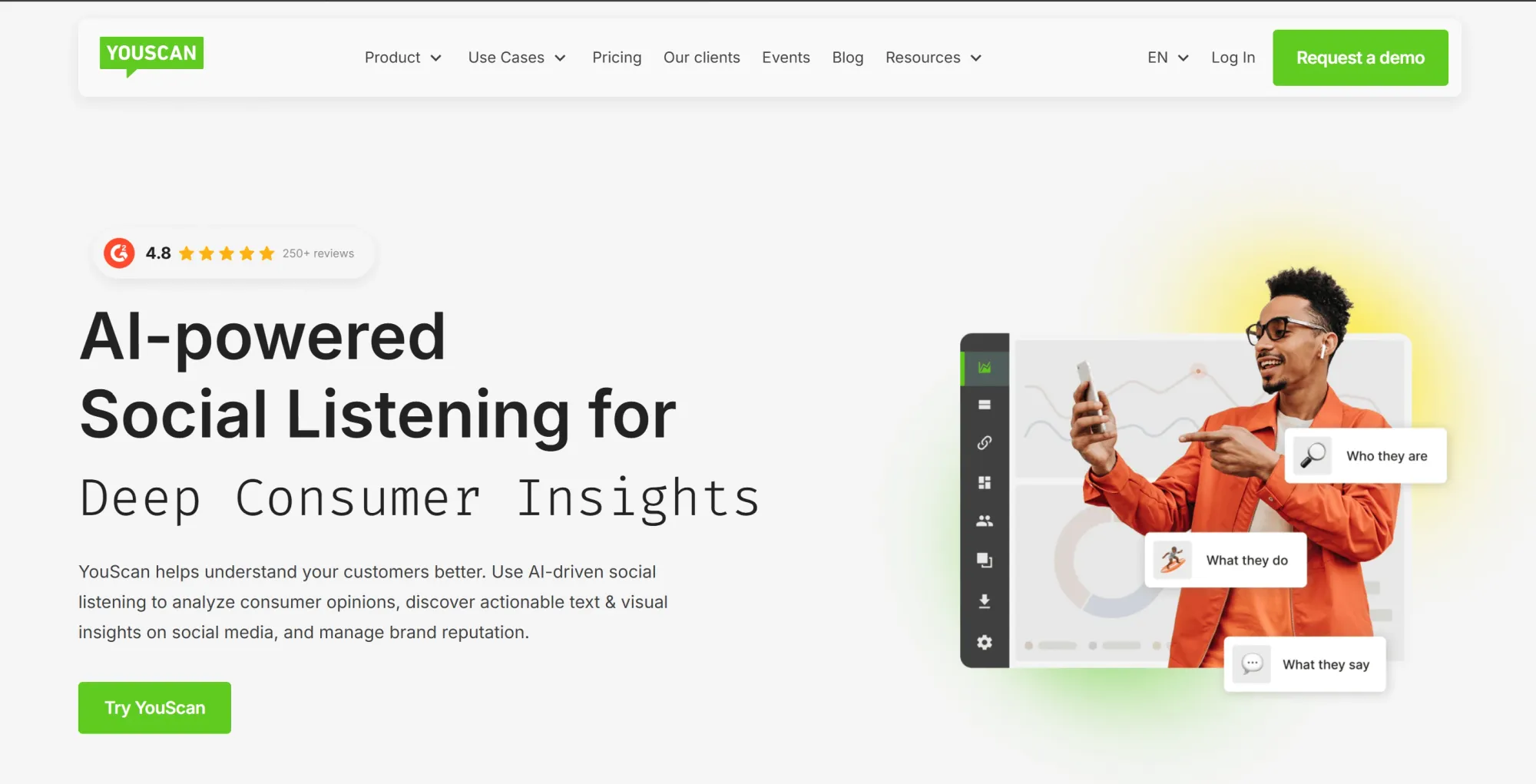
YouScan stands out for its use of image recognition in brand monitoring. It can detect logos, objects, scenes, and even demographic data in images that mention brands, even when the brand isn't explicitly tagged in the text. It also has a conversational AI assistant that allows you to talk to your data. You can ask direct questions to get quick summaries and recommendations.
Separate from its main platform, YouScan offers a free web-based tool to check whether a piece of text is AI-generated, which may help filter out fake mentions from real ones.
Currently, there’s no dedicated mobile app, and the dashboard's mobile browser version isn't fully optimized for on-the-go analysis. You may experience slower speeds when the platform is processing or analyzing very large datasets.
YouScan pricing:
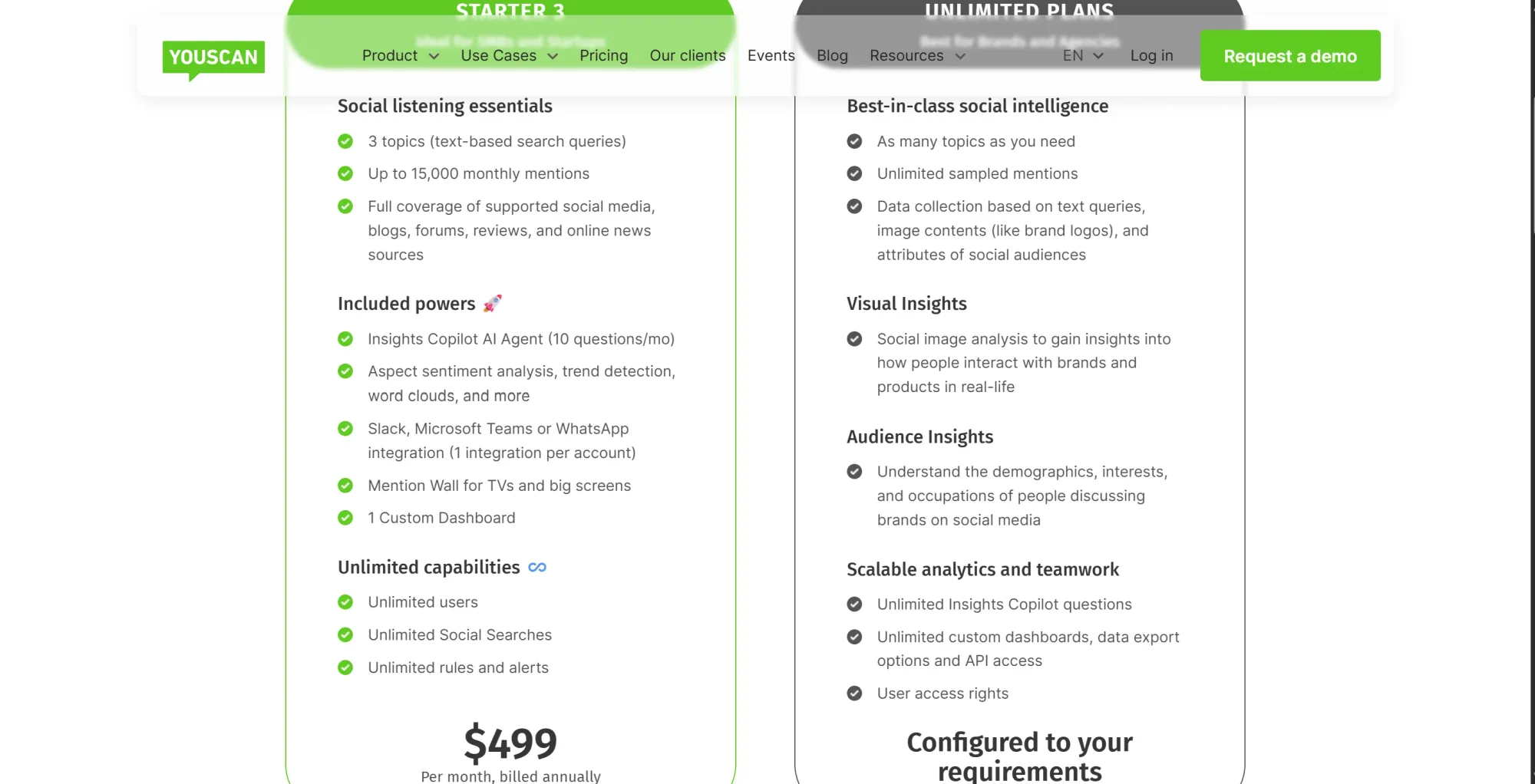
While marketed as "affordable," the $499/month starting price is a barrier for small businesses. It gets worse: YouScan uses a pay-per-feature model, which adds costs to the base subscription for advanced features like the API, Audience Insights, and Visual Insights.
9. Google Trends
- Best for: Identifying emerging trends and shifts in public interest within your niche before they proliferate mainstream media.
- G2 rating: 4.6/5 across 264 verified reviews.
- What I like: It is completely free to use, and it allows filtering results by countries.
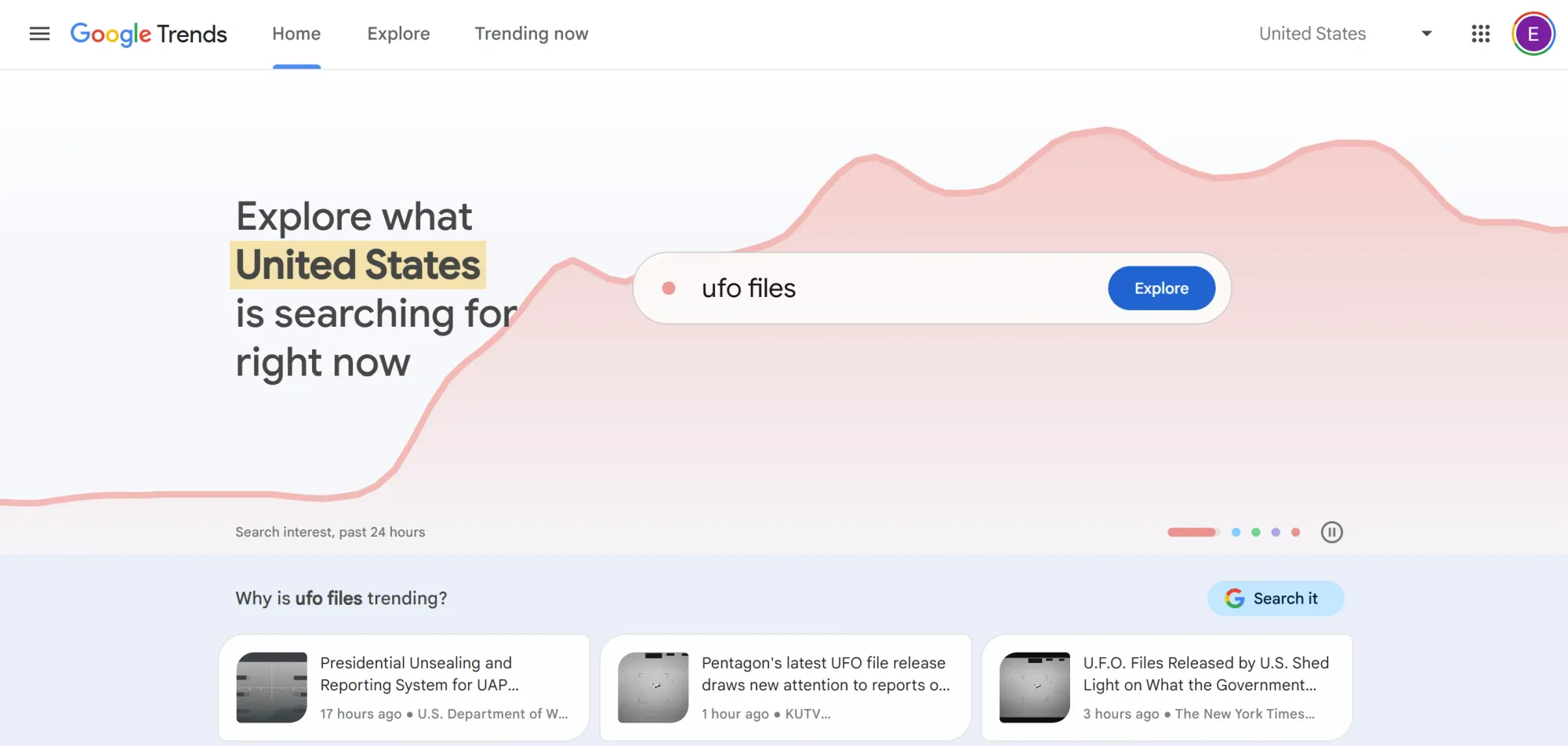
Google Trends is free and provides real-time insight into your audience's search behavior. It shows you relative popularity over time, so you get a clear picture of your brand's momentum, not just raw mention numbers that can easily be skewed by internet noise.
For instance, if your brand’s social mentions are high but search demand is low, you may be generating buzz without any real customer consideration. Conversely, rising searches with low mentions usually point to dark social activity you might not yet be tracking.
In Google Trends, you can filter insights by region or platform, like swapping from web search to YouTube Canada or Brazil.
It’s a great high-level approach tool, but it’s not ideal for serious brand monitoring. Since everything is on a relative scale, you never actually know the real number of people searching. A massive spike on your graph could represent a hundred thousand people or just a hundred.
Also, because it relies on sampled data, smaller brands with lower search volumes often end up with no data results or inconsistent lines that don’t actually reflect what’s happening on the ground.
Finally, Trends only tracks search engine input, completely missing the actual conversations happening on platforms like TikTok, Reddit, or Instagram, where modern brand sentiment is truly formed.
You may be monitoring your brand on the wrong platforms
Brand discovery has fundamentally changed in 2026. The traditional Google search, rank, and convert funnel is weakening. Many buyers are increasingly turning to AI like ChatGPT and Claude directly for comparisons on which brands to purchase from within your niche.
These AI tools build their answers from raw user conversations on subreddits, review sites, private forums, etc., all sites that most traditional monitoring tools can't reach.
That’s the gap Apify fills through a pipeline that pulls data (SERP results, visual and text mentions) from any web source, allows you to run whatever AI models you want for sentiment, and integrates results smoothly within your existing stack.
Sign up now and build your own custom brand monitor with $5 free (renewable) monthly credits.