Before Apify, Sponja cofounder Roee Tsur spent 10–20 hours a week manually searching LinkedIn for one painfully specific kind of company: B2B businesses that actively run webinars. With three Apify Actors and an afternoon, he replaced the manual hunt with a re-runnable pipeline that found 897 US companies advertising webinars, pinpointed 244 likely webinar owners by name and title, and surfaced the top marketing leader at 27 of his 36 best-fit accounts, all for under $20.
Background
Roee Tsur is the cofounder of Sponja, an AI webinar follow-up tool that turns webinars into pipeline: it scores every attendee for buying intent and drafts a personalized follow-up email for each one. Sponja is a two-person team, which means go-to-market falls to Roee.
The company's ideal customer is painfully specific: a B2B company that runs webinars regularly and cares enough about them to invest real money. There's no "runs webinars" filter on any sales database. That specificity is what made prospecting so hard, and what eventually made it so easy.
Our ideal customer is painfully specific: a B2B company that runs webinars and cares enough to spend real money on them. No sales database has a filter for that.
-- Roee Tsur, Cofounder, Sponja

There's no database of "companies that run webinars"
For months, Roee's prospecting was manual LinkedIn search: typing "webinar" into the search bar, opening profiles and company pages one by one, guessing whether an event from eight months ago meant an active program, then guessing again at who inside the company actually owned it.
The standard sales databases didn't solve it either. They can filter by industry, headcount, and title, but none of them can answer the one question that defines Sponja's ICP: Does this company actively run webinars right now?
Then it clicked: companies that pay to advertise their webinars on LinkedIn are, by definition, companies that run webinars and spend money on them. LinkedIn's Ad Library is public. Roee didn't need a database; he needed a scraper.
Three Actors and an afternoon
Roee searched Apify Store, found Actors that covered both steps, and wired them together.
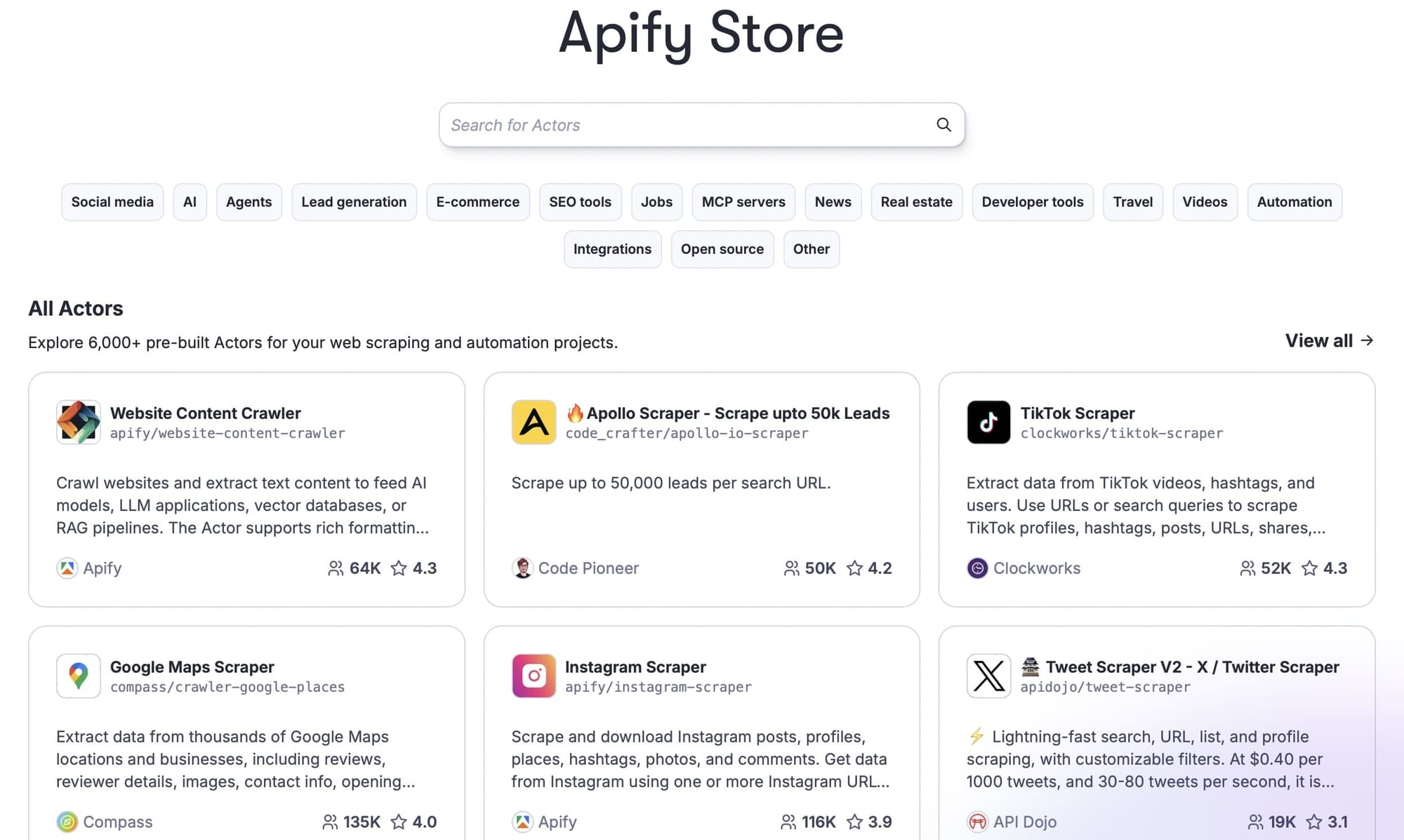
Step 1: Find the companies. LinkedIn Ad Library Scraper searches LinkedIn's public ad library by keyword. Roee ran it across seven keywords ("webinar," "webinar series," "on-demand webinar," "live demo," "fireside chat," "virtual event," and "virtual roundtable") in the US, with an earlier validation sweep in the UK and Germany. After deduplication, that produced 897 distinct US B2B companies actively advertising webinars, each with the actual ad copy, which he then auto-summarized into webinar topics and dates. Discovery cost around $1 in total.
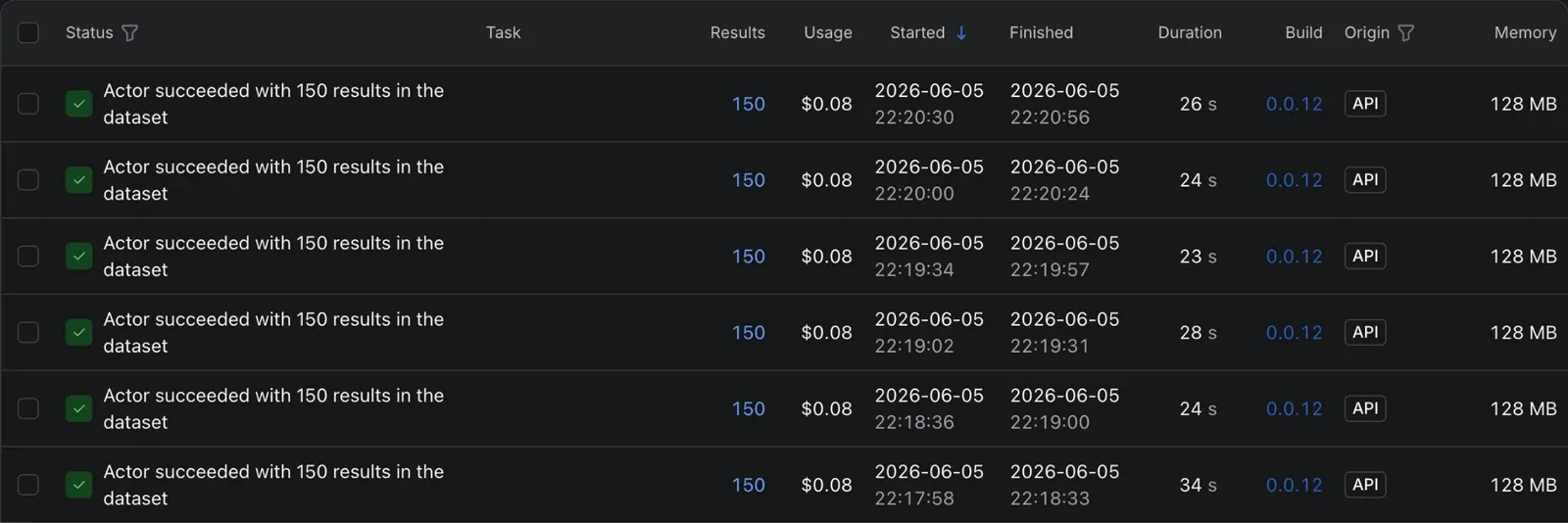
Step 2: Find the owner. For Sponja's best-fit accounts, LinkedIn Employees Scraper searched each company for the people who run events: titles like Director of Marketing Events, Head of Field Marketing, VP of Events Marketing, and Demand Generation. The Actor accepts many companies per run, so the entire employee step for 36 companies was just a handful of batched runs instead of hundreds of calls. Roee used LinkedIn Company Details Scraper to resolve advertiser names to company pages and pull headcount along the way.
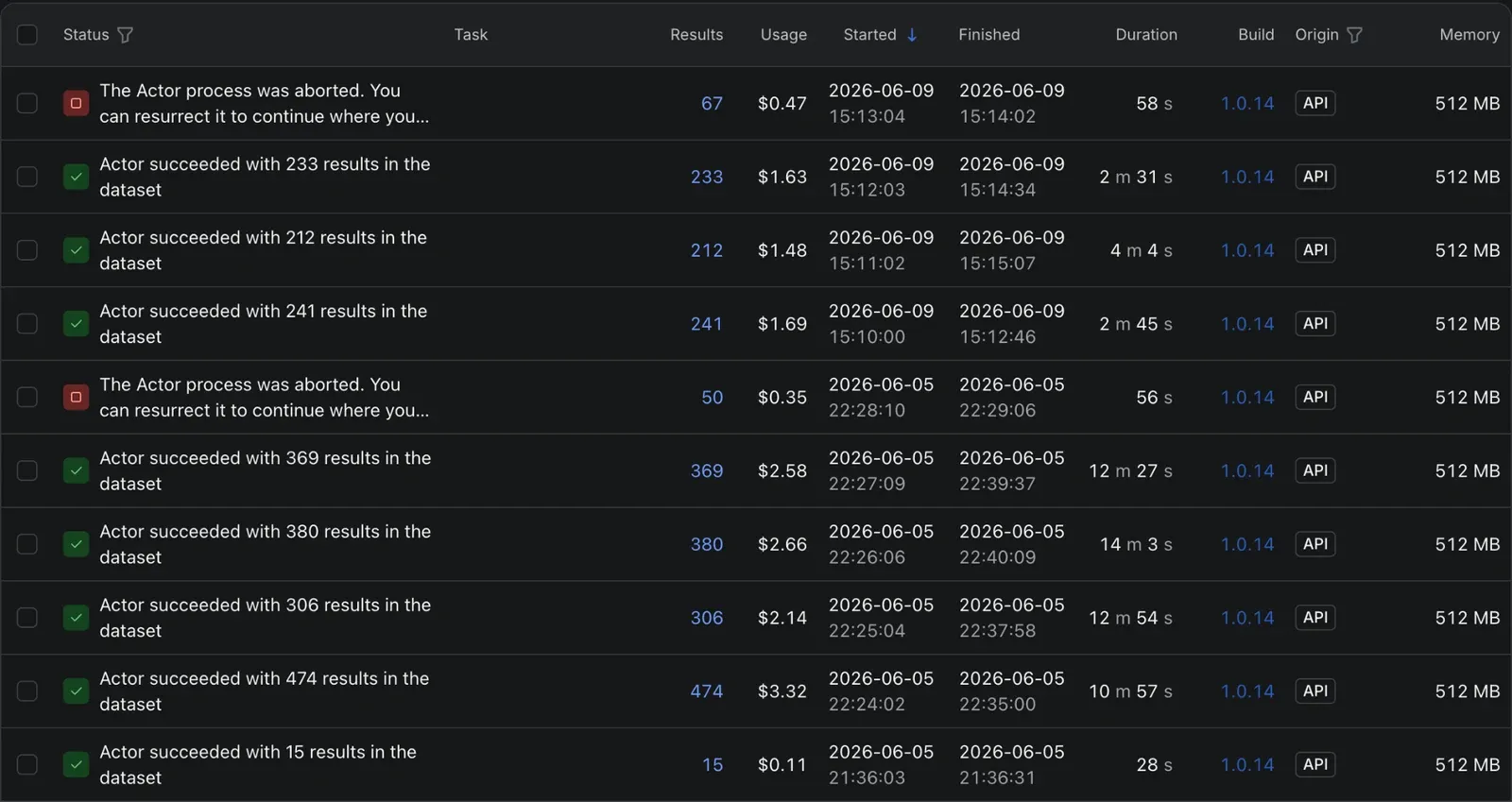
The setup took one afternoon of iterating. It wasn't friction-free, and that's worth sharing:
- Date filters returned zero results. LinkedIn's Ad Library scopes to currently and recently shown ads, not arbitrary date ranges. Once Roee stopped filtering by date, everything worked, and "recently shown" turned out to be the freshness signal he wanted.
- Name matching produced false positives. Public people-search occasionally matched employees to the wrong company with a similar name. The fix was a sanity check: if a small company suddenly shows more "webinar owners" than employees, flag it. That one guard cleaned up the entire list.
- Long runs outlive your patience, not the platform. Some batched runs exceeded his client timeout, but they kept running on Apify's side, and datasets are readable mid-run, so he could start building results before the runs even finished.
The results
- 897 companies actively advertising webinars identified and enriched with ad copy, webinar topics, and dates, a list no sales database could produce
- 1,264 event-marketing prospects extracted across the top 36 accounts, narrowed to 244 likely webinar owners, the actual people who own them, not generic marketing contacts
- Top marketing leader identified at 27 of 36 priority accounts for executive outreach
- Under $20 in total Actor spend for the entire pipeline
- From 10–20 hours a week of manual searching to a re-runnable pipeline that refreshes the list on demand
The people the pipeline surfaced held up to scrutiny too: directors of marketing events and VPs of events marketing at publicly traded enterprise software companies and well-known SaaS scale-ups, exactly the buyer Sponja serves.
List building stopped being part of my week. With Apify, the whole thing now re-runs on demand for less than the cost of lunch.
-- Roee Tsur, Cofounder, Sponja
Key takeaway
Stop looking for your ICP in databases and start looking for it in behavior. Nobody sells a list of "companies that run webinars," but those companies advertise, post, and hire in public, and Apify turns any of those public signals into a list.
"The insight that webinar advertisers are our market was worth more than any tool," Roee says.
Roee's advice: define the public behavior that proves someone is your customer, then find the Actor that captures it. Had he known this earlier, he'd have skipped months of manual LinkedIn archaeology.
Try it yourself
- LinkedIn Ad Library Scraper: find companies advertising anything your product relates to
- LinkedIn Employees Scraper: find the person who owns it
- LinkedIn Company Details Scraper: enrich with firmographics
All three run on Apify's free plan, so you can test the idea on your own ICP before spending anything.
And if your company is one of the 897, running webinars and winging the follow-up, that's the problem Sponja solves: every attendee scored for buying intent, every follow-up drafted before your coffee gets cold.
Questions about Sponja's pipeline? Connect with Roee on LinkedIn.

See Apify in another stack in the video below: