The competitive intelligence tool landscape is broader than well-known names like Semrush, Klue, or Crayon. It also includes lesser-known tools and flexible DIY solutions like Apify and Dify that let you build custom workflows instead of relying on out-of-the-box software.
Not all tools achieve their goal in the same way. Some focus on sales enablement, others on marketing and market insights, SEO and AI visibility, AI-assisted analysis, or even visual website change tracking.
This guide breaks down the best competitive intelligence tools. We will compare them across key criteria such as features, integrations, pricing, AI capabilities, and user reviews, so you can clearly understand the differences and make an informed decision.
Types of competitive intelligence tools
Competitive intelligence tools can be categorized in several ways (e.g., by use case, type of software, or target audience). However, at a high level, most systems fall into one of two main approaches:
- DIY solutions: They provide the building blocks to create custom competitive intelligence workflows tailored to your needs. This approach offers maximum control, allowing you to track exactly what matters and integrate with your existing stack. The trade-off is that setup and maintenance require more effort.
- Out-of-the-box platforms: They’re ready-made competitive intelligence solutions that you can start using right after the initial setup. They offer an all-in-one experience, combining data collection, analysis, and reporting in a single interface. Still, they can be more expensive and less customizable.
The choice between these two approaches depends on your team’s priorities:
| Aspect | DIY CI Solutions | Out-of-the-Box CI Platforms |
|---|---|---|
| Setup | More complex (requires building workflows by connecting components, and setting up integrations) | Quick to start (minimal, guided setup) |
| Flexibility | High, with full control over data sources and logic | Limited to platform features and supported integrations |
| Cost | Often cheaper, especially at scale or with selective usage | Typically higher subscription or licensing costs |
| Maintenance | Requires ongoing management and optimization | Managed by the vendor |
| Use cases | Best for tailored workflows, niche tracking, or integration-heavy stacks | Best for teams wanting a ready-to-use, well-established solution |
| Scalability | Scales based on your architecture and integrations | Scales within platform limits and pricing tiers |
| Target users | Those needing full control | Marketing, sales, and strategy teams seeking simplicity or already familiar with off-the-shelf tools |
Most important components
The ultimate competitive intelligence tool, whether DIY or out-of-the-box, should deliver the following set of capabilities:
- Data gathering: Collect competitor data from websites, social media, news, job boards, and other sources across regions and languages.
- Real-time monitoring: Continuously or frequently track competitor activity to deliver timely updates and reduce blind spots.
- AI features: Employ AI to classify, summarize, and filter large volumes of competitive data, removing irrelevant noise.
- Integration with external tools: Connect with platforms like Salesforce, HubSpot, Slack, and Teams to embed insights into existing workflows.
- Custom alerts and notifications: Send automated updates via email, chat tools, or dashboards based on defined triggers.
- Collaboration and socialization: Enable you to comment, share insights, and collaborate on competitive intelligence in a centralized workspace.
- Reporting: Use reporting software to turn collected intelligence into dashboards, summaries, and reports that stakeholders can actually use.
TL;DR: Top competitive intelligence tools compared
| Name | Approach | Best for | AI features | Integrations | G2 score | Free trial/option | Entry price |
|---|---|---|---|---|---|---|---|
| Apify | DIY + Out-of-the-box | Competitive intelligence workflow building based on web data | ✔ | Slack, Google Sheets, Zapier, AWS, n8n, Airtable, APIs, and 50+ others | 4.7/5 (448 reviews) | ✔ (free plan) | Starting at $19/mo |
| Klue | Out-of-the-box | Sales enablement competitive intelligence and battlecards | ✔ | Salesforce, HubSpot, Slack, Teams, Gong, Highspot, and others | 4.7/5 (443 reviews) | ✖️ (demo only) | Custom (undisclosed) |
| Similarweb | Out-of-the-box | Market benchmarking and traffic intelligence | ✔ | Google Analytics, Salesforce, Power BI, Snowflake, HubSpot, and others | 4.4/5 (1,163 reviews) | ✔ (free trial) | Starting at $125/mo |
| Dify | DIY | Building AI agents and custom CI workflows | ✔ | OpenAI, Anthropic, Slack, Apify, APIs, MCP tools, and others | 4.1/5 (20 reviews) | ✔ (free plan + open-source) | Starting at $59/mo |
| Semrush | Out-of-the-box | SEO-driven competitive intelligence and visibility tracking | ✔ | Google Analytics, Search Console, Looker Studio, Zapier, WordPress, and others | 4.5/5 (3,348 reviews) | ✔ (7-day trial) | Starting at $139.95/mo |
| Crayon | Out-of-the-box | Automated CI for sales battlecards and alerts | ✔ | Salesforce, Slack, Teams, Gong, Seismic, Highspot, and others | 4.6/5 (385 reviews) | ✖️ (demo only) | Custom (undisclosed) |
| Visualping | Out-of-the-box | Website change monitoring and competitor tracking alerts | ✔ | Slack, Teams, Google Sheets, Email, Webhooks, API, and others | 4.6/5 (415 reviews) | ✔ (free plan) | Starting at $140/mo |
| Ahrefs | Out-of-the-box | SEO and AI visibility competitive analysis | ✔ | Google Search Console, Sheets, Looker Studio, APIs, and others | 4.5/5 (683 reviews) | ✔ (limited free plan) | Starting at $29/mo |
| Contify | Out-of-the-box | Enterprise market intelligence and automated insights | ✔ | Salesforce, HubSpot, Slack, Teams, Power BI, email, and others | 4.5/5 (114 reviews) | ✔ (7-day trial) | Custom (undisclosed) |
| Kompyte | Out-of-the-box | Sales battlecards and automated competitor tracking | ✔ | Salesforce, HubSpot, Slack, Teams, Highspot, Showpad, and others | 4.3/5 (102 reviews) | ✖️ (demo only) | Custom (undisclosed) |
What are the best competitive intelligence tools?
Below is a selection of the best competitive intelligence tools, reviewed and ranked according to the criteria outlined above.
1. Apify
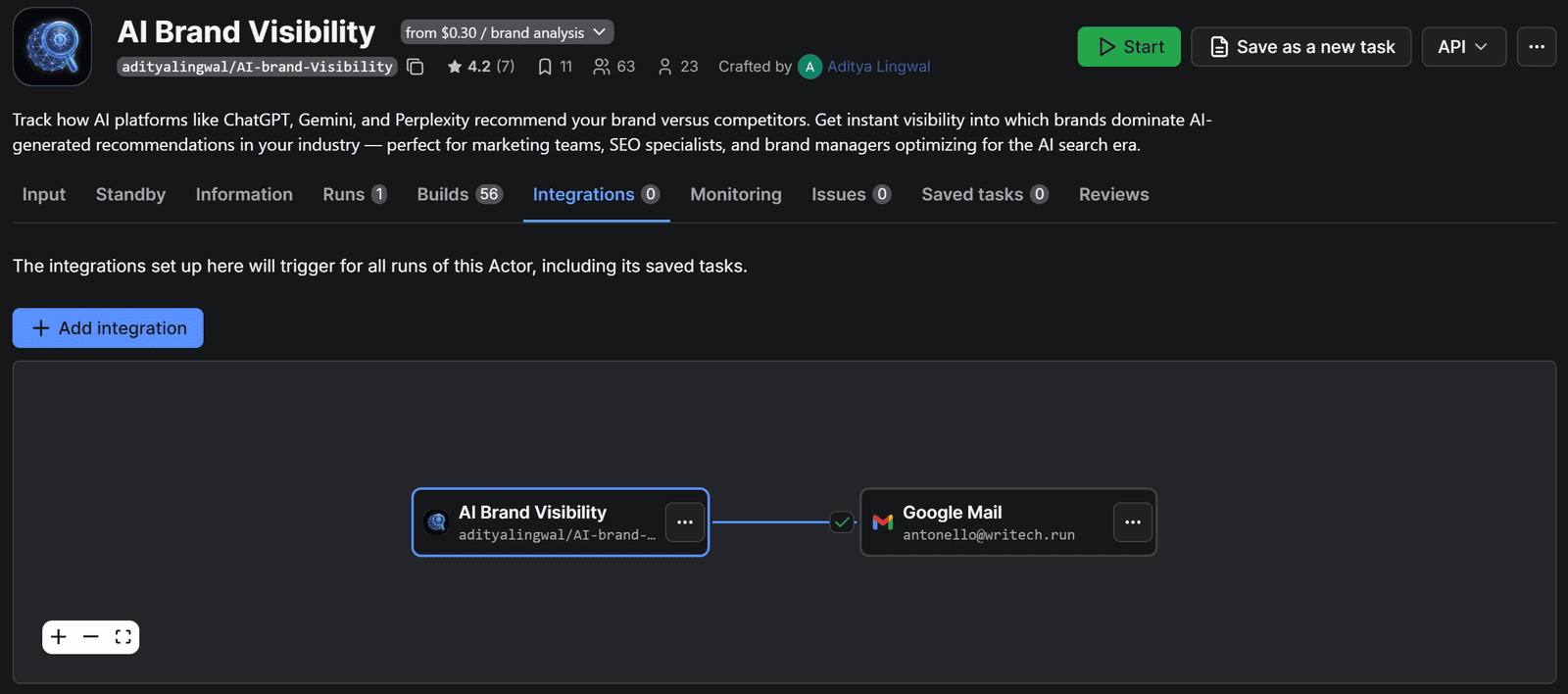
A full-stack platform for web scraping, data extraction, and automation. Among its many use cases, it also enables the creation of custom competitive intelligence systems through a DIY approach.
Instead of offering a predefined analytics experience, Apify comes with an ecosystem of 26,000+ pre-built Actors. These serverless cloud programs serve as building blocks for collecting, transforming, and orchestrating web data.
You can get started by adopting one of the dozens of ready-made competitive intelligence Actors. Alternatively, you can connect multiple Actors to build tailored automated CI workflows directly in the Apify web dashboard. That means Apify embraces both the DIY and out-of-the-box approaches.
In a DIY setup, you could add one Actor to scrape competitor pricing pages, another to track news or job postings, and a third to aggregate and structure the data via AI. Then, you can configure the results to be sent periodically to Slack or Google Sheets for ongoing monitoring.
Best for: Building highly customizable competitive intelligence tools without engineering overhead.
Type: Cloud-based web platform for DIY + out-of-the-box competitive intelligence tools.
Main features:
- Large library of 26,000+ ready-made Actors
- No-code custom workflow creation by combining multiple Actors into pipelines
- Scheduled monitoring of competitor websites and related web resources
- Real-time data extraction for up-to-date competitive intelligence signals
- Anti-blocking infrastructure (proxies, rotation, bypass mechanisms) for scalability
- Webhooks for event-based alerts and automation triggers
- APIs and SDKs for programmatic control of workflows
- MCP integration for enabling AI agents to call Actors as tools
- Data exploration and preservation via structured dataset storage
- Scalable serverless execution with automatic infrastructure handling
- Run tracking in the web app for ongoing CI pipelines
- GDPR, SOC 2 Type II, CCPA, ISO 27001-compliant infrastructure
Data sources: Website pages, search engine results, Google Maps data, AI output results, social media posts, Amazon product data, news sites, job boards, and all other publicly accessible web sources, depending on selected Actors.
Integrations: Slack, Google Drive, Google Sheets, Google Docs, GitHub, Airtable, Zapier, n8n, Airbyte, Make, Pinecone, LangChain, LlamaIndex, Qdrant, Milvus, AWS, MCP-enabled AI tools and agents, MCP Connectors that let Actors read from and write to external services, webhooks, custom via APIs, and countless others.
User reviews:
- G2 score: 4.7/5 (448 reviews)
- Strengths:
- Extensive pre-built Actor library
- Strong automation and scheduling capabilities
- Easy workflow setup
- Scalable infrastructure with minimal maintenance
- Concerns:
- Usage costs can be difficult to predict for some workflow runs
- Actor discovery can be improved
Pricing:
- Free monthly recurring plan available
- Subscription-based pricing (+ usage-based compute costs and optional add-ons):
- Starter: $19/month + usage-based compute costs
- Scale: $199/month + reduced compute unit pricing
- Business: $999/month + lowest compute pricing tier
- Custom pricing available for enterprise plans
2. Klue
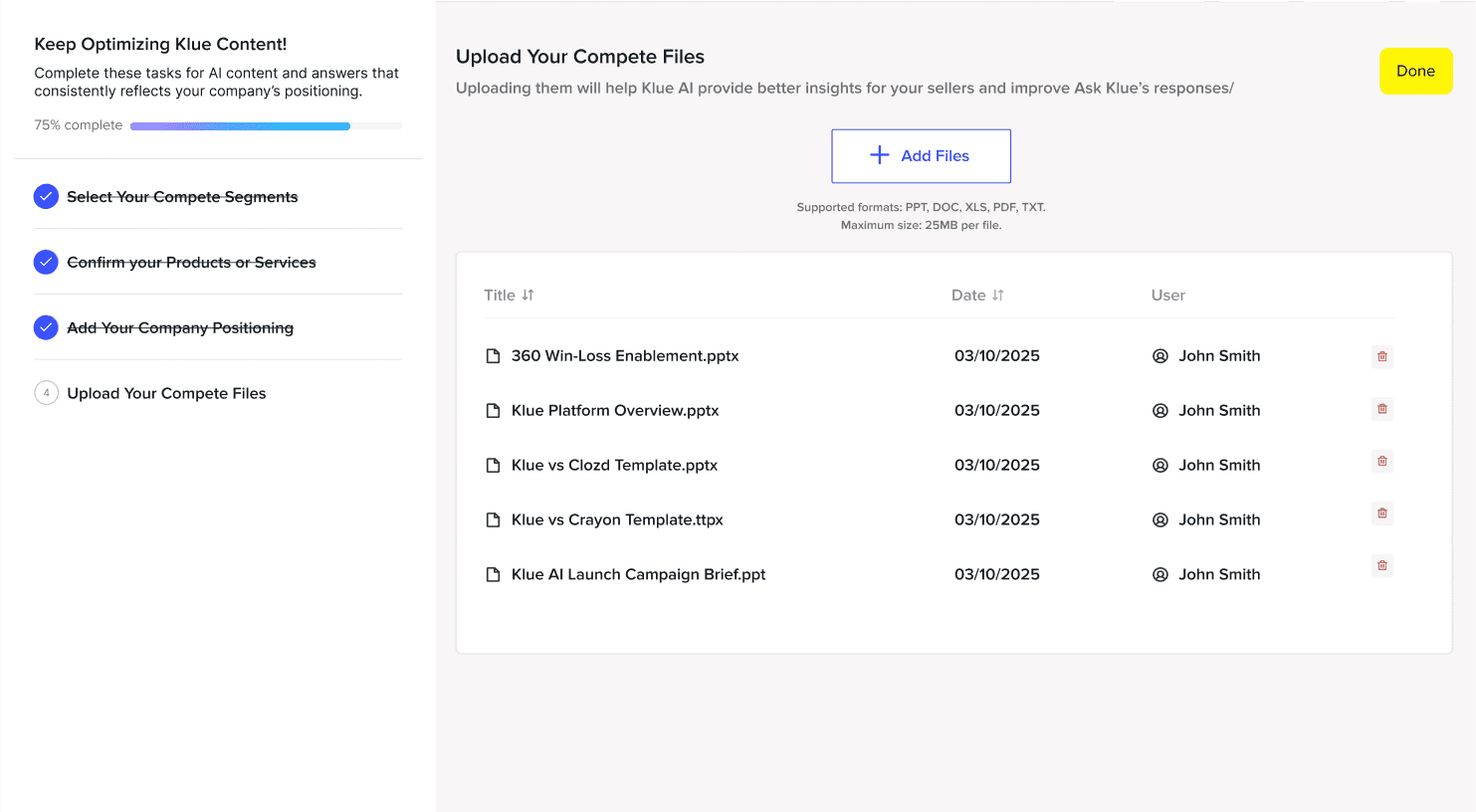
A win-loss and competitive intelligence tool that collects, organizes, and distributes market and competitor insights across an organization. Klue takes advantage of AI agents and automated workflows to surface deal-based intelligence, analyze buyer feedback, and generate competitor profiles.
Best for: Competitive intelligence for sales enablement to improve go-to-market execution.
Type: Out-of-the-box SaaS platform.
Main features:
- AI agents for automated competitive research and deal support
- Built-in Q&A assistant for real-time competitive answers
- Deal-specific competitive guidance
- Competitor profiles generation and updates
- Automated email digests and reporting
Data sources: G2 reviews, win-loss interviews, internal company documents, employee-submitted intel, CRM and sales activity data, and call recordings.
Integrations: Salesforce, HubSpot, Microsoft Dynamics, Slack, Teams, SharePoint, Highspot, Seismic, Showpad, Gong, Chorus, Gmail, Outlook, and a few more.
User reviews:
- G2 score: 4.7/5 (443 reviews)
- Strengths:
- User-friendly UI
- Deep actionable market intelligence
- Effective battlecards and digests
- Concerns:
- Alert noise
- Difficult content creation and table editing
- Information overload in some views
Pricing:
- No free trial
- Pricing disclosed only after demo-based evaluation
3. Similarweb
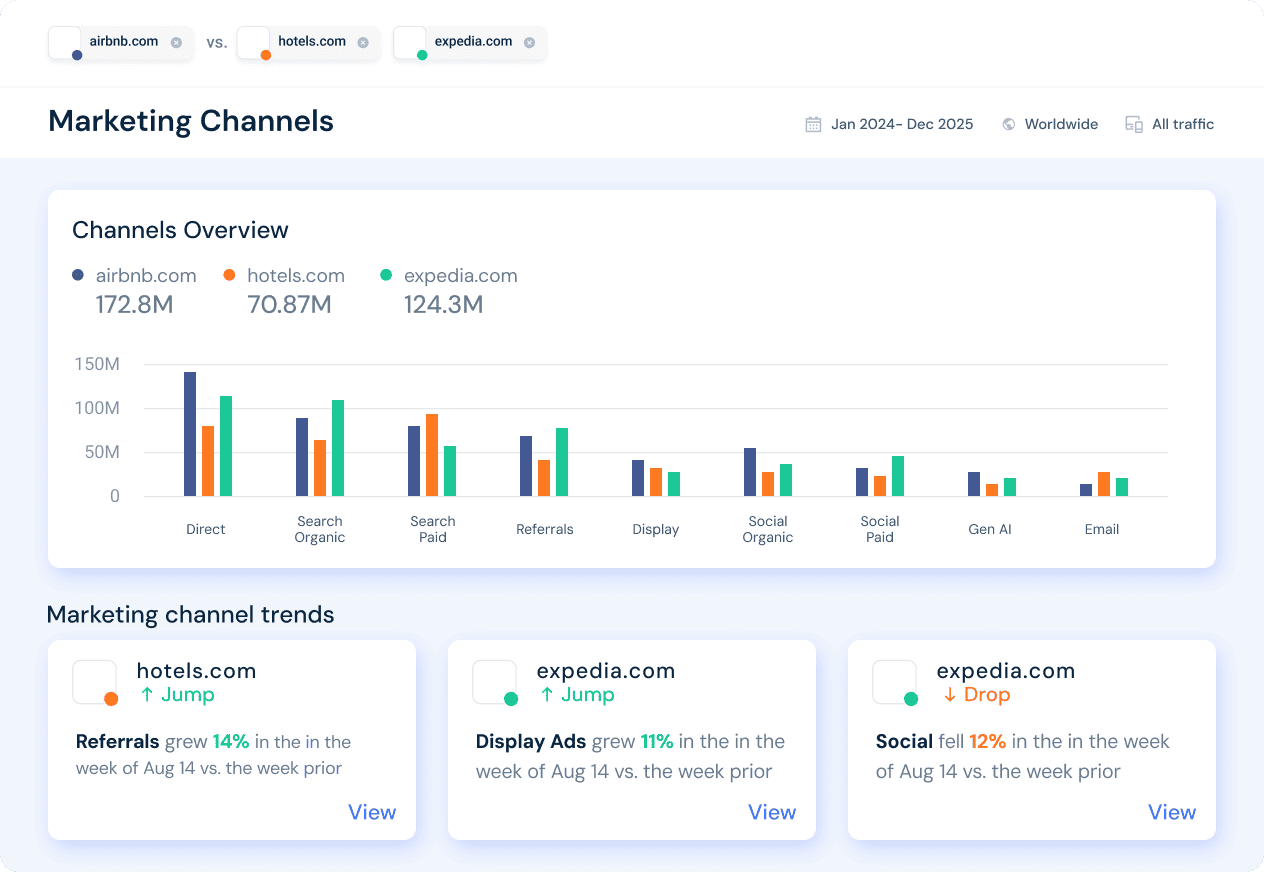
A competitive intelligence tool that provides visibility into competitor performance, market shifts, traffic, and engagement across multiple digital channels. Similarweb aggregates data from several online sources and applies AI-driven analysis to surface insights on growth patterns, keyword opportunities, and brand visibility, including presence in AI search channels.
Best for: Competitive benchmarking, PPC analysis, audience and channel performance analysis.
Type: Out-of-the-box SaaS platform.
Main features:
- Competitor discovery and identification of emerging players
- Keyword and organic growth opportunity analysis
- GenAI visibility tracking and brand presence monitoring
- Audience overlap and behavior analysis across competitors
- Competitive tracking alerts
Data sources: Website traffic data, search keyword datasets, GenAI platform outputs, advertising intelligence, and global audience behavior signals.
Integrations: Google Looker Studio, Tableau, Power BI, Microsoft Excel plugin, HubSpot, Salesforce, AWS, Google Cloud Platform, Snowflake, Databricks, and other BI, CRM, and data analytics solutions via APIs and native connectors.
User reviews:
- G2 score: 4.4/5 (1,163 reviews)
- Strengths:
- Fast navigation experience
- Strong competitive traffic intelligence
- Rich visual dashboards and benchmarking
- Concerns:
- Data accuracy reported as inconsistent in some cases
- Some features are priced above $10K+/mo
- Limited granularity for niche data
Pricing:
- Free trial available
- Subscription-based plans start at $125/mo for single users, scaling up to $25,000+/mo for full feature sets
- Enterprise-level offerings require contacting sales for custom pricing
4. Dify
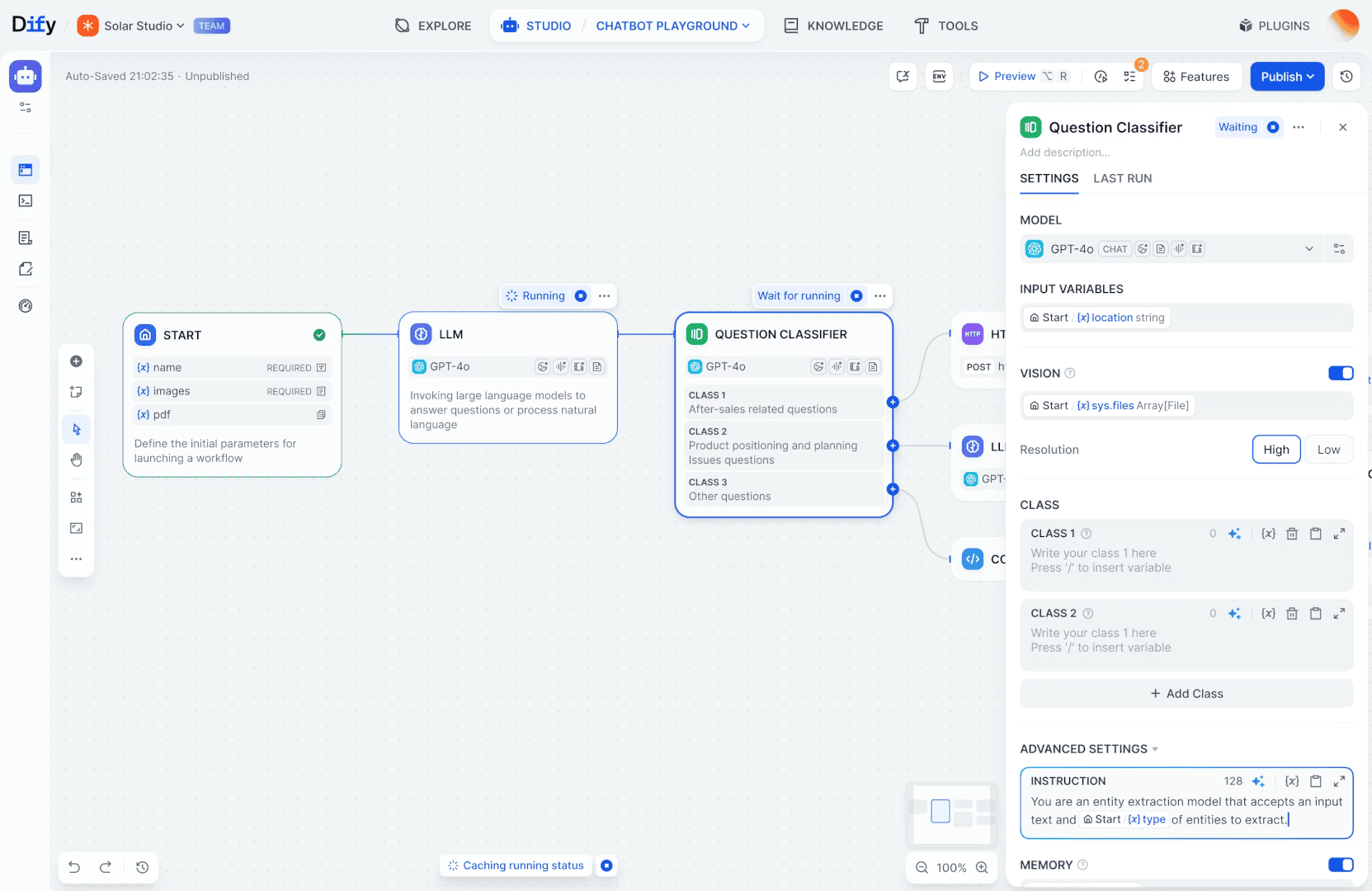
A low-code/no-code platform for building AI-powered applications and agentic workflows. It has an open-source nature, boasting over 130k GitHub stars. It gives you the ability to design and implement custom workflows in a drag-and-drop interface. This makes it suitable for creating tailored competitive intelligence systems via data processing, RAG pipelines, and LLM integrations.
Best for: Building custom competitive intelligence AI agents for your unique business needs.
Type: Open-source and cloud-based DIY platform for building AI applications and workflows.
Main features:
- Visual workflow builder for AI automations
- Support for a long list of LLMs, including open-source and proprietary
- Integration with tons of external systems via APIs, MCP, or built-in plugins
- Workflow automation with triggers and execution controls
- Observability and deployment infrastructure for production-ready AI agents
Data sources: User-defined sources via plugins and integrations, including websites, search engines, databases, APIs, internal documents, and custom datasets.
Integrations: Hundreds of integrations, including LLM providers (e.g., OpenAI, Anthropic, Hugging Face), search tools (e.g., Google, DuckDuckGo), web data tools (e.g., Apify, Bright Data, Firecrawl, etc.), communication tools (e.g., Slack, Discord), and services and data sources via API or MCP.
User reviews:
- G2 score: 4.1/5 (20 reviews)
- Strengths:
- Intuitive drag-and-drop experience
- Powerful integrations and API connectivity
- Quick AI workflow and chatbot creation
- Concerns:
- Not fully production-ready stability reported
- UI can feel overwhelming initially
- Customer support mentioned as unresponsive
Pricing:
- Free, open-source option for self-hosting scenarios
- Free plan for cloud-based hosting
- Subscription-based plans for hosted usage:
- Professional: $59/mo
- Team: $159/mo
- Custom options available for enterprise needs
5. Semrush
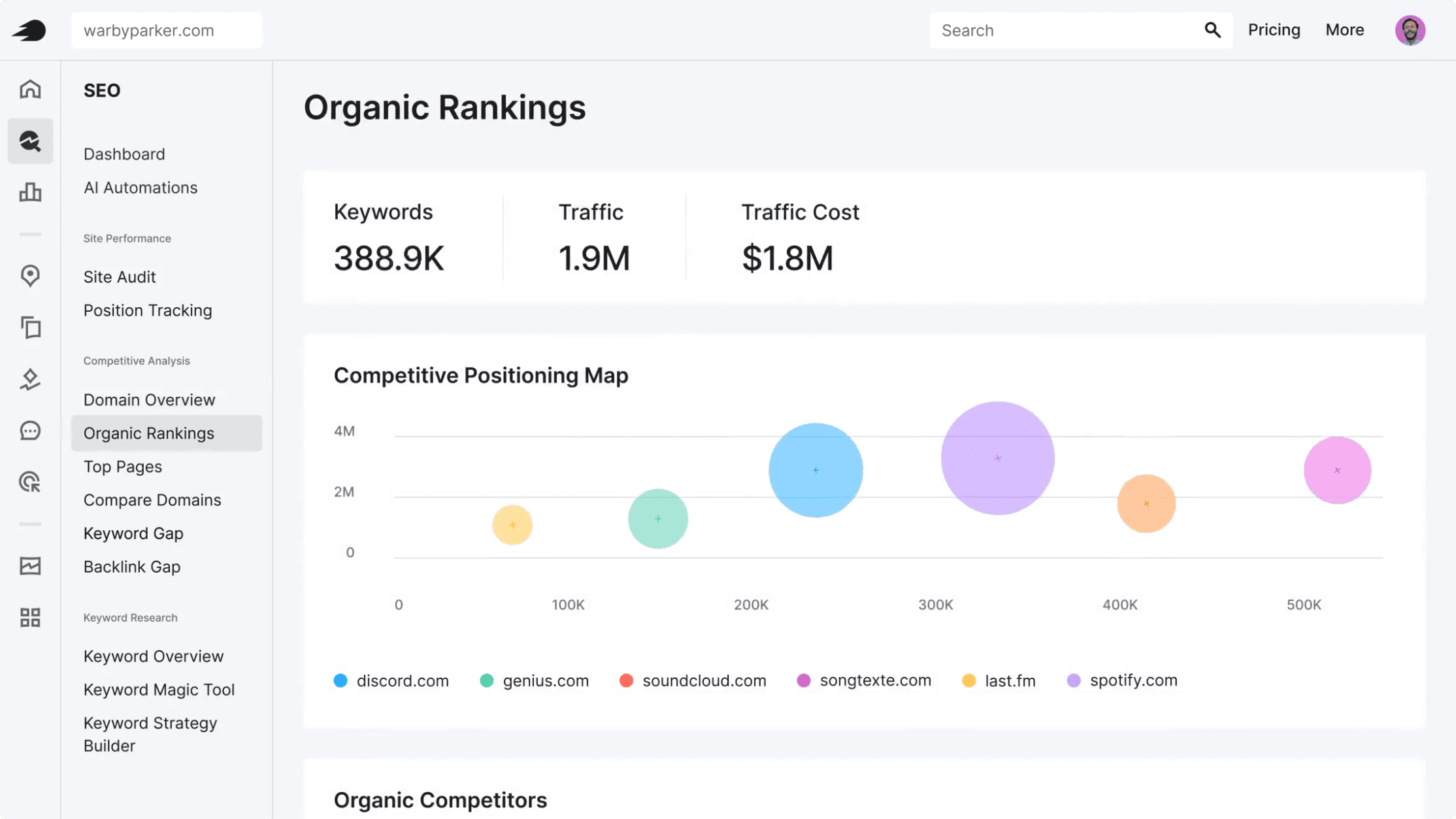
An online solution specialized in digital marketing and SEO that helps monitor and improve visibility across traditional and AI-driven search engines. It aggregates large-scale keyword, backlink, domain, and prompt data to support competitive research, content optimization, and performance tracking. Semrush covers SEO, traffic, and market insights to help you understand visibility and competitor positioning.
Best for: Search visibility, competitor SEO benchmarking, AI search presence, and organic traffic growth analysis.
Type: Out-of-the-box SaaS platform.
Main features:
- AI visibility tracking in LLMs
- Keyword research and discovery
- Competitor SEO and market benchmarking
- Rank tracking and SERP monitoring
- Content optimization and creation support
Data sources: Search engine results, AI platform outputs, web crawls, and digital marketing datasets.
Integrations: Google Analytics, Google Search Console, Google Ads, Google Sheets, Google Docs, Looker Studio, WordPress, Trello, monday.com, Zapier, and multiple social platforms.
User reviews:
- G2 score: 4.5/5 (3,348 reviews)
- Strengths:
- All-in-one SEO and marketing platform
- Detailed keyword and competitor analysis
- Time-saving unified SEO workflows
- Concerns:
- Pricing perceived as high for small teams
- The number of features can feel overwhelming at first
- Some metrics are estimates, not exact
Pricing:
- 7-day free trial
- Subscription-based plans for regular users (+ add-ons for reporting, lead generation, etc.):
- Pro: $139.95/mo
- Guru: $249.95/mo
- Business: $499.95/mo
- Custom pricing for enterprise needs, with the option for a demo
6. Crayon
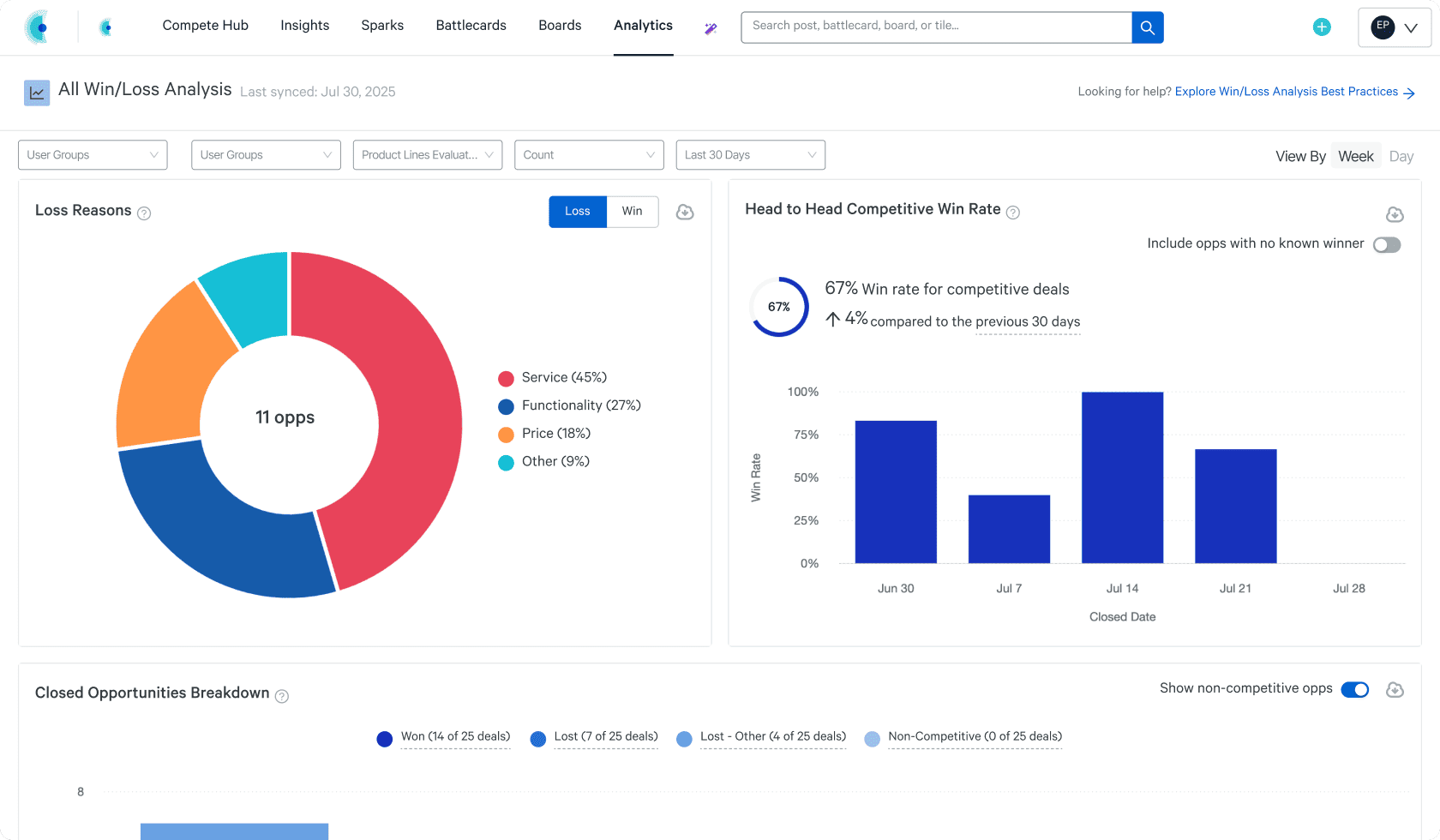
A competitive intelligence platform that continuously monitors competitors across websites, news, pricing pages, reviews, and more. It then relies on AI to summarize and surface key insights. Crayon turns this intelligence into battlecards, alerts, and sales enablement content, delivering it directly into tools like Slack, Salesforce, and Teams. This way, revenue teams can act on it instantly.
Best for: Automated competitive intelligence for revenue team activation.
Type: Out-of-the-box SaaS platform.
Main features:
- AI summarization
- Importance scoring
- Sales battlecards
- Alerts
- Win/loss analysis
Data sources: Competitor websites, pricing pages, news, job listings, support documents, customer reviews, call recordings, win/loss interviews, and internal collaboration tools.
Integrations: Salesforce, Slack, Teams, Highspot, Seismic, Showpad, SharePoint, Gong, Chorus, Clari, CRM systems, and AI tools via MCP or API.
Ease of use: Guided workflows, automated insights, and AI-driven features to support non-technical teams.
User reviews:
- G2 score: 4.6/5 (385 reviews)
- Strengths:
- Excellent, responsive customer support
- Strong automated competitive intelligence insights
- Deep integrations
- Concerns:
- AI features seen as limited
- Manual effort for maintenance tasks
- Limited non-digital intelligence coverage
Pricing:
- No free trial
- Custom pricing based on your specific needs
7. Visualping
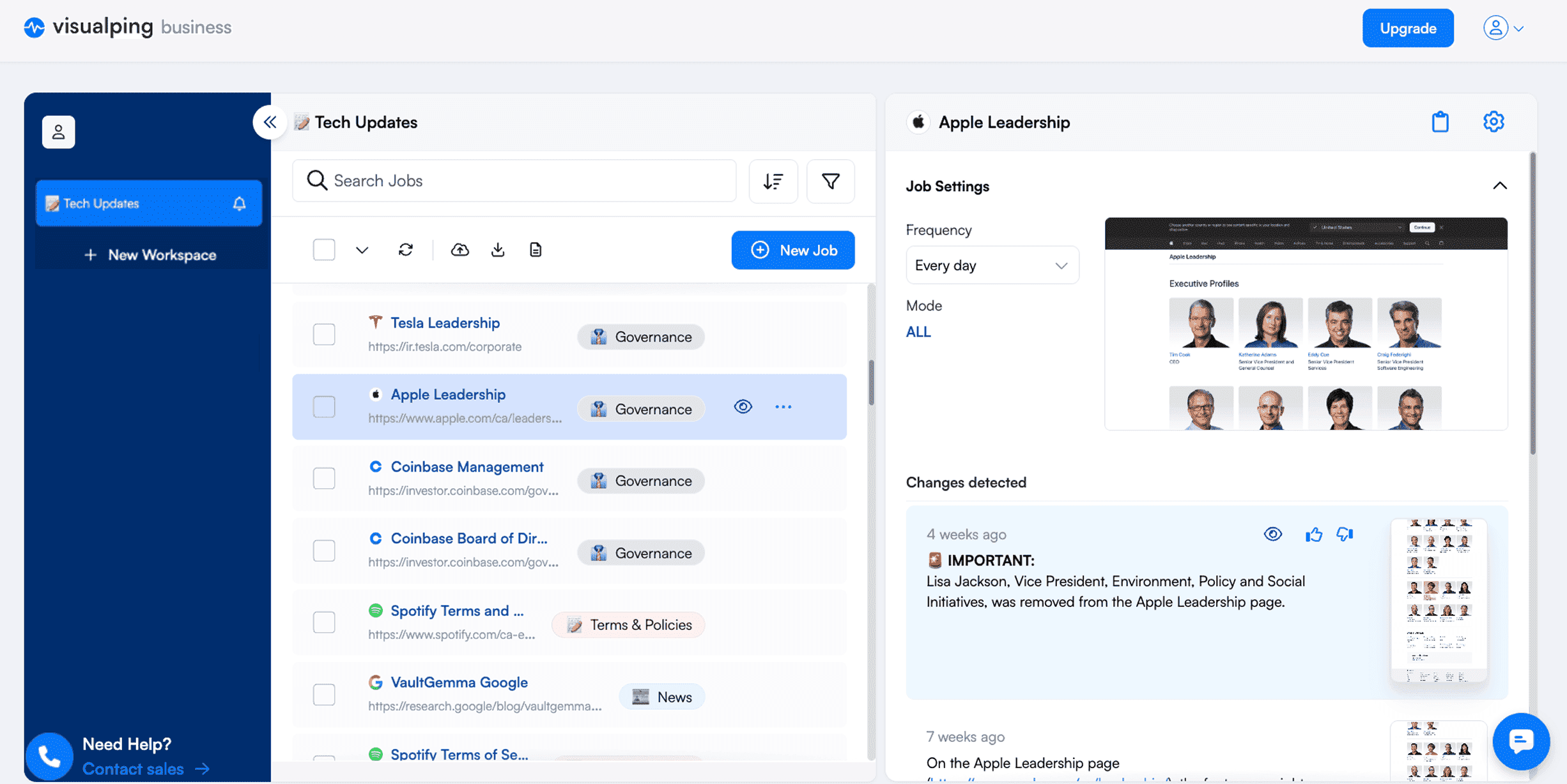
A website change detection and monitoring tool that tracks updates across webpages and delivers alerts when changes occur. Visualping harnesses AI to highlight and interpret relevant modifications. It helps you stay informed about competitor activity, regulatory updates, pricing changes, and online content shifts through structured notifications and visual comparisons.
Best for: Monitoring website changes for visual competitor tracking.
Type: Cloud-based SaaS website, available also as a Chrome extension.
Main features:
- Website change detection and monitoring
- Real-time alerts on detected updates
- AI analysis of change relevance
- Before-and-after screenshot comparison
- Custom monitoring of page elements and keywords
Data sources: Any webpage.
Integrations: Email, Slack, Teams, Google Sheets, webhooks, and API integrations.
User reviews:
- G2 score: 4.6/5 (415 reviews)
- Strengths:
- Simple interface
- Quick setup
- Instant notifications for page changes
- Concerns:
- Limited free plan
- Some alerts considered irrelevant
- Enterprise tiers seen as expensive
Pricing:
- Free plan for personal use
- Paid plans starting at $140/mo for business use
- Enterprise solutions with custom pricing (starting from ~$3,000/year), with free trial available
8. Ahrefs
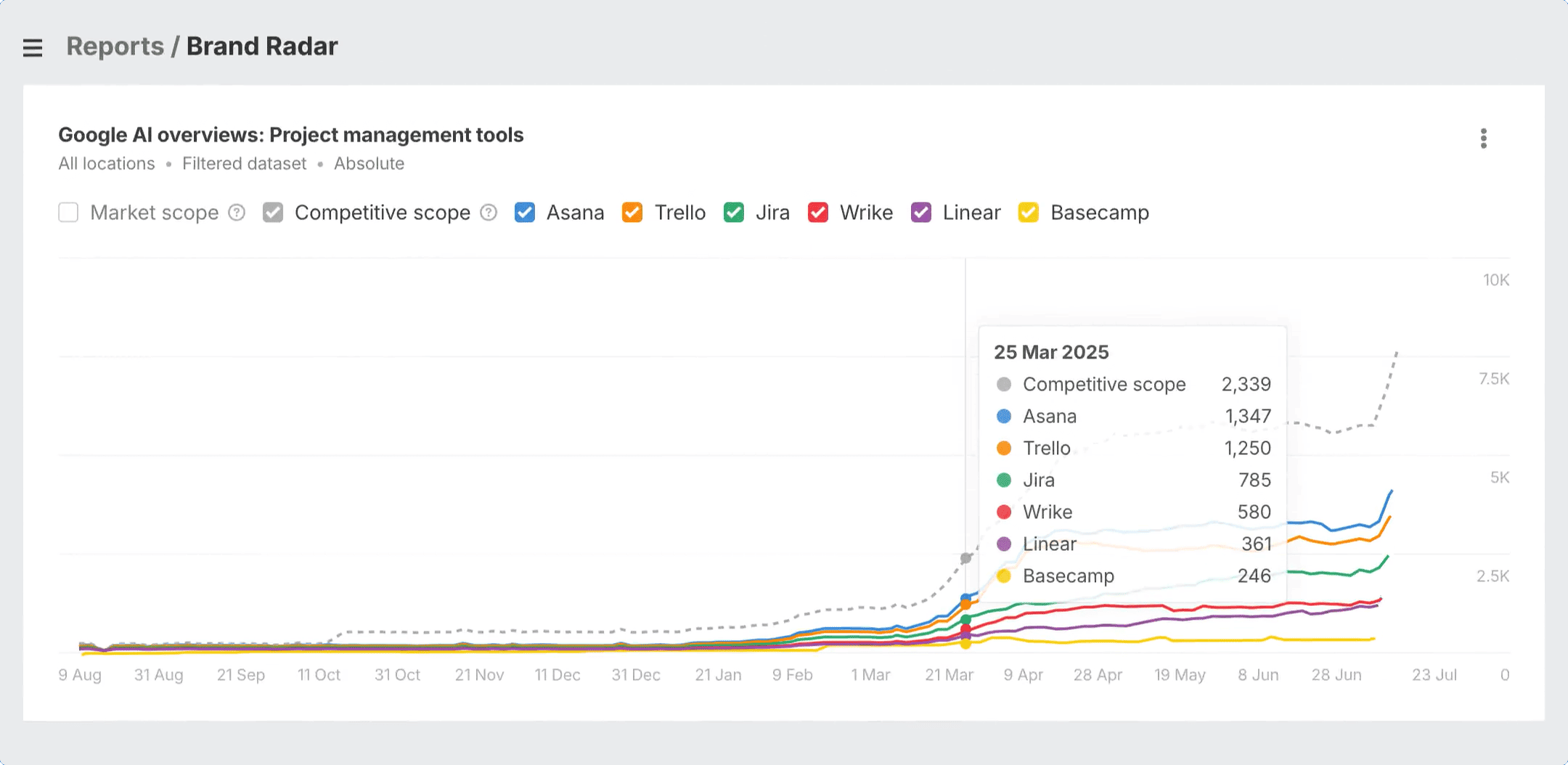
An online solution for monitoring search and AI visibility, analyzing competitors, and tracking performance across websites. Ahrefs combines SEO, brand monitoring, and content intelligence to surface insights from search engines, AI platforms, backlinks, and keywords. It supports ongoing competitive analysis, reporting, and optimization workflows across marketing teams.
Best for: Tracking brand visibility in search and AI platforms, monitoring competitors’ organic and paid performance.
Type: Out-of-the-box SaaS platform.
Main features:
- Exploring competitor websites and analyzing specific traffic
- Tracking brand visibility across AI platforms and LLMs
- Performing keyword research
- Monitoring search rankings over time
- Discovering web mentions and link opportunities
Data sources: Search engine results, AI platform outputs, web crawl data, backlink indexes, and web mentions.
Integrations: Google Sheets, Google Docs, Google Search Console, LLM providers via API, Looker Studio connectors, custom integrations via API, Screaming Frog SEO Spider, Netpeak Checker, and other SEO and analytics tools.
User reviews:
- G2 score: 4.5/5 (683 reviews)
- Strengths:
- Accurate backlink data
- Comprehensive keyword research
- Intuitive interface
- Concerns:
- High pricing for small teams or freelancers
- Steep learning curve
- Credit limits restrict deep analysis usage
Pricing:
- No general free trial, but testing is available via a limited Ahrefs Free plan
- Subscription-based plans (+ additional add-ons for specific features):
- Starter: $29/mo
- Lite: $129/mo
- Standard: $249/mo
- Advanced: $449/mo
- Enterprise: $1,499/mo
9. Contify
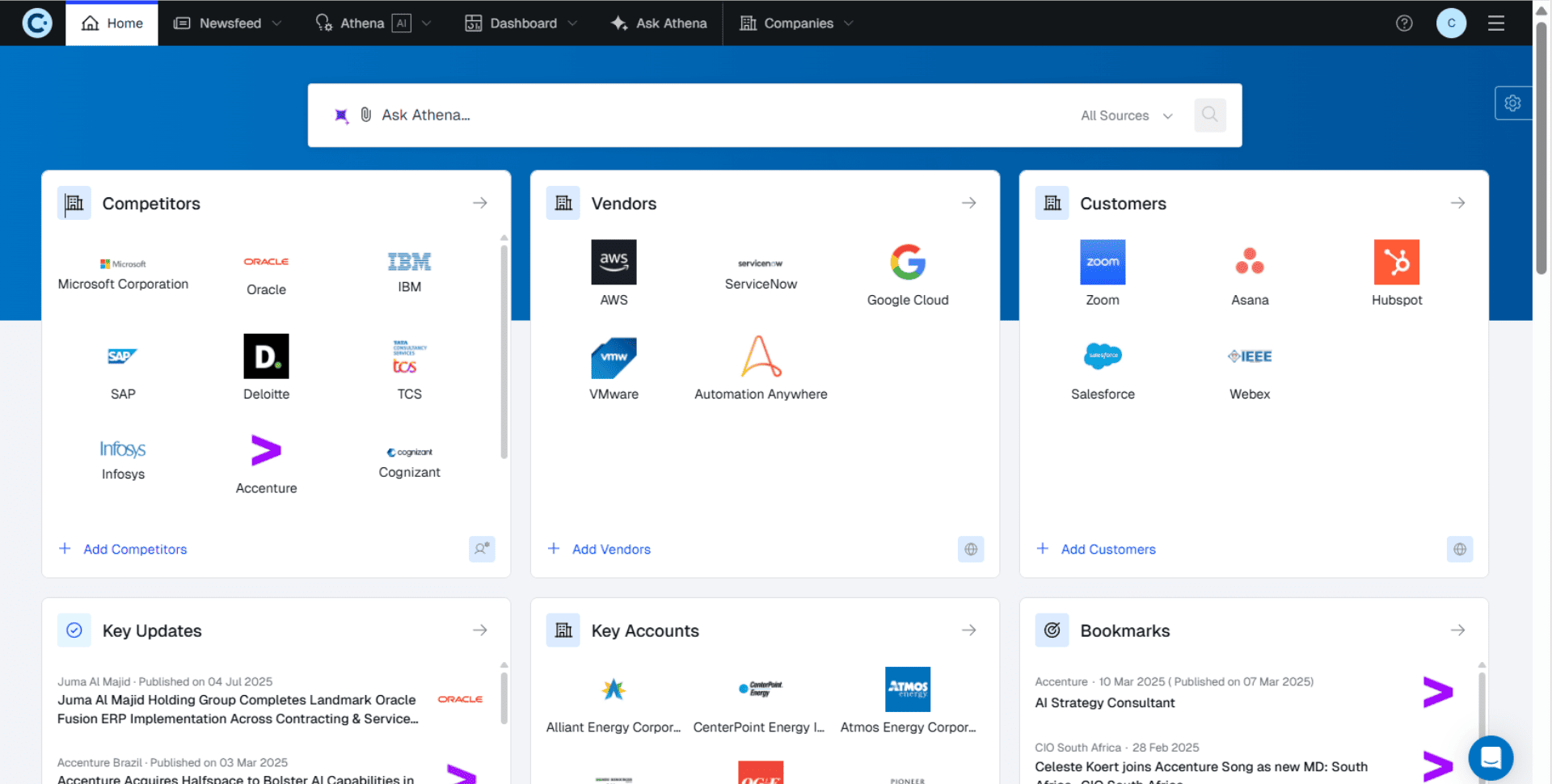
An AI-first market and competitive intelligence solution. It aggregates and analyzes data from global and internal sources to deliver decision-ready insights. Contify transforms unstructured information into structured intelligence using AI, helping you track competitors and markets. Insights are delivered through dashboards, alerts, and newsletters adapted to different roles and strategic priorities.
Best for: Competitor monitoring and account intelligence for organization-wide decision support.
Type: Out-of-the-box, AI-native SaaS platform.
Main features:
- Built-in Athena AI to prompt for business facts and insights
- Automated alerts
- Newsfeeds from global and curated intelligence streams
- AI-driven data extraction and insight generation
- Customizable dashboards, templates, and battlecards
Data sources: Websites, news sources, company websites, social and digital content, internal enterprise sources, multilingual sources, and proprietary crawled data.
Integrations: Slack, Teams, Salesforce, HubSpot, Power BI, email systems, and custom API-based integrations.
User reviews:
- G2 score: 4.5/5 (114 reviews)
- Strengths:
- Thorough market intelligence insights
- Responsive customer support
- Automated real-time competitive updates
- Concerns:
- Limited collaboration features
- UI/UX needs improvement
- Pricing perceived as expensive
Pricing:
- 7-day free trial available
- Custom, non-publicly disclosed pricing
10. Kompyte
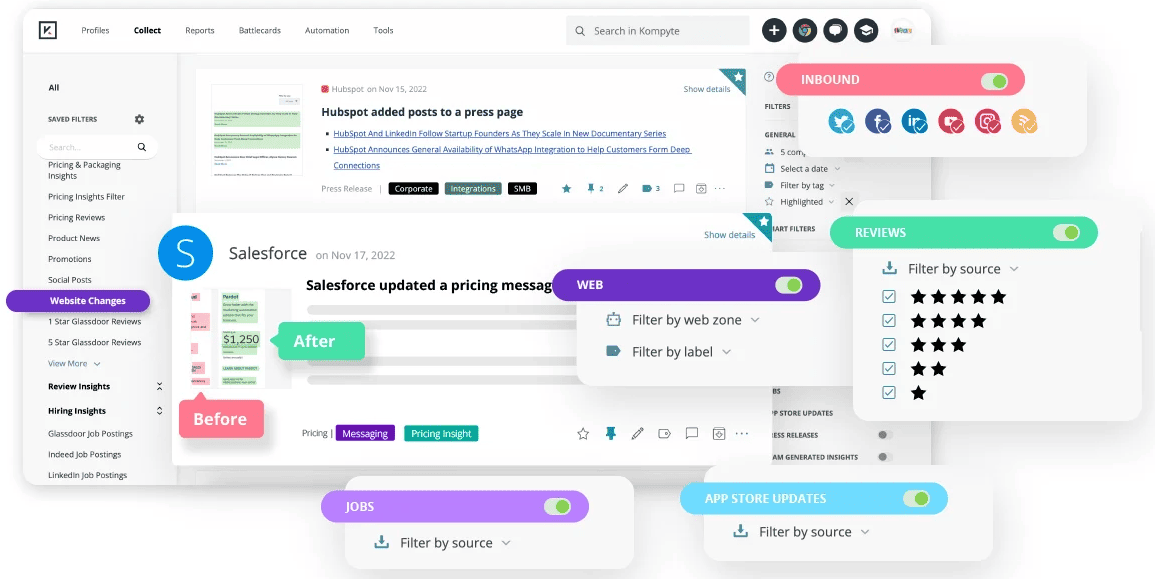
A competitive intelligence automation tool that continuously tracks competitors across digital sources. Then, it utilizes AI to filter, summarize, and surface actionable insights. Kompyte delivers updates through battlecards, alerts, and reports within popular sales teams' tasks. It helps understand competitor movements, market shifts, and win-loss drivers while reducing manual research effort. It was acquired by Semrush in 2022.
Best for: Sales battlecards and automating competitive intelligence for revenue, marketing, and product teams.
Type:
- Out-of-the-box SaaS platform.
Main features:
- Sales battlecards creation, updating, and distribution
- Real-time alerts on competitor updates and market changes
- Win/loss analysis and reporting capabilities
- Competitive benchmarking across traffic, channels, and engagement
- Integration of insights directly into CRM and sales workflows
Data sources: Websites, social media, ads, job postings, RSS feeds, industry publications, review platforms, app stores, and search marketing data.
Integrations: Salesforce, HubSpot, Slack, Teams, Google Drive, OneDrive, Highspot, Showpad, plus CRM systems and sales enablement tools.
User reviews:
- G2 score: 4.3/5 (102 reviews)
- Strengths:
- Simple UI
- Real-time competitive intelligence tracking
- Battlecards to streamline sales enablement
- Concerns:
- Occasional outdated information
- AI outputs sometimes irrelevant or noisy
- Lacks depth for advanced users
Pricing:
- No free trial, but you can get a demo
- Subscription-based plans (Essentials, Professional, Unlimited) with undisclosed pricing
Choose the best tool for your use case
Choosing a competitive intelligence tool depends less on “which is best” and more on your team’s needs, budget, and seniority.
For maximum flexibility and control, go with DIY-first platforms like Apify and Dify. Apify is ideal for building CI workflows around web data, while Dify is better for designing agent-based CI systems.
If you’re looking for ready-to-use enterprise competitive intelligence tools, Klue, Crayon, Contify, and Kompyte are the main options. For SEO and digital market intelligence, Semrush, Ahrefs, and Similarweb provide the most complete experiences. Finally, Visualping is useful for tracking website changes and competitor updates.
Rule of thumb:
- DIY flexibility → Apify, Dify
- Enterprise CI workflows → Klue, Crayon, Contify, Kompyte
- SEO & visibility → Semrush, Ahrefs
- Market benchmarking → Similarweb
- Change monitoring → Visualping
Conclusion
In this article, you learned what competitive intelligence tools need to be effective and the main criteria for selecting them. Here, we reviewed and compared the best competitive intelligence tools: Apify, Klue, Similarweb, Dify, Semrush, Crayon, Visualping, Ahrefs, Contify, and Kompyte.
Apify stands out thanks to its high versatility when building custom CI workflows, combined with the ability to just go for an existing competitive intelligence Actor.