Search for "App Store API" and the first result is Apple's own. There's no extra charge for it, but it only works if you're already in the Apple Developer Program ($99/year), and it has a hard ceiling: App Store Connect only serves data about apps you own - your builds, your sales reports, and the reviews left on your listing. The moment you want data on an App Store app you don't own, the official API gives you nothing.
If you’re trying to find out which apps are currently winning the rankings, what users complain about, or how often they ship updates, you need another solution. Apple App Store Scraper can get details, ratings, reviews, and metadata for any app on the store and turn it into market and competitor research. No API key, no login, and you pay only for what you pull.
Actors have access to platform features such as built-in proxy management, anti-bot evasion support, integrated storage with structured CSV/Excel/JSON exports, and standardized input parameters (URLs, keywords, limits, etc.). Actors integrate easily with tools like Make, n8n, or into AI workflows, so you can send your data directly into analysis pipelines without manual handling.
How to collect App Store data, step by step
Running Apple App Store Scraper takes a few steps, from setup to exporting data you can analyze. You don't write code or manage proxies.
Step 1: Set up the Actor
Open Apple App Store Scraper in Apify Store and click Try for free. If you don't have an account yet, you can create one with your email, Google, or GitHub account.
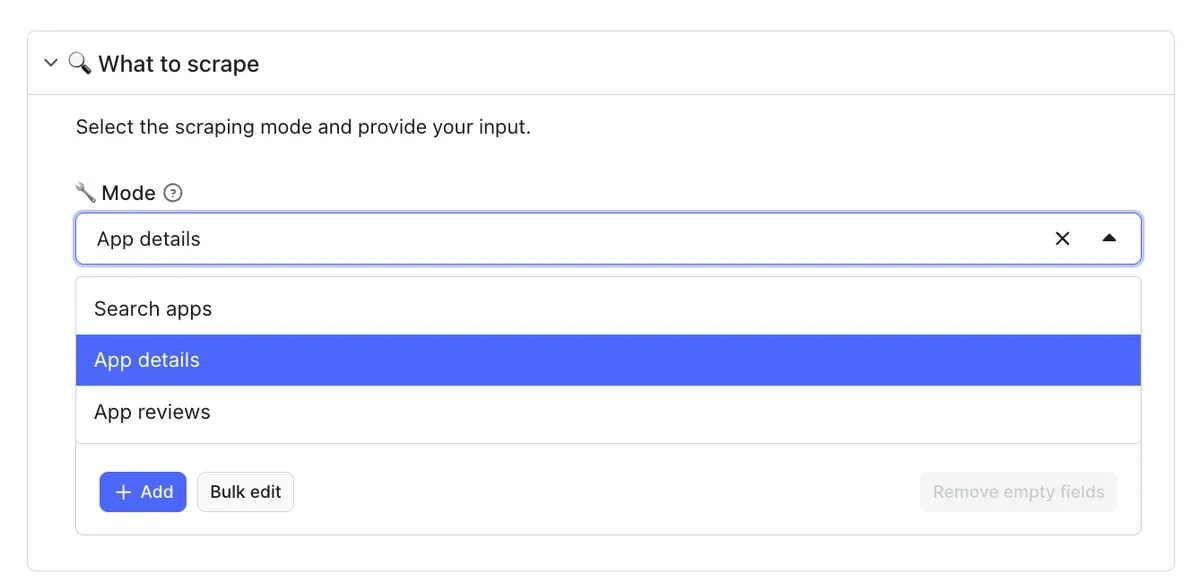
Pick a mode: Search takes a keyword like "photo editor" and returns the matching apps for a given country. Details takes app URLs or IDs and returns full metadata for each, with an option to pull reviews alongside. Reviews takes the same app inputs and returns individual user reviews, sorted by most recent or most helpful.
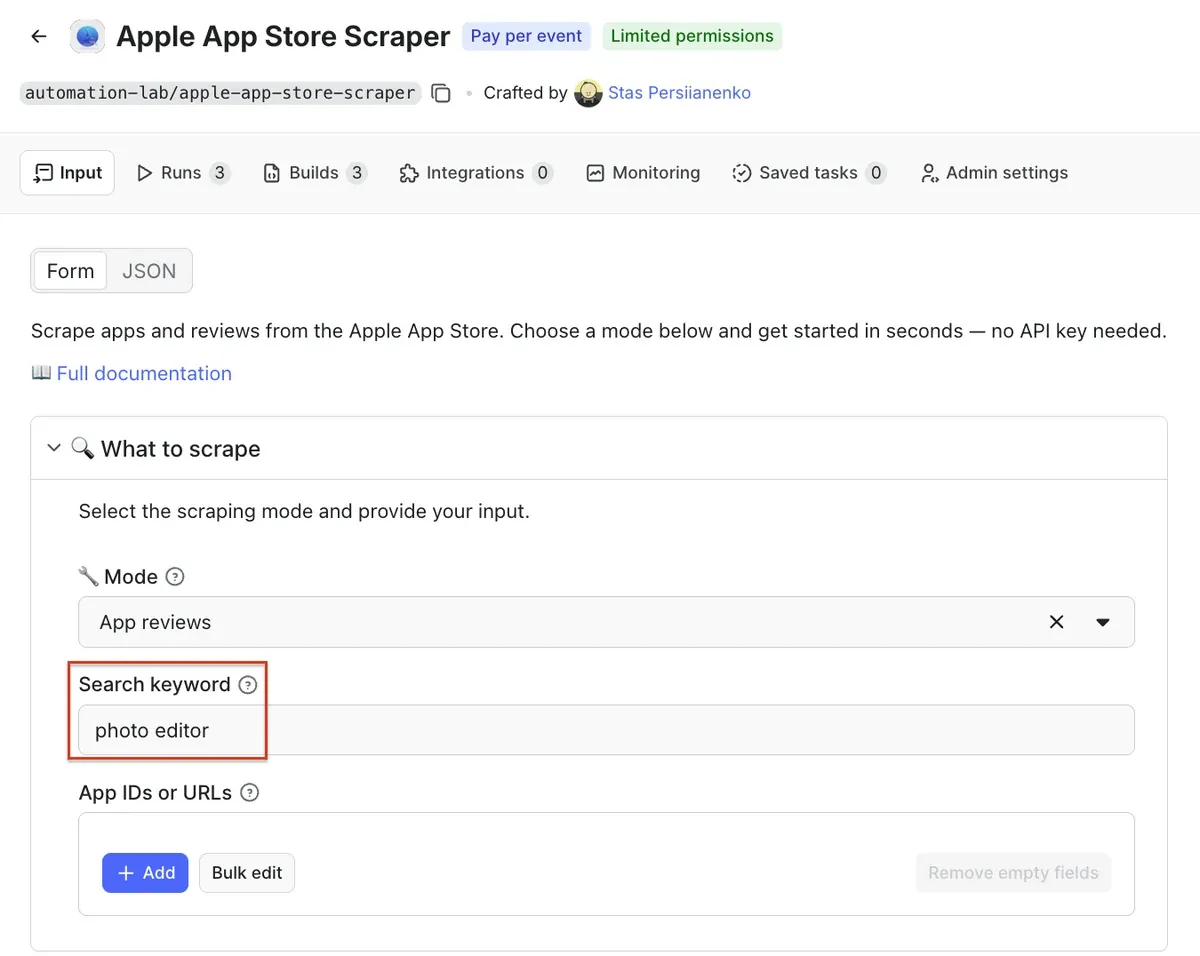
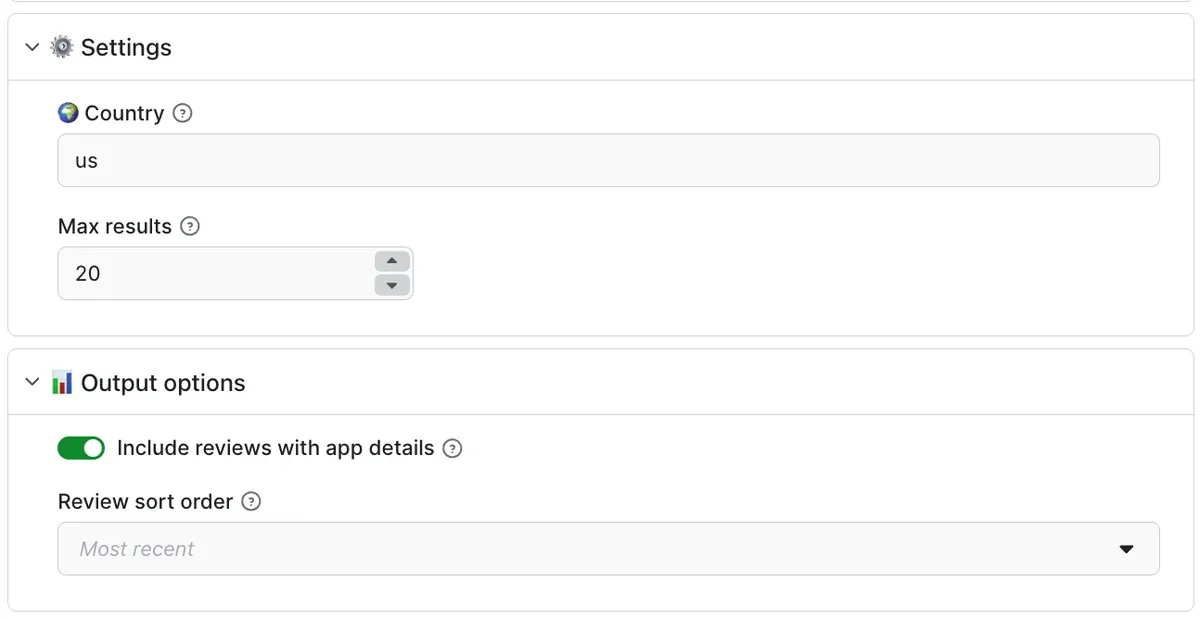
For market research, start in Search mode with a keyword for the category you care about. In this example, we use:
- Search keyword:
photo editor - Country:
us - Max results:
20
Step 2: Run the Actor and export the data
Click Save & Start. The Actor works through the search and pushes each app to the dataset. When the run finishes, open the Output tab and export as JSON (to feed an app, pipeline, or AI tool) or as CSV or Excel (to open in any spreadsheet or BI tool).
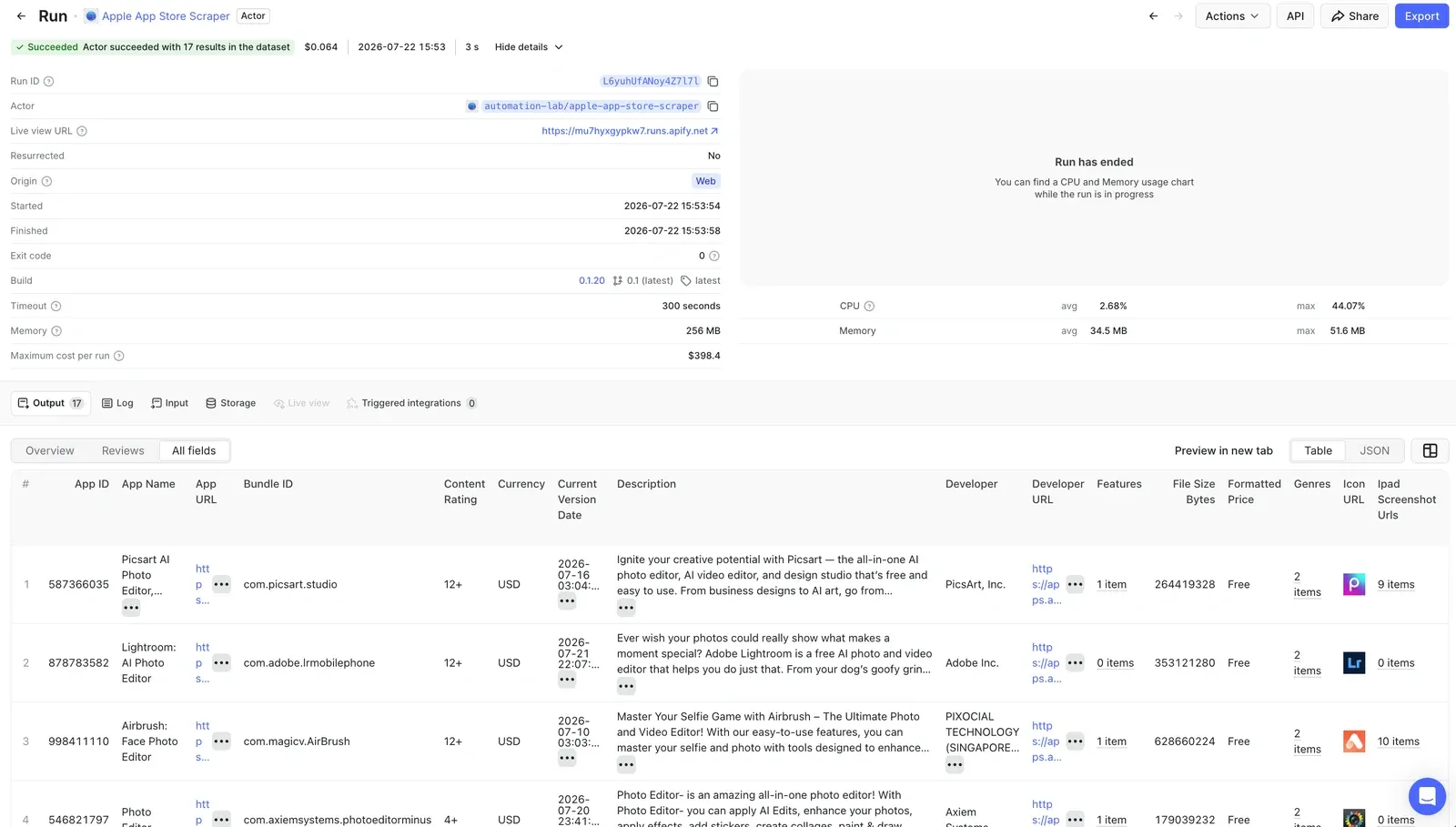
Each record is one app with all its metadata. In Reviews mode, each record is one review tied to its app.
Step 3 (optional): Schedule and compare over time
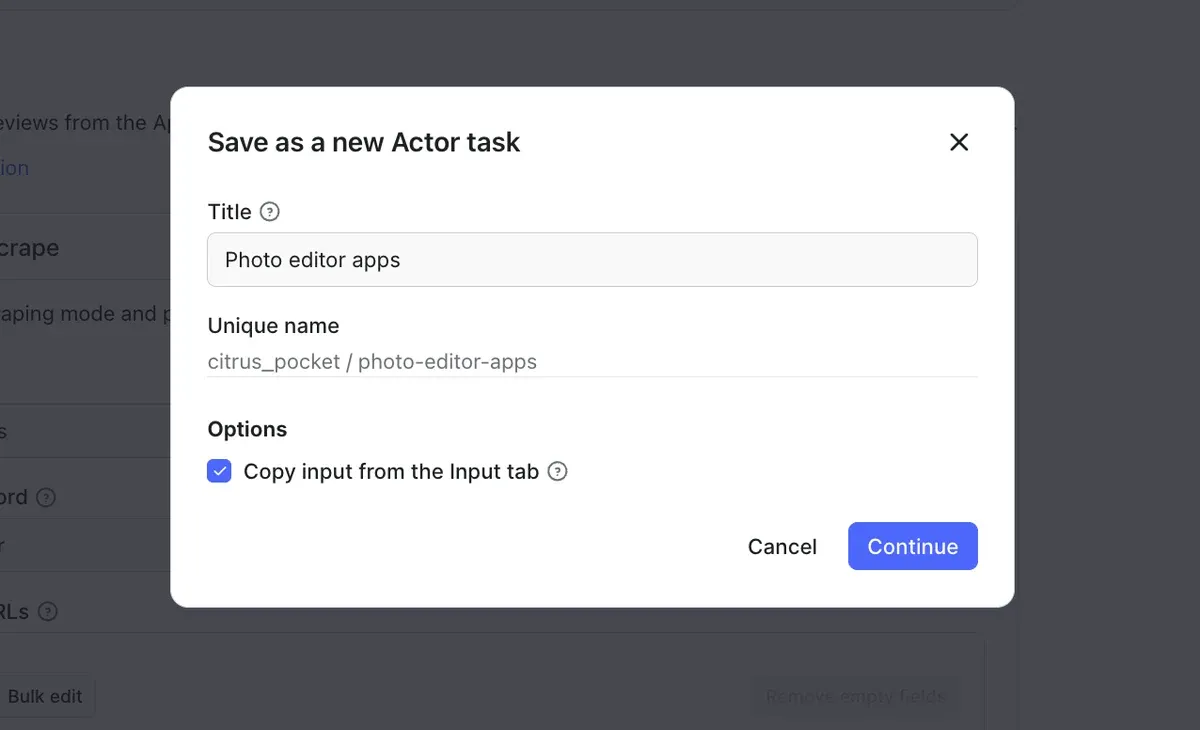
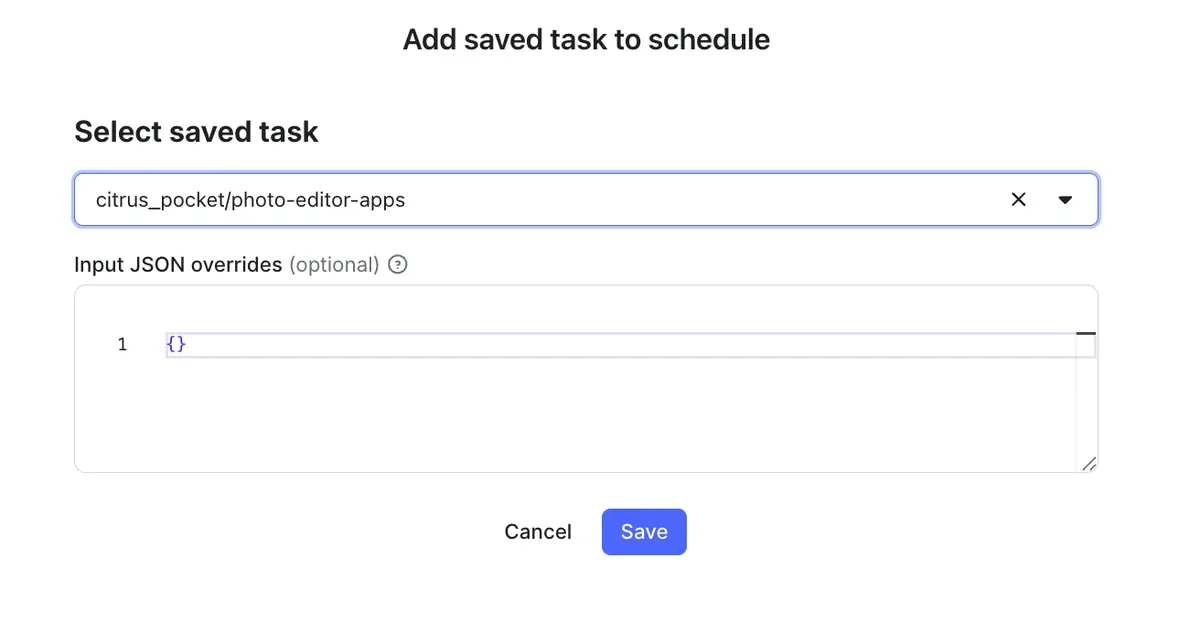
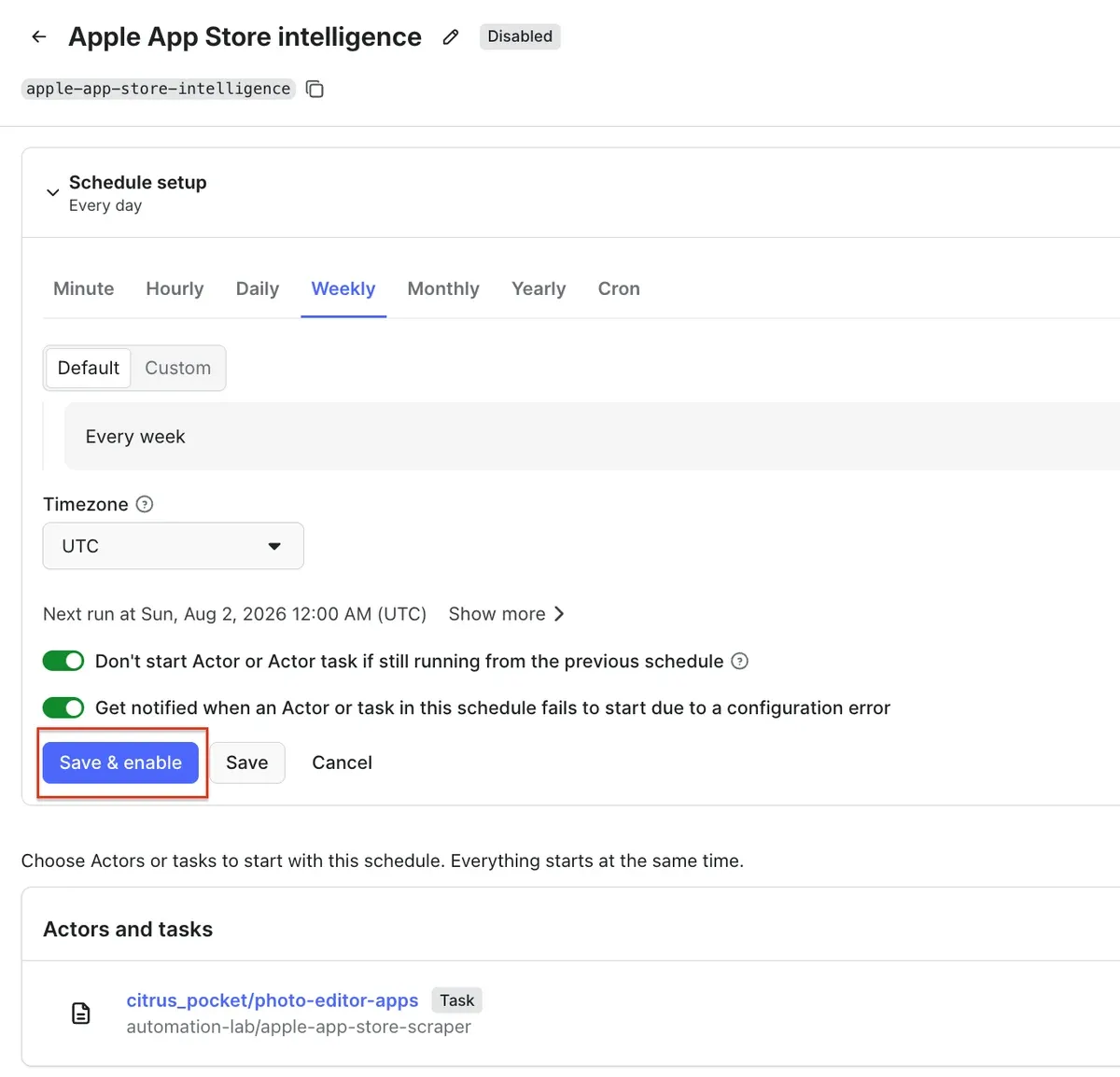
App Store data moves: ratings climb, new versions ship, prices change. To get a fresh dataset every week and line up your runs, you can set automated runs in Apify Console. To do this, configure the Actor, then click Save as a new task in the top-right corner. Give the task a name and save it.

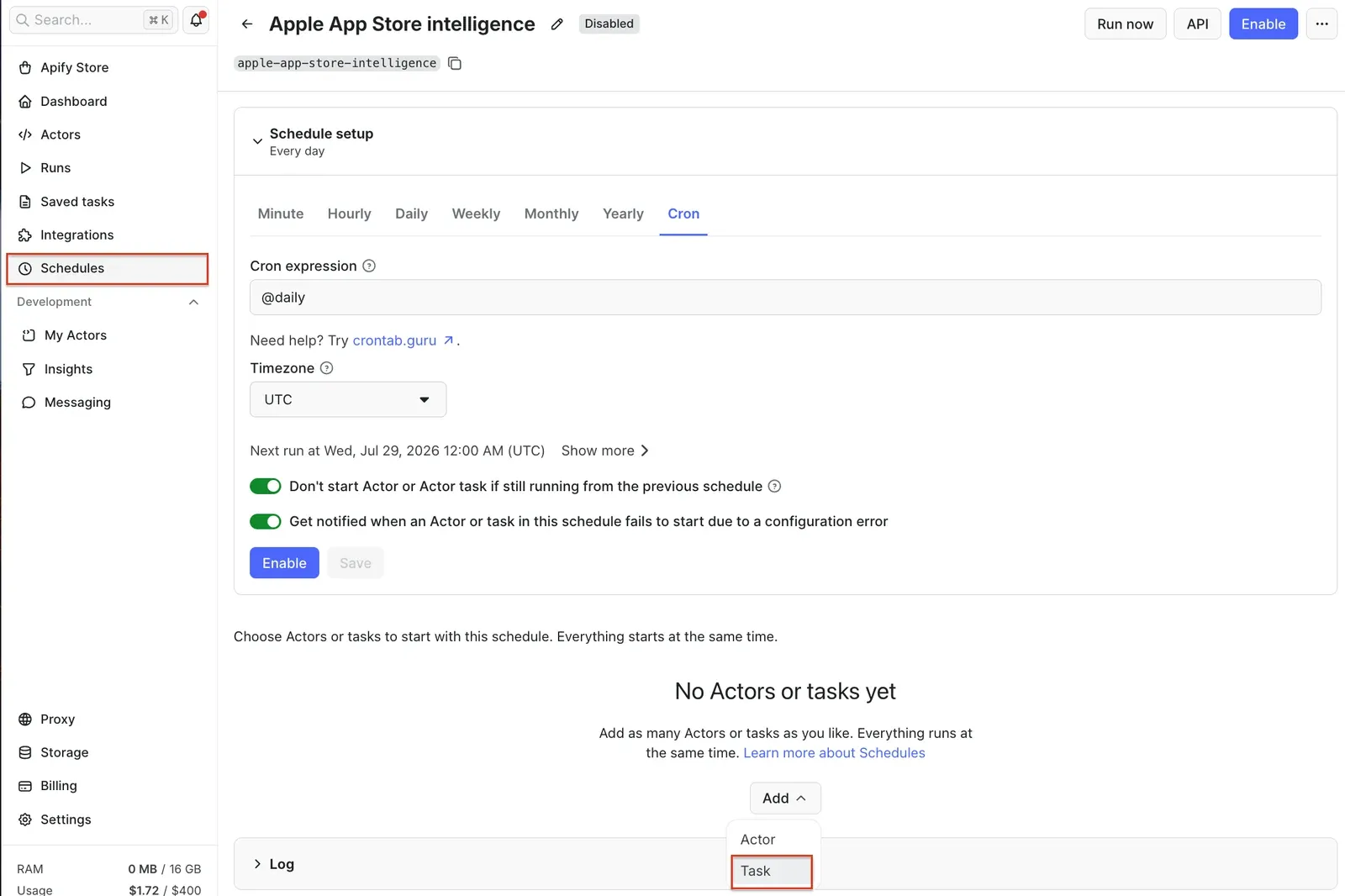
Open Schedules in the left-hand navigation, click Create a schedule, add your task, and choose how often it should run: daily, weekly, monthly, or any cadence that fits.
How to use App Store data for market research
Pulled data can help you track competitors by rating, review volume, update cadence, and pricing. You can also see which features reviewers praise or miss, size a market by summing ratings across a category, watch pricing and rating patterns.
Analyze your findings
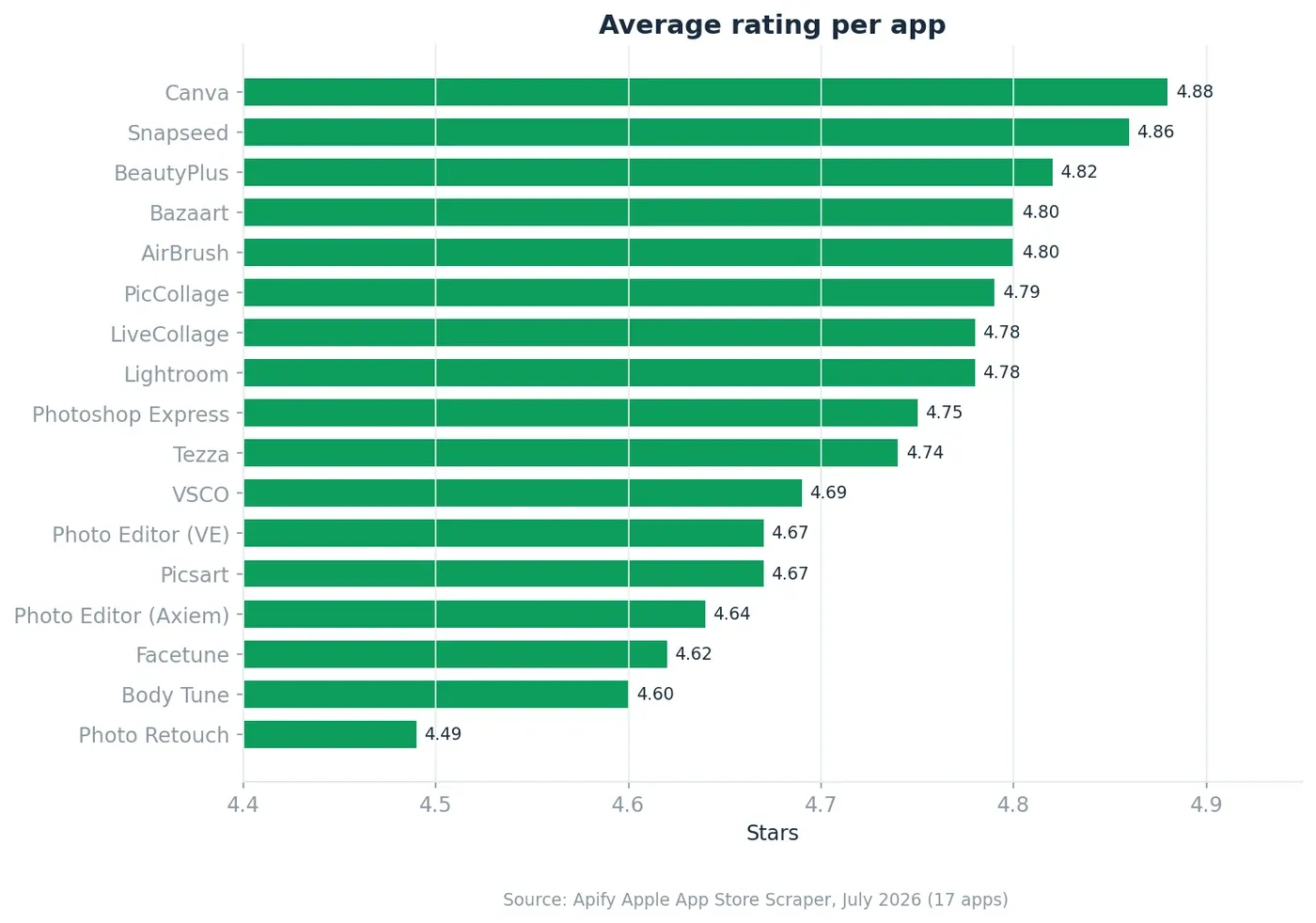
For this walkthrough, one search run returned 17 photo editor apps in the US store. Drop the JSON into an AI tool like Claude and ask it to analyze the file, or connect through Apify MCP so Claude or ChatGPT can call the Actor and pull fresh data on demand. Here's what this run showed.
Canva runs the category on both axes: 3.46M ratings, nearly double the next app (PicCollage at 1.83M), and the highest rating in the set at 4.88. When one app leads on both reach and satisfaction, that's the competitor to study first.
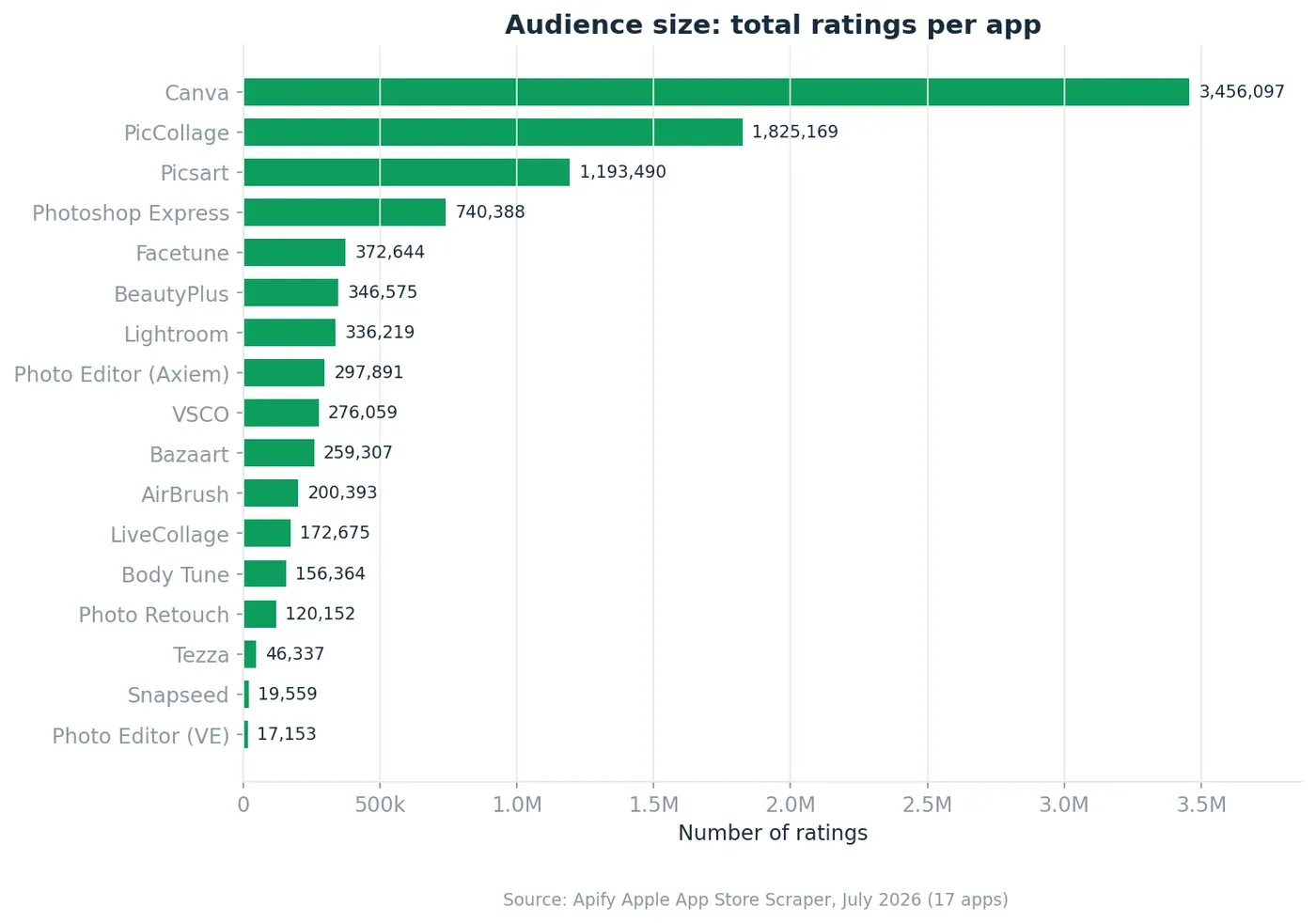
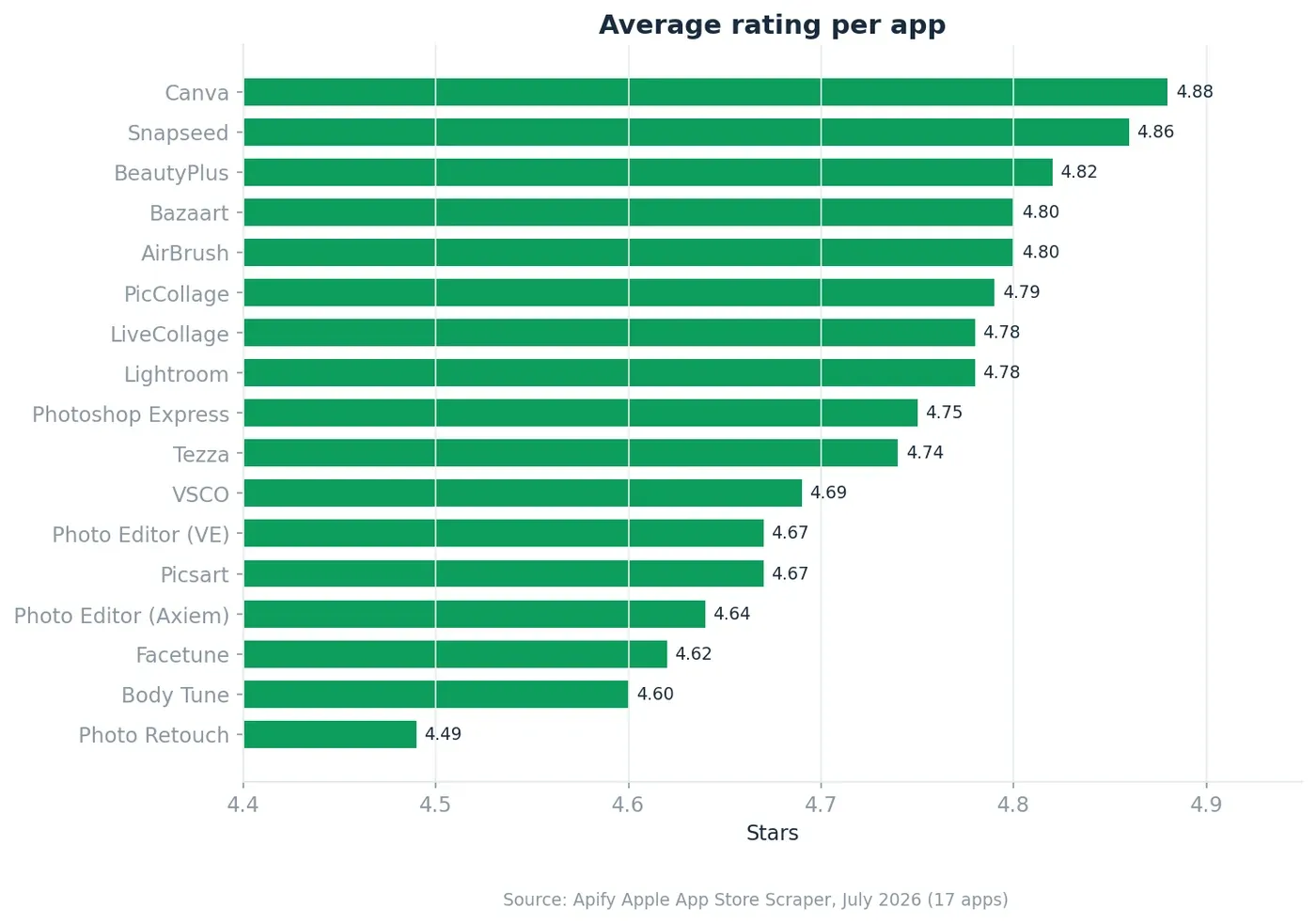
Ratings barely separate these apps. Every app scores between 4.49 and 4.88, with a mean of 4.73. App Store stars skew high across the board, so rating alone is a weak signal. But reach and quality don't always travel together. Snapseed, from Google, holds a 4.86 rating, second-highest in the set, on just 19.5k ratings: a well-loved app with a fraction of the reach. A gap like that points to either a marketing ceiling or a niche worth entering.
Metadata shows product strategies. Three companies run two apps each in this single category: Adobe (Lightroom and Photoshop Express), PIXOCIAL (Airbrush and BeautyPlus), and VIDEO EDITOR PTE (Photo Editor and Collage Maker). One company covering a category from multiple listings is a pattern worth watching.
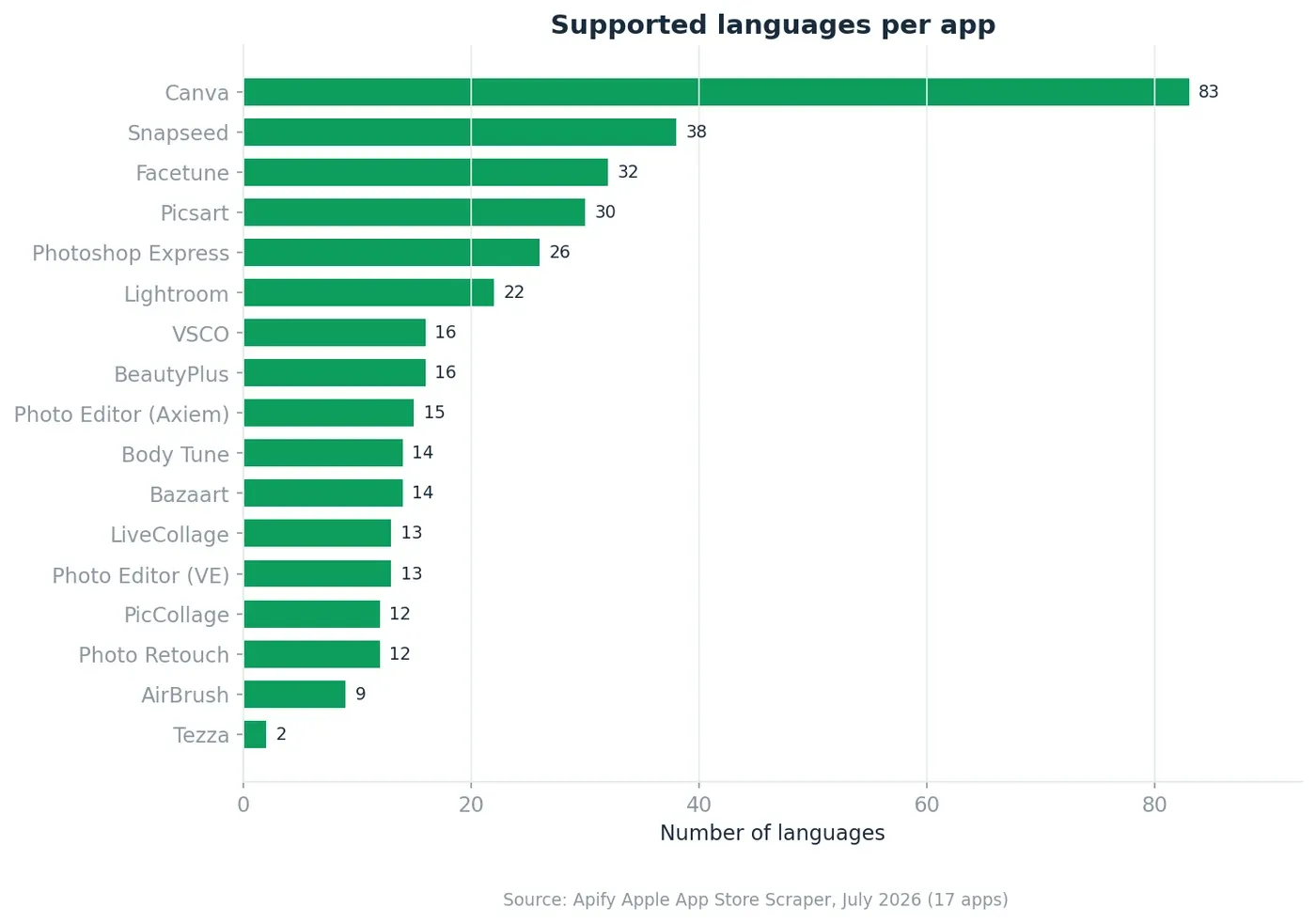
Localization is also key to market expansion. Tools like Canva ship in 83 languages; some apps in the set support as few as 2. Language count is a fast proxy for how globally an app is competing.
Start collecting App Store data
The App Store ranks these apps for you, but it won't tell you why one wins. Meanwhile, a single Actor run can turn a category that looked like 17 near-identical 4.7-star apps into a clear map. One app dominates in terms of reach and languages shipped, so the localization gap is where the category is won. The second-most-loved app has a fraction of that audience, which is either a marketing ceiling or an opening. Several companies run more than one listing in the same category, covering it from multiple angles rather than betting on a single app.
None of that lives in Apple's official API, and none of it needs a data team to find. Point Apple App Store Scraper at your category and run the analysis in minutes.

FAQ
Does Apple have an official App Store API?
Yes. App Store Connect API is free to use, but it requires an Apple Developer Program membership ($99/year) and only returns data about apps you own: your builds, your sales reports, and the reviews on your own listings. For data on apps you don't own, it returns nothing.
Do I need an API key or a developer account to collect App Store data?
No. Apple App Store Scraper runs on the Apify platform, so there's no key, no login, and no Apple Developer membership. You create an Apify account, set a keyword or app URL, and pay only for the results you pull.
What data can you get from an App Store listing?
App metadata (name, developer, category, price, current version, and supported languages), rating score and rating count, and individual user reviews sorted by most recent or most helpful. Search mode returns the matching apps for a keyword and country, so you can pull a whole category in one run and export it as JSON, CSV, or Excel.