New research questions need new data sources
When your research spans quantum science, climate-smart agriculture, and public health, you need data from the platforms where people actually talk. For Ming (Bryan) Wang, faculty member at the University of Nebraska-Lincoln, that means building datasets across TikTok, Instagram, YouTube, and X.
His work covers how the public discusses quantum science and technology, climate-smart beef, and e-cigarette marketing - topics that require collecting real conversations from social media.
But his data stack had a critical limitation:
His existing tool, Sprinklr, only provided reliable access to X (Twitter). It did not support historical data for Instagram or TikTok, and TikTok scraping in particular was difficult to achieve with any academic-ready tool.
Yet those are the platforms where much of today's visual, youth-driven science and health discourse happens.
So Ming needed a way to:
- Gather topic-based datasets from TikTok, Instagram, and YouTube
- Collect visual and engagement data for computer vision and NLP analyses
- Maintain full methodological transparency required in academic research
- Support multiple grant-funded projects and interdisciplinary teams
The research questions were expanding. His data sources weren’t.
“I’ve been able to get data from X pretty easily, but TikTok was a challenge. Sprinklr doesn’t offer historical scraping for Instagram or TikTok, so I use Apify to complement that data.”
-- Ming (Bryan) Wang, University of Nebraska-Lincoln
How Apify became the foundation of multi-platform research
Ming found Apify while searching specifically for a TikTok scraper, and discovered that Apify also provided reliable solutions for Instagram and YouTube.
With Apify, Ming can now build cross-platform datasets around each of his research topics, collecting structured content, text, media links, and engagement metrics from the platforms where discussions actually occur.
Because Apify delivers consistent, export-ready datasets, he can run the full suite of academic analysis using his own transparent methods:
- Sentiment analysis
- Topic modeling
- Computer vision on images from scraped posts
- Engagement analysis (likes, comments, shares)
This approach now supports:
- His individual research
- The research team’s projects
- Multiple interdisciplinary, grant-funded collaborations
What Ming’s lab can do with Apify that it couldn’t do before
With Apify, Ming’s lab now has the data infrastructure needed to study public conversations about emerging science and health issues across the platforms where they naturally unfold, not just on X.
Apify enables him to:
- Access TikTok, Instagram, and YouTube data that he couldn’t get elsewhere
- Build cross-platform, topic-driven datasets for quantum tech, climate-smart beef, and e-cigarette research
- Combine text, visuals, and engagement signals in a single research framework
- Maintain academic transparency by doing analysis independently
- Support multiple ongoing grants and upcoming publications
Apify now serves as the stable data source behind Ming’s multi-platform scientific communication research, allowing his lab to study how people discuss science and health topics across modern, visual-first social networks.
Need real multi-platform social data for research?
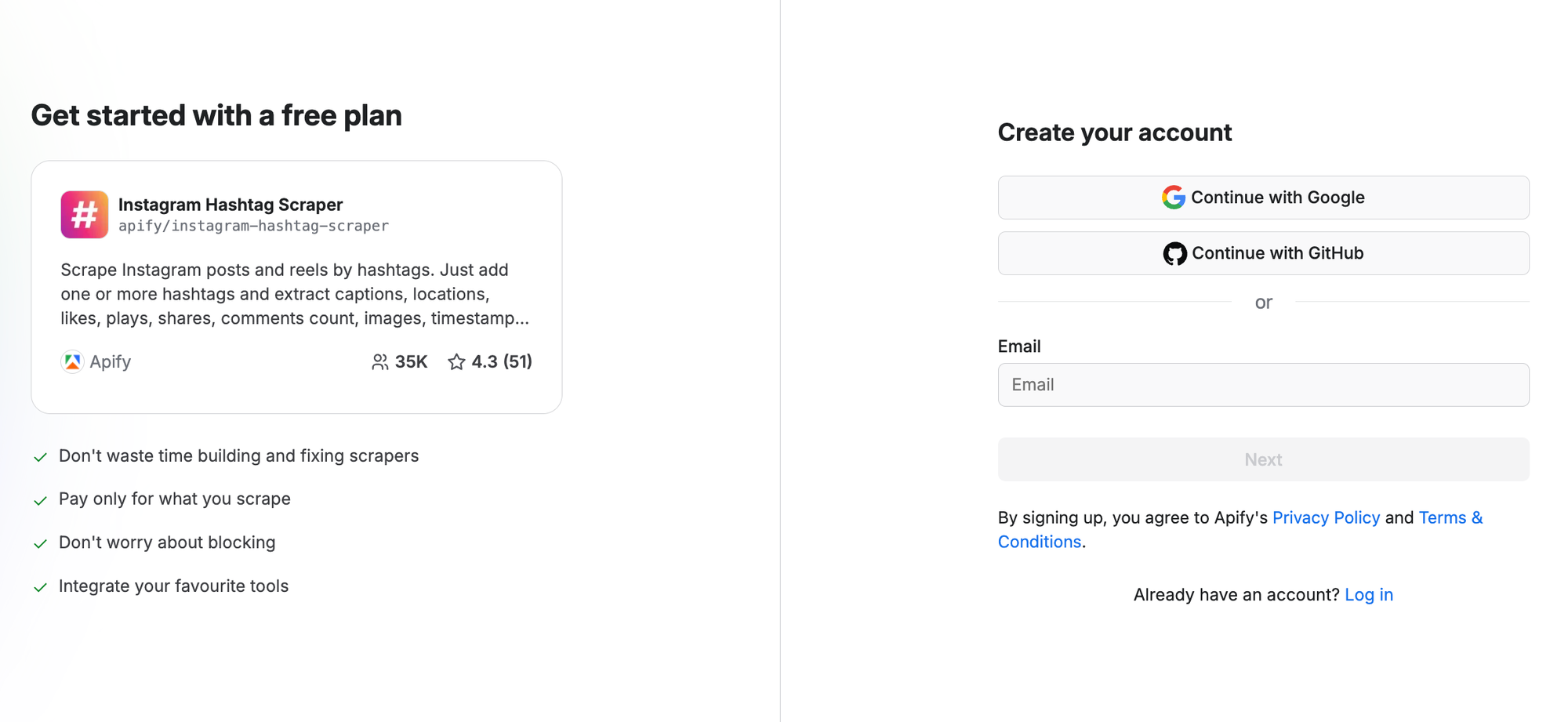
Try Apify’s social media scrapers and start collecting TikTok, Instagram, YouTube, and X data for your next project. No infrastructure required.
Start collecting data with social media scrapers from Apify